Several members of my family recently sent me some pictures from a trip they took to Savanah, Georgia, and asked me what I knew about Casimir Pulaski. Well, Monday, March 2, is Pulaski Day in Chicago, so I though I’d give everyone a very short course on the Father of the American Cavalry.

Kazimiarz Michael Wladyslaw Wiktor Pulaski was born on March 4, 1745, in Warsaw, Poland, the son of Count Joseph Pulaski. The Count was a member of the Bar Confederation (1768-1772) that was trying to defend Poland against Russia. (Sadly it ended with the 1st Partition of Poland.) The young Casimir fought valiantly as a cavalry officer, but ultimately he had to flee Poland. He spent the years 1771 to 1775 traveling Europe and the Ottoman Empire trying to put together enough money and troops to return to Poland. Instead, he ended up in debtors prison in France.
Luckily, some of his friends bailed him out and introduced him to Benjamin Franklin, then in France as an agent of the Second Continental Congress. Franklin was always looking for outstanding European officers to train Americans in the Continental Army, most of whom grew up as farmers or merchants, not soldiers. Franklin liked the man, and send a letter introducing Pulaski to George Washington. Pulaski sailed from Nantes and arrived in Boston on June 23, 1777. He immediately headed to Philadelphia where, in August, he requested a commission from Congress—but like virtually everything else, Congress took its time.

Pulaski was not a man to wait patiently so on August 20th, while Congress inched along, he rode out to Neshaminy Falls and met Washington. Early in September, the British began moving on Washington’s men. On September 11, the Redcoats started a flanking maneuver in an effort to cut off some of the Continental troops. Pulaski didn’t care about a commission. He asked permission from Washington to take some of the General’s personal guards and deal with the British. Washington agreed, so Pulaski led 50 men in a countercharge that bought enough time for the Americans to retreat in an almost-orderly fashion. Regardless of the best efforts of the American cavalry, the British won the Battle of Brandywine. Just four days later, Pulaski received his commission as a Brigadier General. He immediately began reforming and training an American cavalry unit.
Pulaski joined Washington and his men that frozen winter at Valley Forges. The Pole kept training his cavalry despite the desperate lack of food, clothing and heat. By the middle of February, Pulaski decided it was time to see what his men could do—and foraging for food was a good way to start. He and 50 of his cavalrymen headed toward Burlington, New Jersey, where they hooked up with General Anthony Wayne. On February 28, 1778, several British sentries saw what they thought was a large number of American cavalry, so they headed back toward the Delaware River. Pulaski and Wayne’s men attacked the Redcoats the next morning. It was actually a small skirmish, though Pulaski’s horse was shot out from under him. He and his men returned to Valley Force with some intelligent—and so desperately needed food.

Working with the Americans chafed on Pulaski. His English was rudimentary at best, and he strenuously disagreed with much of the tactics and strategy developed by the men in Washington’s inner circle. By March 1778, he was so frustrated that he resigned his commission. But he shortly decided that he needed to take another shot with the American Cavalry. Ultimately Congress reinstated his commission. He formed a unit of 68 lancers and 200 infantrymen, many of whom were foreigners who he recruited in Baltimore.
While the new unit trained, American privateers seized British ships along the New Jersey coast and sailed them to ports along the Little Egg Harbor River. The courts sent all the materiel to Valley Forge, and sold the ships. After loosing close to 20 ships in just three months, the British, based in New York City, sent 15 ships with hundreds of soldiers to stop the privateers. They reached Little Egg Harbor in early October, and on the 7th torched a number of houses, confiscated the contents of the vessels, and destroyed 10 ships. They would have done more, but they heard that the Polish general and 250 men were on their way. In the early morning of October 15, 400 Redcoats attacked a 50-man detachment of Pulaski’s men, bayoneting almost of them (known to this day as the Little Egg Harbor Massacre), then hastily returned to New York harbor. The American cavalry continued to train in the Minisink region of the upper Delaware River over the winter.
In February 1779, Pulaski requested that Washington transfer him and his men to the Southern front. As much as Washington appreciated Pulaski’s skill, he was a very difficult man to deal with, so Washington was happy to oblige!! They arrived in Charleston, South Carolina, in May 1779. There he met Colonel John Laurens, and together they convinced the City Fathers to try to defend Charleston, rather than surrender it to the British. They did, in fact, hold Charleston, though the Americans, including Pulaski’s Cavalry Legion, paid a heavy price. However, what all the Americans were really aiming for was to retake Savannah, Georgia.

Pulaski, like so many who lived in the South in those days, battled with malaria in the summer, but it didn’t stop him. By September he and his men reached Augusta, Georgia, where they joined General Lachlan McIntosh’s troops. As part of a joint French-American attempt to take Savannah, McIntosh and Pulaski would be the forward units for General Benjamin Lincoln’s men. On October 9, 1779, during a valiant but hopeless cavalry charge, Pulaski was hit by grapeshot. His men carried him from the field and put him aboard the brig Wasp, where he died two days later. Originally laid to rest on the Greenwich Plantation, he was reinterred at the Casimir Pulaski Monument in Savannah.
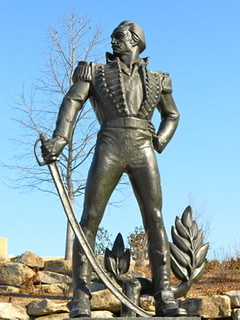
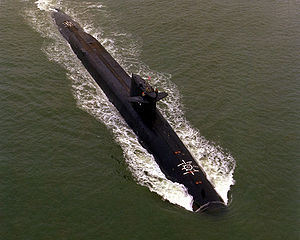
Though Pulaski’s life was cut short, he was not forgotten. Just two weeks after his death, Congress ordered a monument to be dedicated to him, though it wasn’t finished until 1854. The Marquis de Lafayette layer a cornerstone for Pulaski’s monument in Savannah in 1825. A bust of Pulaski has been in the U.S. Capital since 1867. There are a number of statues of Pulaski across the U.S. Numerous cities and counties are named for Pulaski, as are bridges and a skyway. Of course, as mentioned at the beginning of this discussion, Pulaski Day is celebrated on the first Monday in March in Chicago, as well as other cities. And one of the most interesting ways he is remember is the name of a U.S.Navy submarine—the U.S.S. Casimir Pulaski.
As I said, this was a very short course. If you’re interested in more information on Pulaski, below are some very good books.
Leszek Szymanski. Casimir Pulaski: A Hero of the American Revolution.
Douglas Shores. Kazimierz Pulaski: General of Two Nations.
Francis Kajancki. Casimir Pulaski: Cavalry Commander of the American Revolution.
 Historical Lense