With the Olympics up and running, some of my students wanted to spend a little time discussing it. None of them are happy about where it’s being held, calling it the “genocide games.” (Personally I agree with them wholeheartedly.) Then one student asked me what I remember of the Olympics in the “old days.” Really? Define “old!” With that, it was time to get back to our discussion of Jackie Fisher and Dreadnoughts. But since this is a military history class, I did find some photos of men who were in the US military and competed in the Olympics–before even I was born. The students enjoyed, them, and I thought you might like them too.
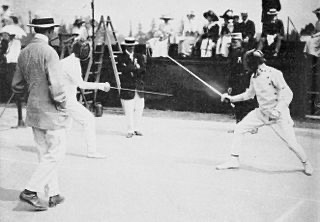
George Patton, USA, pentathlon, 1912 Olympics, Stockholm
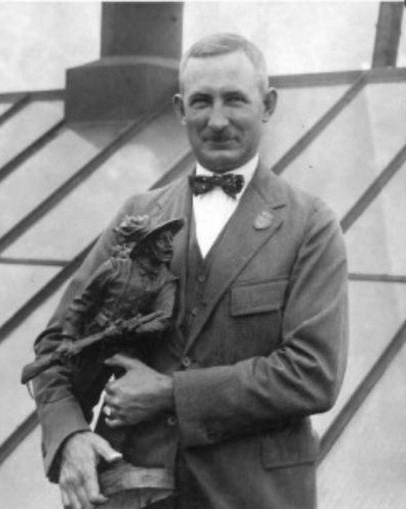
Carl Osburn, USN, shooter, 1912 Olympics, Stockholm
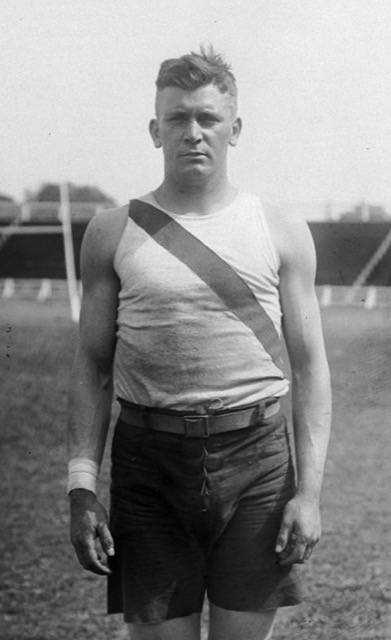
Harry Liversedge, USMC, shot put, 1920 Olympics, Belgium
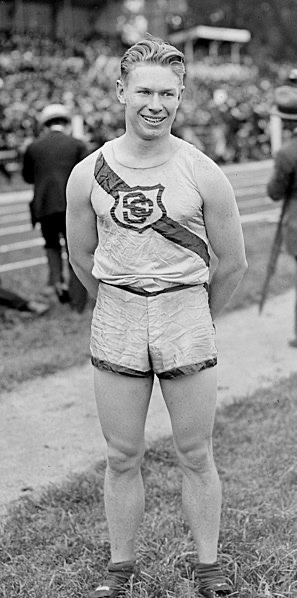
Charlie Paddock, USMC, 100m sprint, 1920 Olympics, Belgium
Champerlin, Thomson and Tuttle, USA, equestrian, 1932 Olympics, Los Angeles
The Olympics will be starting in just a few days–fingers crossed. It will be a very different Olympics due to covid-19, but if it’s held, it will be wonderful to be able to watch the best athletes in the world compete. There are the games that so many of us watch–gymnastics, track and field and swimming–but there are so many more, like archery, canoeing, fencing, shooting, water polo to name just a few. The modern games were first held in 1896, so it’s interesting to find out about some America’s early athletes.
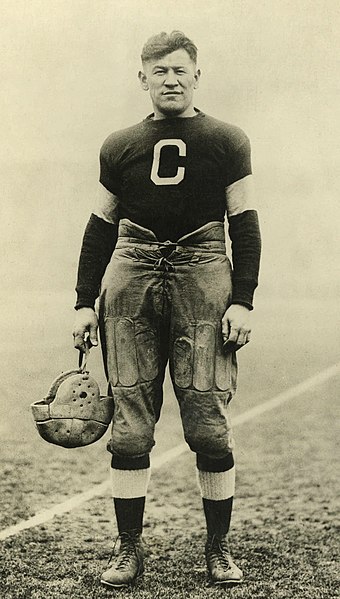
James Francis (Jim) Thorpe 1887-1953
The first one I thought of was James Francis (Jim) Thorpe. A member of the Sac and Fox nation, he attended the Carlisle Indian Industrial School in Carlisle, PA, where he played football as you can see above, and was a two-time member of an All American football team. In 1912, Thorpe was a member of the American team that went to Stockholm, Sweden to compete in two new events–the decathlon and the modern pentathlon. Just a few minutes before he was supposed to participate in the 1,500- meter run, someone stole his shoes. He managed to find a mismatched pair and ran in them. He won the Gold. And went on to win the Gold in the pentagon. In addition to those medals, King Gustav V of Sweden presented him with the challenge prize for the decathlon, and Czar Nicholas II of Russia presented him with the challenge prize for the pentathlon. He went on to play baseball from 1913 to 1919, and football from 1922 to 1928. He had hoped to transition to announcing, but the Great Depression ended that. Like so many others he worked at a number of menial jobs until his death from heart failure in 1953. He is in the Pro Football Hall of Fame, and you can visit Jim Thorpe (the actual name of a town) which is one of the nationally ranked best small towns in the US.
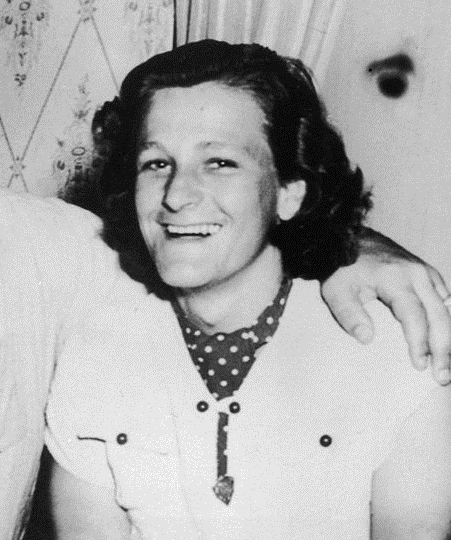
Mildred Ella (Babe) Didrikson Zaharuas 1911-1956
Another American Olympian was Mildred Ella Didrikson–aka Babe. She grew up as an extremely athletic child, playing baseball with a passion. After high school she played basketball for the Golden Cyclones which won the national AAU title, and she was named All-American twice. Didrikson attended the AAU national track and field championships in 1931 where she won five of the eight events she entered. The following year, she was part of the women’s American team to the Olympics in Los Angeles, where she won the Gold in the 80-meters hurtles, the Gold in the Javelin, and the Silver in the high jump. At the time, many said that she would have won more medals, but in the ’30s, women were only allowed to participate in three events. Eventually, she became a very serious, and outstanding golfer, who’s live was cut short when she died of cancer in 1956.
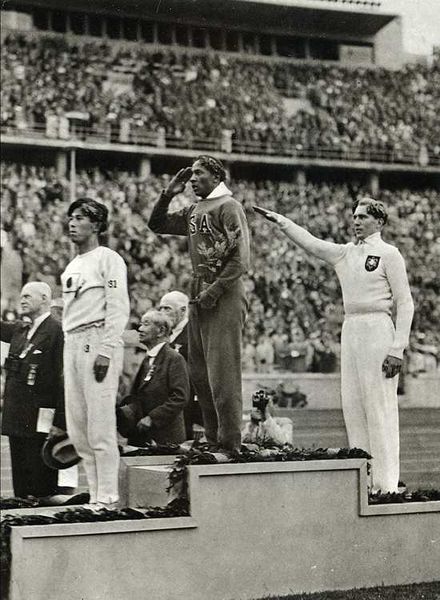
James Cleveland (Jesse) Owens, 1913-1980
Many of us remember James Cleveland (Jesse) Owens. From a very early age, Owens had a passion for running and his Junior High School track coach gave him a wonderful foundation. In high school, he attended the National High School Champions in Chicago, where he broke the world record of the 100-yard dash and the long jump. He attended Ohio State University, where he was called the “Buckeye Bullet” because of his speed. He won four individual NCAA champions in 1935, and another four in 1936. And then came the Olympics in Berlin. On August 3, he won the Gold for the 100-meter dash. On August 4 he won the Gold for the long jump. On August 5 he won the Gold in the 200-meter sprint. And finally, on August 9 he won the 4 by 100 sprint. There are differing opinions as to whether or not Hitler spoke to Owens. However, when the American Olympians arrived in New York, Mayor Fiorello LaGuardia greeted him warmly before the massive ticker tape parade up Broadway. Unfortunately he, too, had to deal with discrimination for years after his triumph.
Unfortunately life after the Olympics wasn’t just wonderful endorsements and motivational speaking. Live has changed dramatically over the following 80 years. To learn more about these amazing athletes and their lives after the Olympics, you might take a look at some of these books.

 Historical Lense