Happy Birthday Marines! đźĄł

Tun Tavern, November 10, 1775, saw the birth of the United States Marine Corps. So many of us think of Marines at Belleau Wood, Iwo Jima, Inchon, Da Nang and Fallujah, but Marines have been in so many more areas of the world. Sometimes it’s been in battle, but frequently they went to show the flag. One long-forgotten diplomatic mission happened in 1903-1904 in Abyssinia (Ethiopia).

In the summer of 1903, the US decided to establish relations with the nation of Abyssinia. Few people knew much about it, though it was a well functioning nation which had actually defeated the Italians in 1894 when Rome thought it would be a cake-walk to seize the Abyssinia. The US much preferred to be a trading partner. The State Department told Consul Robert P. Skinner, then in France, to travel to Addis Ababa, capital of Abyssinia, and develop a treaty.
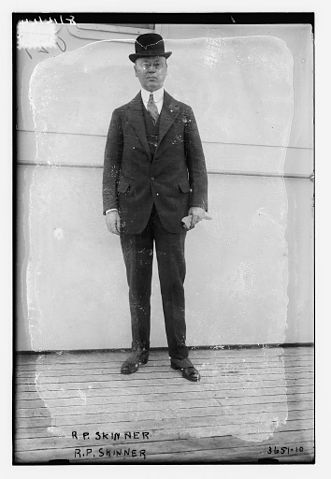
At that same time, the U.S.S. Brooklyn, U.S.S. San Francisco, and U.S.S. Macias were off the coast of Beirut, and they were ordered to put together a detachment of Marines, with a few seamen, to join Skinner on his trek to Addis Ababa. Lt. Charles L. Hussey, USN led the party. With him was Capt. George C. Thorpe, USMC, one sergeant, two corporals, 14 privates, six sailors, one hospital steward, a coxswain and an electrician. They sailed aboard Macias through the Suez Canal and down the Red Sea to Djibouti in what was then called French Somaliland. There they met up with Skinner and his secretary, Horatio Wales.

From Djibouti they took a rickety, narrow-gauge train about 200 miles to the end of the line at Dire Dawa, which was filled with mud huts, a telegraph office and a telephone exchange. There they set up Camp Scott. The following day they enlisted a translator, and bought 45 mules and 46 camel for their 300-mile trek to Addis Ababa. Shortly after they started their journey, they received a message from Ras Mekonnen asking the Americans to make a 32-mile detour to Harrar. As the most trusted counselor to the Emperor Menilek II, and the man who had defeated the Italians at the Battle of Adwa, that was a “command performance.” The Ras and 100 of his soldiers met the Americans just outside the city, and led Skinner and the entire detachment in to Harrar. The Consul and the translator spoke at length with Mekonnen and the following day returned to Dire Dawa. They finally headed out to Addis Ababa on November 29.

Most of the camel and mule handlers were members of the Danakil tribe, who were more warriors that muleteers. At one point, the man in charge of the animals told Thorpe to head in a different direction. When Thorpe insisted that they follow the American’s route, the man pulled a knife on the Captain. He and another Marine grabbed the knife. The man then snatched one of his own men’s spear. The Marines grabbed that as well, at which point the man gave up, flopped on the ground crying and carrying one—and then got up and started heading in the right direction.

Things went well until the evening of December 3d when the Danakil and what seemed to be a large group of men in the area began to threaten the Marines. Hussey, Thorpe and Skinner were discussing whether they might need to fight their way back to Dire Dawa when they started hearing very loud voices in a language even the translator didn’t understand. There seemed to be numerous people wandering around the area. Thorpe and his men formed a skirmish line and were seconds away from moving out when the clouds moved and they saw a huge number of monkeys who took one look at the Marines, and fled.
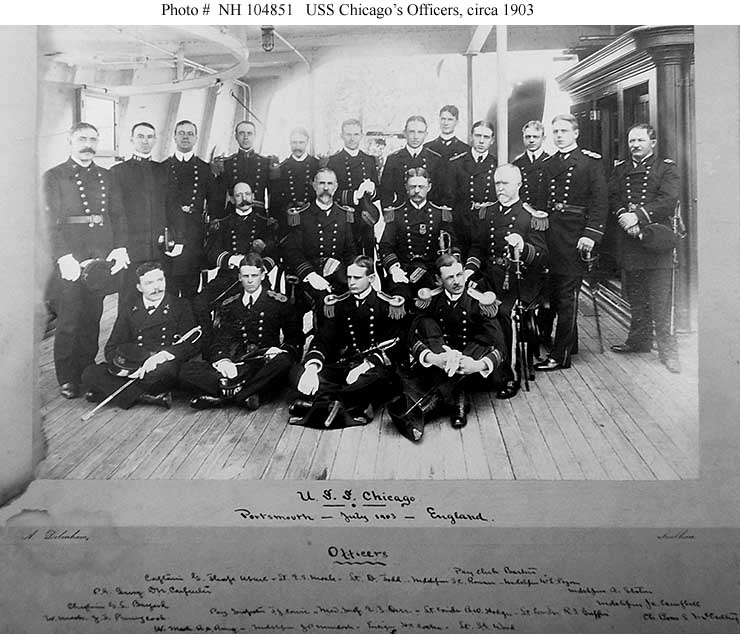
Marine Captain George Cyrus Thorpe is fourth from the left of the group standing

They trekked on across the grassland, until early in the morning of December 18, when they arrived about a mile away from Addis Ababa. Taking some time to change into their dress uniforms, they were met by Abyssinian troops and a group of Emperor Menilek II’s counselors, all dressed in brilliantly colored uniforms and the cavalry riding a variety of animals from Arabian steeds to zebras. After a “formal picnic” the Americans were escorted into Addis Ababa straight to the Geubi, the Emperor’s palace, where they met Menelik II. After a 21-gun salute and shaking hands will all the Americans, Skinner presented the Emperor with a large silver tray engraved with an invitation for Abyssinia to join the Louisiana Purchase Exposition in St. Louis in the spring of 1904. The Emperor immediately agreed. After some additional discussions with Skinner, the Emperor withdrew and the Americans marched to another palace to the tunes of Hail Columbia and the Marseilles.

Skinner and the Emperor continued their talks the following day. They agreed to establish diplomatic relations, and agreed to Most Favored Nations status between the two countries. Later that day, the Americans met diplomats from Italy, Great Britain and Russia, as well as the Abuna, Archbishop Mathias, the head of the Coptic Christian Church, and one of the most influential men in Abyssinia. On the 23st the Americans attend a mpressive banquet. The following day Emperor visited Camp Roosevelt, where he watched the Marines parade and Thorpe put his men through the Manuel of Arms and Bayonet exercises. Cpl. Joseph Rossell (later Colonel, USMC) showed the Emperor the Krag-Jorgenson rile, disassembling it, answering Menilek’s technical questions, then reassembling it at breakneck speed, loading it with blanks, and handing it to the Emperor who enjoyed shooting over the heads of some of his own men.
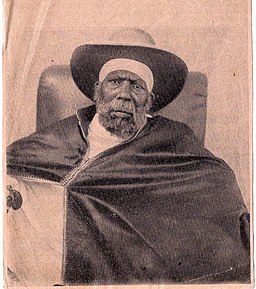
Emperor Menelik II

After additional discussions, Menilek and Skinner signed the treaty on December 27. The Emperor then presented each Marines and Seamen with the Menilek medal, and presented Hussey and Thorpe with the Star of Ethiopia medals, and two spears. As they were about to leave, the Americans were also presented with two massive elephant tusks, and two lion cubs to be presented to his friend, Theodore Roosevelt. The camels which were to carried the cubs in large baskets were terrified. Camels and lions don’t mix, but eventually they relented and carried the cubs, swaying along, back to Dire Dawa. (One of the cubs became terribly seasick because of the constant swaying, and eventually died. The Emperor replaced it, and both lions spent the rest of their days at the National Zoo in Washington, D.C.) By January 15, the Americans were back in Djibouti, boarding the Macias, and heading back to Beirut. Mission accomplished.

Happy Birthday Marines đźĄł

Tun Tavern, Philadelphia

This Sunday, November 10, is the 244th birthday of the United States Marine Corps. As a child, I learned about the men who joined the very first Marines at Tun Tavern in Philadelphia (November 10, 1775). About Presley O’Bannon and the Barbary Pirates. How BGen. Archibald Henderson left a note on his door “Have gone to Florida to fight Indians. Will be back when war is over.” How 50 Marines led by Capt. John T. Myers, with a small group of British, Russian, German and French soldiers held the Legations at Peking for 55 days. And of course there was Belleau Wood, where Sgt. Dan Daly—who already had received two Medals of Honor—is said to have hollered to his men, “come on you sons of bitches, do you want to live forever?“

BGen. John T. Myers

I learned about places like Chapultepec, Sumatra, Addis Ababa, Tampico, Tientsin, Cavite, Chateau Thierry, Guam, Guadalcanal, Iwo Jima, and Chosin Reservoir. I heard names like Robert Huntington, Littleton W.T. Waller, Smedley Butler, Fritz Wise, Alexander A. Vandegrift, “Red Mike” Edson, and so many more. I was rearranging some books over the weekend to make room for two new ones. (My father used to say that I buy my books by the pound). One of them is about General Clifton Cates who, as 2d Lieutenant Clifton B. Cates told his battalion HQ “I will hold” during the carnage of Belleau Wood, on July 19, 1918.

Born in Tiptonville, Tennessee on August 31, 1893, Cates was graduated from the Missouri Military Academy in 1910. He later graduated from the University of Tennessee College of Law in 1916, and was admitted to the Bar that same year. While the Great War raged in Europe, the US only felt below-the-surface rumblings. But when the Germans announced they would begin Unrestricted Submarine Warfare on February 1, 1917, followed immediately by the Zimmerman Telegram which suggesting an alliance between Mexico and Germany, it became crystal clear that the Americans were going to war. (Congress declared war on April 6, 1917.) Cates, like so many of his friends, wanted to serve, and one young man told him that a group called Marines were looking for men. Cates asked him “what is a Marine?” It didn’t matter—he wanted to fight for his country, and after passing all the tests and physicals he was commissioned as a 2d Lieutenant in the Marine Corps Reserve on June 13, 1917.

Naval Hospital, Parris Island c. 1919
(NH series NH1000000, NH100843)

He and his buddies ended up in Parris Island, near Beaufort, South Carolina. It wasn’t the Parris we know today, but the Parris Island that was little more than a swamp with a few ancient plantation houses. Not only did the men learn to be Marines—drills, the rifle range, more drills, more rifle range—but they also built everything from schools and barracks to latrines. From Parris Island his cohort moved north to Quantico in northern Virginia. More instruction, more drills, more rifle range, though now they could occasionally go into the town of Quantico for a good meal and enjoy the ladies at the dance hall.

Finally they were ready to go “Over There” aboard the USS Henderson. Part of a convoy for four transports and a battleship, they arrived at St. Nazaire, France, on February 5, 1918, and after some time learning about trench warfare from the French, ended up along the Paris-Metz highway on June 1, 1918, as part of the 96th Company, 6th Regiment. Over the coming weeks, they took massive casualties at Bouresches and Belleau Wood. He and a few men ended up in an abandoned French trench where he scrippled a quick note and send a runner to the Battalion HQ. It’s worth reading:

“I have only two men out of my company and 20 of other companies. We need support, but it is almost suicidal to try to get it here as we are swept by machine-gun fire and a constant artillery barrage is on us. I have no one on my left and very few on my right. I WILL HOLD.”

He did. And those words continue to inspire Marines to this day. Later that afternoon some men from a French battalion pushed forward and hooked up with the beleaguered Marines. Cates and his men were part of the troops to win the campaigns of Soisson, Blanc Mont Ridge, the St. Mihiel Salient and the Meuse-Argonne. By the end of World War I, Cates had received the Navy Cross, Distinuished Service Cross with oak leaf cluster, the Purple Heart, Silver Star and the French Croix de Guerre.

Among the survivors of the 2d Battalion, 6th Regiment were Maj. Thomas Holcomb, 1st Lt. Clifton Cates, and 1st Lt. Graves Erskine
(Naval History and Heritage Command)

After a year of occupation duty in Germany, Cates returned to the States. He expected to spend the rest of his live as a lawyer in Tennessee. While waiting for his discharge order he ran into Commandant George Barnett who suggested that maybe Cates would like to serve as the Commandant’s Aide-de-Camp. He said yes, and never looked back. After working for Barnett, Cates had sea duty on the USS California, served in Shanghai twice, worked at the War Plan’s section at Headquarters, Marine Corps, and as war clouds loomed again, became Director of the Marine Corps Basic School at the Philadelphia Navy Yard.

On August 4, 1942, Cates, now a colonel in charge of the 1st Marine Regiment, used everything he’d learned during the 1st World War—better training, security, tactics and weapons—and spent the next five months retaking Guadalcanal. Then it was back to the States to command the Marine Corps School at Quantico. In June 1944, General Cates returned to the Pacific in command of the 4th Marine Division. Retaking Tinian Island was tough, but fast. The 4th Division quickly headed back to Maui for R+R and then serious training because they, along with the 3d and 5th Marine Divisions, would face General Kuribayashi and 22,000 Japanese soldiers on the black volcanic sand of Iwo Jima on February 19, 1945. It took another 37 days to secure the island—one of the toughest in Marine Corps history.

After the war and a number of short assignments, he again commanded the Marine Barracks at Quantico. On January 1, 1948, Cates arrived at the pinnacle of his career, becoming the 19th Commandant of the Marine Corps. In the middle of his term as Commandant, the North Korean army flooded across the 38th Parallel, starting the Korean War, and again the Marines were in the thick of it. He made several tours of the Korean front, and after his friend General Lemuel Shepherd became the 20th Commandant in 1952, Cates went back to his Marines at Quantico until he retired on June 24, 1954. Cates died at the US Naval Hospital at Annapolis on June 4, 1970 and was laid to rest at Arlington National Cemetery on June 8.

Marine Commandant Clifton B. Cates

General Cates (sometimes known as Lucky Cliff) would agree with me in saying that there are many truly amazing men and women Marines. And there are some great books about the Marines I’ve mentioned—and many more. (And none of them weigh much at all🙄) You can use an actual book, a Kindle, even Audible books, but try reading one—though I bet you’ll find that they’re like potato chips—you can’t stop with just one. I’ve listed just a few of those books below, but if you’re looking for something else, just let me know—I’m happy to help.

  • James Nelson, I Will Hold
  • Dirk Ballendorf, Pete Ellis
  • Roger Willock, Unaccustomed to Fear: A biography of the Late General Roy Geiger
  • David Ulbrich, Preparing for Victory: Thomas Holcomp
  • Victor Krulak, First to Fight: Lt.Gen. Victor H. Krulak
  • John Lejeune, The Reminiscences of a Marine
  • Jon Hoffman, Chesty
  • Holland Smith, Coral and Brass
  • Jon Hoffman, Once a Legend: “Red Mike” Edson and the Marine Raiders
  • Hans Schmidt, Maverick Marine: General Smedley D. Butler
  • Merrill Twining, No Bended Knee
  • A.A. Vandegrift, Once a Marine
  • Frederic Wise, A Marine Tells it to You
  • Bernard Cole, Gunboats and Marines
  • Allan Millett, In Many a Strife: General Gerald C. Thomas
  • Albertus Catlin, “With the Help of God and a Few Marines”
  • E.B. Sledge, With the Old Breed
  • Nicholas Popaditch, Once a Marine
  • Hampton Sides, On Desperate Ground
  • Richard Tregaskis, Guadalcanal Diary
  • Robert Heinl, Soldiers of the Sea
  • Robert Drury, The Last Stand of Fox Company
  • Frank Peterson, Into the Tiger’s Jaw