No, I mean Marque, part of a Letter of Marque and Reprisal. I’ve been thinking about it because of the recent massive problems of the Colonial Pipeline. Remember, a few weeks ago a group of hackers stopped a 5000-mile gas pipeline, leaving much of the east coast with no gas. What does a Letters of Marque have to do with a pipeline? Just keep readings-it will all make sense.
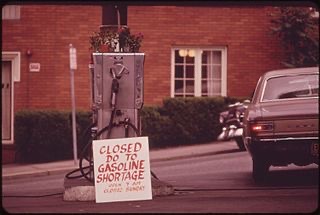
If you recall, the pipeline was stopped when hackers extort $4 million from the company to get the gas flowing again. In some ways, it was worse that the energy crisis of the 1970s. Then you might get gas on an odd or even day, or only get a certain number of gallons, and there were always huge lines. The worst thing was when it was your turn, and you’d pulled up to the pump just as the light turned red–no gas😢. Hopefully they’d have some the next day, or a station close by was open. This time it was worse. Stations closed in 80 percent of a state., and there was no information as to when it would be available. How could you get to work? The market? The doctor? School? How could truckers deliver anything? How could planes move cross-country? What about the military? The ultimate goal is to harden our infrastructure so that it can’t happen again. But that’s going to take some time. What do we do in the meantime, to prevent hackers from trying it again?
So, here’s a question. What is piracy? According to Merriam-Webster, it’s “the unauthorized use of another’s production, investment or conception.” I think we could make a pretty good case that hacking is a form of piracy. We all know something about piracy–if nothing else, we’re seen films like Pirates of the Caribbean or Captain Blood, of The Sea Hawk and so many more. And how the governments stop piracy? Well, long before there were large navies that could deal with pirates, there were Letters of Marque and Reprisal. A government literally would put together a Letter of Marque allowing a private shipowner to use his own vessel to seize a ship that was stealing goods–even people–from other vessels. They would bring the ship in to port, and share the profits between the owner, the seamen, and the government. Letters of Marque and Reprisal were first used in 1293 under Edward I of Great Britain, but over the years were used by the French, the Dutch, and other countries.
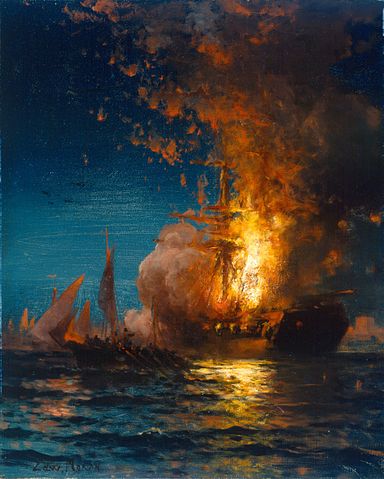
As written in our Constitution, Article 1 Section 8 includes enumerated powers– taxation, the power to declare war, and the ability to give Letters of Marque and Reprisal. With a very small Navy in our nation’s early days, Letters of Marque were used frequently, especially during the American Revolution, Barbary Wars and the War of 1812. But as navies grew, the need for Letters of Marque and Reprisal diminished. Part of the Paris Declaration of 1856 included a ban on Letters of Marque, but the US wasn’t ready to sign on. In fact, during the Civil War, both the Union and Confederacy used Letters of Marque. However, Americans really haven’t been used them since 1865.

Fast forward to 9/11. Al Qada seemed reminiscent to the Barbary Pirates, and there was considerable discussion about the possibility of bringing a new version of Letters of Marque out of mothballs. Though it wasn’t used at that point, it’s been sitting in the wings and people have periodically discussed it since then. At the same time, many companies and government agencies have been dealing with an increasing number of hackers recently–including the police department of Washington, D.C.😡And then came the Continental pipeline. As I said before, hardening the infrastructure is the first order of business. Much has been done behind the scenes, but it needs to be an all-hands-on-deck priority. In addition, it also may be a very good idea to make it clear to hackers that they need to look somewhere else, just as they learned during the Age of Sail. In fact in a recent Op-Ed in the Wall Street Journal, Thomas Ayres suggested just that in “A Maritime Solution for Cyber Piracy.” Letters of Marque and Reprisal should be expanded to include cyber-security companies which can keep the US safer from hackers. It’s an interesting possibility, and one which deserves serious discussion.
 Historical Lense