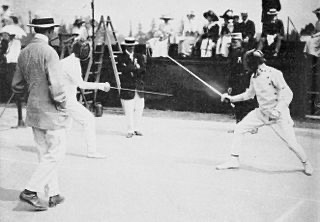
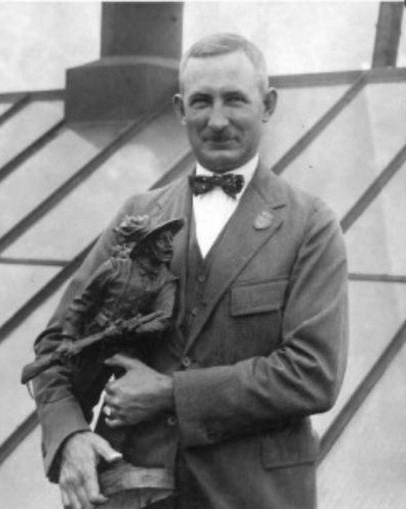
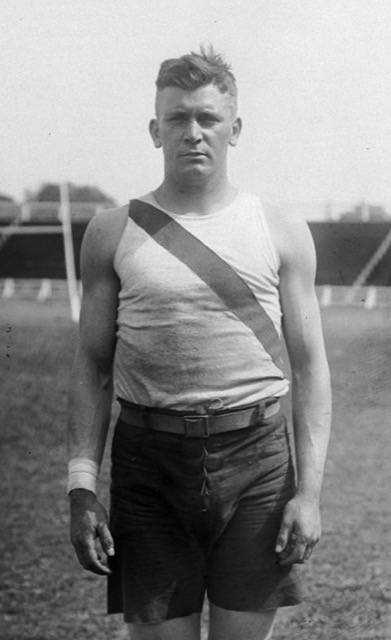
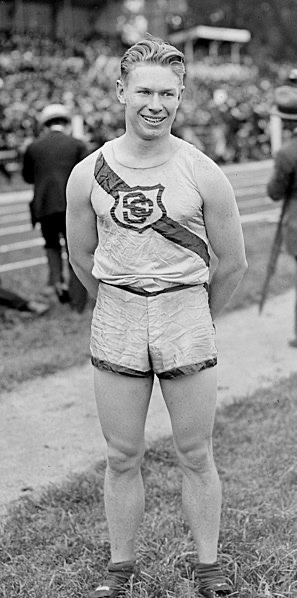
With the Olympics up and running, some of my students wanted to spend a little time discussing it. None of them are happy about where it’s being held, calling it the “genocide games.” (Personally I agree with them wholeheartedly.) Then one student asked me what I remember of the Olympics in the “old days.” Really? Define “old!” With that, it was time to get back to our discussion of Jackie Fisher and Dreadnoughts. But since this is a military history class, I did find some photos of men who were in the US military and competed in the Olympics–before even I was born. The students enjoyed, them, and I thought you might like them too.
George Patton, USA, pentathlon, 1912 Olympics, Stockholm
Carl Osburn, USN, shooter, 1912 Olympics, Stockholm
Harry Liversedge, USMC, shot put, 1920 Olympics, Belgium
Charlie Paddock, USMC, 100m sprint, 1920 Olympics, Belgium
Champerlin, Thomson and Tuttle, USA, equestrian, 1932 Olympics, Los Angeles
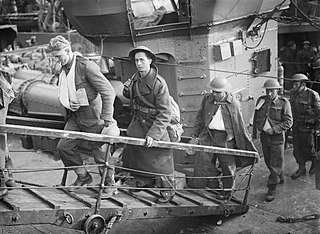
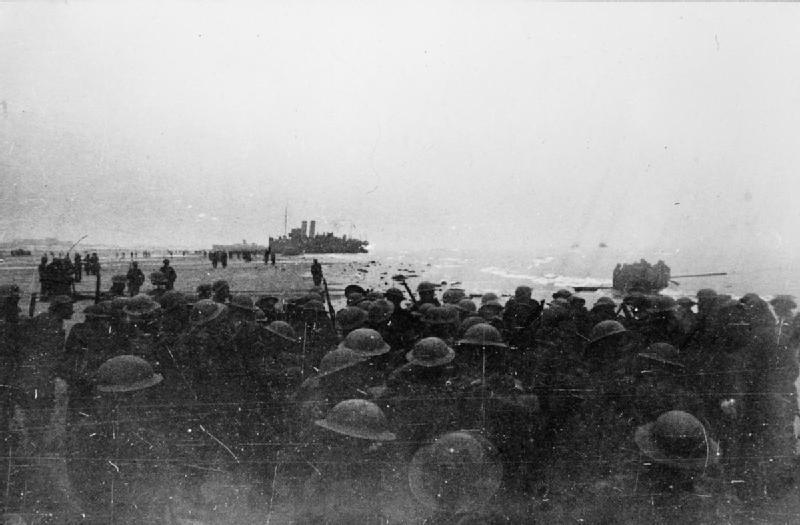
A friend and I were talking the other day. She’s a “non-historian” and asked me if I could suggest any movies about World War II that are both good movies, and good history. Well, I’ve got a long list, but I suggested the film Dunkirk. (I should add that the pictures below were taken in 1940, not by the film camera crews.)
First, let me give you the two minute history lesson so we’re all up to speed. Though World War II started when Hitler rolled into Poland on September 1, 1939, nothing happened in Western Europe. In fact, people in the UK and France were calling it the “Phony War” until May 10, 1940. Then all hell broke loose. German Army Group B invaded the Netherlands, moving south-west toward France. On the 14th, other German troops broke through the Ardennes and turned west to basically force the French and the British Expeditionary Force (BEF) to fall back toward the English Channel, not at Calais but toward Dunkirk. Then, suddenly, the Germans stopped in their tracks. Von Rundstedt and von Kluge wanted to take three days to consolidate their forces and then make one last push, forcing the Allies to surrender. Surprisingly, Hitler agreed to it.
The British were also surprised but didn’t waste any time. Three days bought them more time to get as many men as possible back home. They would have to leave most of their materiel—everything from trucks to artillery and mortars. Most men came back with their pistols, rifles, a few machine guns and the clothes they were wearing. But you can build more weapons—you can’t build more men. From May 27 to June 4, 213,000 Britons, and 123,000 French, Poles, Belgians and Dutch, went to sea on everything from destroyers to ferries, fishing boats, commercial vessels and pleasure boats that came from as far as the Isle of Man and Glasgow–861 vessels in all. Of those, 243 were sunk, usually from bombing runs from the Luftwaffe.
I had a little time this weekend so I binge-watched the movies again–yes, movies. The first Dunkirk was released in 1958. It’s black and white, which actually adds to the almost palpable tension seen throughout the battle and evacuation. The 1958 version is shown from two perspectives. It starts with a British corporal who takes what’s left of his squad through the Nazi-held French hedgerows to the Dunkirk beaches. There they, and thousands of others, wait for ships which they pray will come. We watch them deal with periodic German Stukas strafing across the beaches, Wehrmacht artillery barrages, and Luftwaffe bombardments. On the other side of the Channel we see that people are quickly realizing that appeasing Hitler has failed. A “hot” war has replaced the Phony War. Navy ships, particularly British and Canadian destroyers would bring back large numbers of men, but that wasn’t enough. Hundreds of small boats, many requisitioned by the Navy and many others whose skippers went on their own, set sail for the 45-mile trip to Dunkirk. Many troops did board the destroyers, but watching thousands of men waiting chest-high in the water holding their rifle above their head for hours is wrenching–and historically accurate. Interspersed throughout the movie is actual footage taken by both the British Army and Navy. It’s a powerful and haunting film.
Then on to Dunkirk (2017). The color in this film is magnificent. Again, it follows men trying to get to the beaches–through German rifle, machine gun and mortar fire. And once on the beach, more Stukas, artillery and bombs–and there’s no place to take cover on a beach. You can feel the desperation of men waiting to get off–most resigned and following orders, a few trying to find any possible way out. We also look at Dunkirk from the perspective of those at home, where they realized that it was up to them to get the men back. Here too, we can see the thousands of men who managed to get off the beach to destroyers. In addition, by following one man with his teenaged son and the boy’s friend, we begin to understand what it was like at sea. A shell-shocked soldier (known as PTSD today) who they pick off a capsized vessel, men they pull out of the sea who were covered in oil when their ship exploded–a significant metaphor for so much of the evacuation. What is new to this film as what happened in the air. Focusing on several members of the Luftwaffe and RAF Spitfires, it sounds as though you’re sitting right behind the cockpit, hearing and seeing everything. It’s is a fortaste of the coming Battle of Britain which began on July 10, 1940.
A fitting end to the evacuation of Dunkirk, though not seen in either film, was Churchill’s speech on the evening of June 4, part of which we all remember…“We shall fight on the beaches, we shall fight on the landing grounds, we shall fight in the fields and the streets, we shall fight in the hills; we shall never surrender…”
If you’re interested in learning more about Dunkirk, you might enjoy Walter Lord’s The Miracle of Dunkirk or Julian Thompson, Dunkirk: Retreat to Victory
The phrase “quid pro quo” is all over the TV, radio, and internet these days. It’s a phrase that’s been used for literally hundreds of years (hence the Latin) and lots of people are acting like it’s unusual—something that only professors or lawyers would use. It’s not. It literally means “what for what” or “something for something” or “give and take.” My old Webster’s dictionary says that it’s something given or received for something else. If we put it that way, there’s nothing fascinating about it.
We use quid pro quo’s all the time. Everything from “I’ll take out the trash if you make the bed” to buying a car (money in return for a car) to the Louisiana Purchase when the US paid France $15 million (that was in 1803 dollars!!) for 828,000 square miles of land. Since then, hundreds of quid pro quo’s had been part of the foreign policies in the US, and most other countries. One quid pro quo of tremendous significant was the destroyers-for-bases deal of 1940.
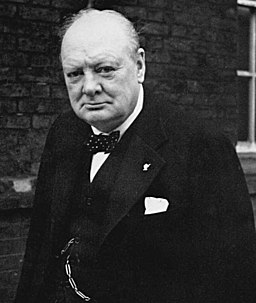
Prime Minister Winston Churchill
After World War I, Congress passed a Neutrality Act in 1935 which banned the sale of arms to any belligerent nation. Fast forward to September 1939 when Germany went to war again. Initially it seemed that Hitler’s Wehrmacht was only interested in Central and Northern Europe. Those not involved actually called it the “Phony War”—until May 10, 1940, when Germany attacked Western Europe, crushing the Netherlands, Luxembourg, and Belgium. Then they turned toward France, which surrendered on June 22, 1940. Shortly before the French capitulated, 800+ British boats of every imaginary type plucked 338,000 members of the British Expeditionary Forces, along with thousands of French, Belgian, Polish and Dutch soldiers, off the beaches of Dunkirk. (If you don’t know much about this, watch the film Dunkirk. Fantastic!! ) Yet while they managed to get the men to Britain, they lost an astonishing amount of materiel, and even worse, six destroyers went to the bottom, and 19 were badly damaged. Great Britain was on her own, and needed help!
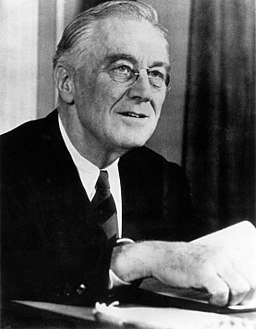
President Franklin Roosevelt
Prime Minister Winston Churchill and President Franklin Roosevelt already had a good working relationship, and on May 20, shortly after Churchill became PM, he wrote to FDR saying that Britain could really use help from the US, particularly regarding shipping, and asked if it would be possible to get 40 or 50 World War I destroyers. Little came of it. At the end of July, Churchill wrote again. Not only was England basically on her own, but now it was clear that Germany was making plans to cross the Channel. (Operation Sea Lion—thankfully the Battle of Britain prevented the cross-channel invasion) It was vital for Britain to have those ships while she repaired the damaged destroyers and ramped up new ships. Churchill also reminded Roosevelt that if Britain fell, it would leave the Americans alone, and it would be much better for the two nations to fight Hitler together.
At the same time that Churchill was asking for help, Roosevelt was running for his third term as President. He had recently pledged not to get involved in any overseas wars unless the US was actually attacked. But he knew that Churchill was right—Hitler had to be stopped, and the further from American shores the better! However, he couldn’t just sent theships to England—that would clearly violate numerous laws. At the same time, he wanted to start expanding our own military, but many Americans were isolationists to whom he had just given his word not to get involved, and he needed their votes. How to do both?
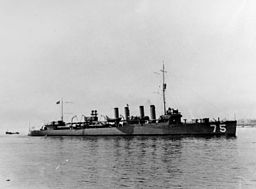
Wickes-class destroyer c. 1917-1919
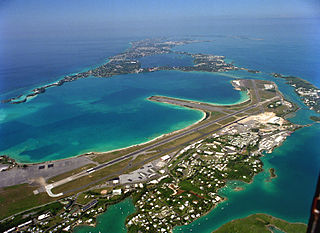
Roosevelt concluded that the way to do what he wanted was another quid pro quo. The US should let the British have the destroyers but in exchange, Britain would lease bases to the Americans. But would it cause a Constitutional problem? Roosevelt turned to the Attorney General, Robert H. Jackson, later Associate Supreme Court Justice and Chief US Prosecutor of the International Military Tribunal at Nuremberg. Jackson advised the President that he could go ahead with the deal because of his authority as Commander in Chief. So, on September 3, 1940, FDR signed the Executive agreement that gave 50 Caldwell, Wickes and Clemson-class World War I destroyers to Britain in return for bases in Newfoundland, Bermuda, the Bahama, British Guinea, Antigua, Jamaica, St. Lucia and Trinidad. Churchill got his destroyers, and FDR got the bases—and despite vocal isolationist opposition, the President went on to have both a third, and ultimately a fourth tern. Over the following 80 years there have been thousands of win-wins (aka quip pro quo’s) between individuals, companies, and nations. Something to think about?



 Historical Lense