We Are Not Amused🤨

Teaching as long as I have, I’ve made friends throughout the country, and a number in Canada too. Texas, Nebraska, South Dakota, Virginia, New Jersey, Alberta, British Columbia, you name it. Phones, FaceTime and now Zoom keeps us connected. And in the past three weeks, almost everyone I’ve spoken to is annoyed. Over the stopping of the Keystone XL Pipeline.😠 I mean, really annoyed.😡 And, in truth, so am I.😤

Apparently, the new administration believes that banning the pipeline will be a boost for climate change. Really?! If that’s the case, why are other countries, which have signed on to the Paris Climate Accords, working aggressively to build pipelines which can provide them with oil and natural gas? Nations like Germany, Azerbaijan, southern Europe and Canada.
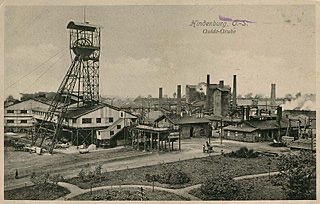
Picture of a German coal mine in the early 1900s

Germany currently gets 40% of its electricity from coal. Now, they’ve moved from black coal to brown coal, but at the end of the day, coal is coal, and it certainly releases a great deal more CO2 than gas. Chancellor Angela Merkel is moving forward with the NordStream 2 pipeline with Russia which will bring natural gas from Russia through the Baltic Sea to Germany.

Then there’s the Caspian National Gas pipeline. Completed on time (December 31, 2020) and under budget, it’s one of the first of a number of pipelines. The Southern Caucasus Pipeline, is underway, and countries including Turkey and Italy hope that the Trans-Anatolian Pipeline and Trans-Adriatic Pipeline, will provide gas to Southern Europe. Turkmenistan and Azerbaijan forged a deal just a few week ago. Why? Because at this point, renewable energy provides only a tiny fraction of the electricity and fuel that these growing nations need. Gas is infinitely cleaner than the current alternatives and can provide what is necessary.

Engineers, pipe fitters and assorted trades put together a portion of a pipeline

And what about Canada, our friend and ally for 150 years? When President Biden stopped the Keystone XL Pipeline, Prime Minister Justin Trudeau was openly upset. And so was Alberta’s Premier Jason Kenny, who called it a “gut punch,” and believes that it will definitely hurt our mutual working relationship. American and Canadian workers–10,000 workers–lost their jobs. But actually it’s more like a minimum of 60,000 direct and indirect jobs that will be lost in short order. Union representatives, starting with Richard Trumka, President if the AFL-CIO, many Governors and state officials, US Representatives and Senators all know that stopping the pipeline will be very painful for a very long time. Most importantly, everyday people who work for a living, are saddened, scared, and distressed.

We all understand that climate change is an extremely serious issue, but let’s think about this. Using gas rather than coal has brought down greenhouse gas emissions in the US to 1992 levels–leading the world in carbon emission reductions. But stopping the pipeline means that the oil or gas will have to go by trucks or trains, and that will seriously increase emissions. That is a wrong-headed idea on every level. Members of the EU and the Paris Accords are ready and willing to use pipelines rather than trucks because they understand the benefits. Our government, on the other hand, prefers to increase emissions and throw people out of work on the vague promise that they will find other jobs sometime in the future–possibly jobs making solar panels, most of which are made in . . . China, which is one of the worst climate offenders in the world.😳

The Canadians are assessing what they will do now, while still speaking to the Biden administration. Some union leaders say they are having discussions with high level government officials. Hmmm. State and local officials keep pressing the White House to keep the Keystone Pipeline alive. Right now things seem bleak. But as one of my former grad students told me—“we’re writing our Congressman, and we’ll keep writing till they fix it or we’ll vote for someone who will!“

Lai, Lee, Wong . . . Who’s Next?

Last week I posted about the serious need to help the small and medium-size gyms, not only to keep them afloat, but also because of the serious health benefits good gyms provide all of us. Covid-19 has, understandably, focused all of us close to home. We’re working hard to keep family, work and school on an even keel. That gives us little time or energy to look outward. Between the virus and the election, Hong Kong has been on our back burner–and China has taken full advantage of that. So let’s take a minute and see what’s been going on in Hong Kong for the past few months.

Since the summer, with Beijing’s new National Security Laws now in place, China is closing the noose around Hong Kong tighter every day. Many Hong Kongers are quietly making their plans–either stay and fight, or sell their property and leave. Taiwan, the UK, Canada, Australia and the US are ready to help, but it’s a difficult process to leave Hong Kong–especially since it’s not known if Beijing will continue to recognize Hong Kong passports. There are also questions because many, but not all Hong Kongers have dual passports.

Jimmy Lai and Martin Lee at a 2019 protest in Hong Kong

On August 23th, 12 Hong Kongers, between 16 and 33 years old, tried to use a speedboat to make a 400-mile dash from a quiet cove in northeastern Hong Kong to Taiwan. All of them had been very involved in the massive demonstrations in 2019. They only made it 36 miles before the Chinese equivalent of the Coast Guard stopped them. They ended up in jail in Shenzhen province, just across the border in China proper. They are charged with everything from riot to weapons charges. Another nine people were charged in October. They may receive up to 10 years in prison for allegedly helping the “Hong Kong 12.” It’s estimated that over the past few months 10,000 Hong Kongers have been detained.

Chinese leadership recently announced it is beginning to impost “comprehensive governance” for the next five years. “Comprehensive governance” means direct rule from Beijing–no democratic rule, no civil liberties in Hong Kong. Then the Council of Hong Kong expelled four members of the Civic Party, one of Hong Kong’s numerous pro-democracy parties. The remaining 15 members of the party resigned from the Council in protest, leaving what we’d call the “rump” of the Council to do Beijing’s bidding.

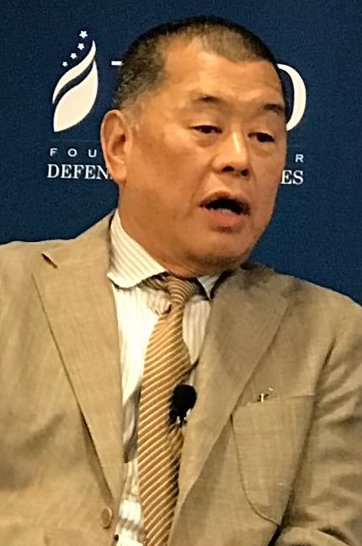
Jimmy Lai

Also in October, police raided the offices of media mogul and pro-democracy leader, Jimmy Lai, the owner of the Apple Daily newspaper and Next Digital magazine. He could certainly leave if he wanted to. He doesn’t. He had arrived in Hong Kong as a child who had stowaway on a fishing boat, and worked his way up from literally nothing. Later that month, more than 100 police took him into custody. He proudly walked out of his firm in handcuffs which he, and so many Hong Kongers considered a badge of honor. He’s currently out on bond but will go on trial for sedition and collusion with a foreign power. Then came the announcement that Martin Lee, the Father of the Hong Kong democracy movement who had been working for a free Hong Kong since he fled from China in 1949, had also been arrested. At the age of 82, Lee has said that he will not leave even if he dies in jail. “Dying without my convictions is what would really give me pain.” (WSJ Nov. 16, 2020)

Martin Lee

It’s not just the older people who are staying. Many students and young people are staying too. For instance, Joshua Wong recently pled guilty and is held in solitary confinement for organizing an illegal protest near Hong Kong’s main police station last year. He knows that he can spent the next three years in jail, but he also knows that the fight for freedom will continue. According to Michael Yon, the well-known war correspondent who spend six months with the protesters, this is a serious insurrection. The fact that the US has put severe restrictions on banks in Hong Kong has given renewed hope to the freedom fighters. However, they are very concerned that the new administration may not stand with Hong Kong the way the current administration has.

The reason that I posted this update is because as difficult as things are here, the Hong Kongers are in a much worse position. The day is coming–hopefully sooner than later🤞–when we may go back to something close to normal. Left to the mercies of Beijing, what will Hong Kong be like by them? What could we do about it? Like I said in the last post–write your congressman/woman and insist that the US continue to put pressure on China, what we can to stand with a free Hong Kong.

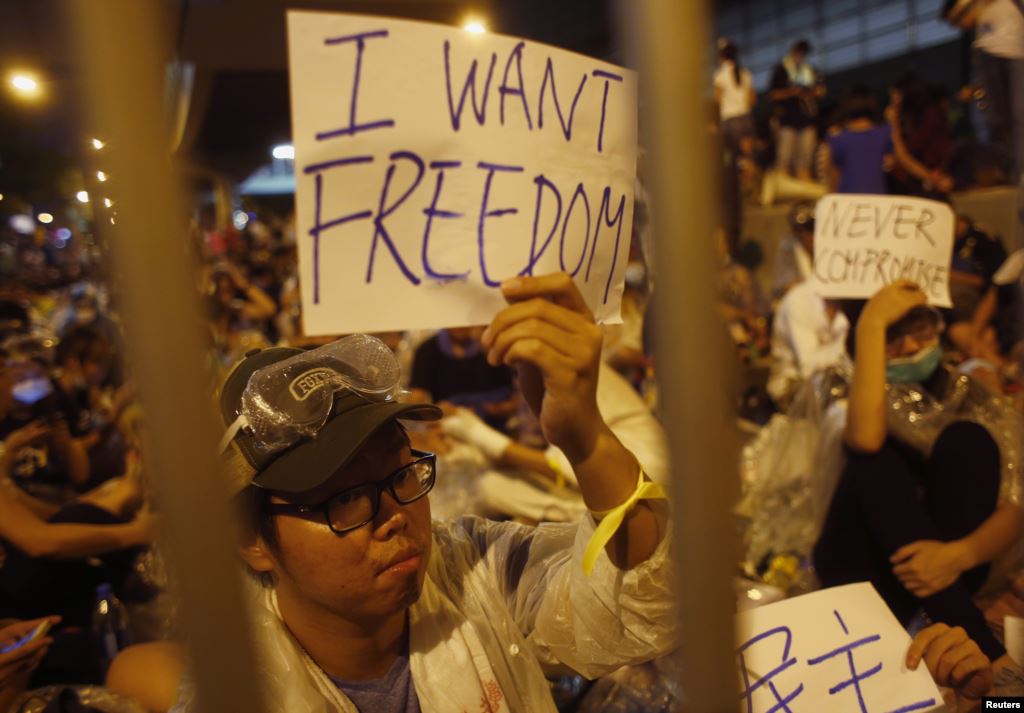
FREE HONG KONG
photo from VOA