Sunday will the be the 77th anniversary of the D-Day landing on the Normandy beaches in France. Most of us remember the stories of the thousands of American, British and Canadian troops who landed on the beached–though there were also men from Australia, Belgium, Czechoslovakia, Denmark, France, Greece, the Netherlands, New Zealand, Norway and Poland who participated in the amphibious assault. What we often forget is that earlier that morning, MajGen Matthew Ridgeway and paratroopers from the 82d (All American) and BGen Maxwell Taylor and the 101st (Screaming Eagles) Airborne Divisions parachuted into France. Called Operation Neptune, the plan was to assist in taking Cherbourg, which would be the fasted way to land supplies needed for the long road to Berlin.

Work on Operation Neptune started in late February 1944. Originally the paratroopers expected to prevent German troops from attacking the Allies landing at Utah Beach, defend the causeway coming off the beaches, and holding the Douve River at Carentan to give time for the American V Corp to merge the two US beachheads. Ultimately planners decided that the 101st would hold the area west of Utah beach, while the 82d would land more inland and hold the bridge along the Douve. During most of March and early April, well over 1000 C-47 Douglas Skytrain troop carriers arrived in Great Britain. Pilots, navigators and paratroopers trained both separately and together. By the end of April both planners and troops believed they were ready to go.
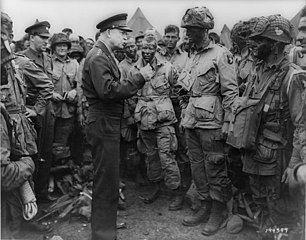
Shortly before midnight on June 5, the first planes–companies of Pathfinders–took off. The Pathfinders would land earlier than the paratroopers and set up transponder radar ground beacons and holoplane marking lights to guide the rest of the troops to their designated landings. Unfortunately, many of the beacons and lights in both the 82d and 101st divisions had a variety of problems–some worked intermittently, while others didn’t work at all. But that was only the beginning of the issues that befell the paratroopers that morning. Despite all the training of the past three months, they were still needed additional navigators. Radio silence meant that pilots could not exchange important information. Given the bad cloud cover and fog, pilots often dropped the paratroopers either too high or too low, or in the wrong landing zone. And of course, antiaircraft and flak was always a problem.
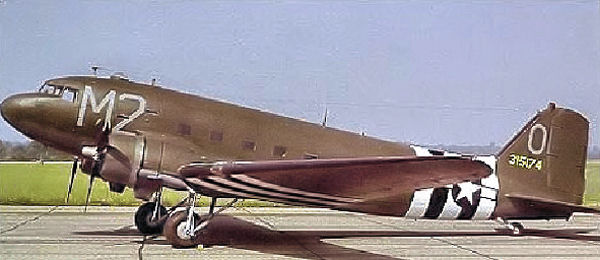
Despite all those issues, the 82d and 101st Divisions took off from Portland Bill on the southeast coast of British shortly after the Pathfinders. Their jump started at 00:48 am June 6. Unfortunately, because of the lack of the lights and beacons, in addition to the same issues that the Pathfinders had had to deal with, many of the landings went horribly wrong. Often blown off course, many men had no idea where they ended up. Many of them didn’t land anywhere near other members of the platoon they had jumped with. Gradually small groups of men met up and put together squads from a number of different units. Eventually they hooked up with other larger units and started to move toward their assignments. It took days for the units to get straightened out. However, despite all the confusion, members of the 82d did take and hold Ste-Mere-Eglise, and the 101st did protect the Carentan’s flank.
So as we remember D-Day and the men who stormed the beaches at Utah, Omaha, Juno, Sword and Gold beaches, we should also remember the paratroopers of the 82d and 101st Division. Three hundred and thirty-four men died, 904 were wounded, and 1257 were missing in action. Hopefully we thought about them on Memorial Day. If not, now may be a good time to do so.
🙏 D-Day . . . Never Forget

 Historical Lense