The US and about 40% of the nations in the world switch between standard time and daylight savings time. This Saturday/Sunday, November 6/7 is the day when the US turns our clocks back one hour–we “fall back.” Then we “spring forward” an hour on the second Saturday/Sunday in March. I did a quick survey this week–asked over 45 people I ran into when I was out and about–if they think this is a good idea. Two said yes. Forty-three said no. (With a variety of expletives which I can’t say in polite society.) Where did this idea come from? And is it really a good idea?

Benjamin Franklin first came up with the idea. He believed that having another hour of daylight would save money on candles, but it didn’t take off the way so many of his other ideas did. It really came to national attention in May, 1916, in the middle of World War I, when the German government believed that daylight savings would save fuel. The British and French started doing the same in 1917, and in 1918, the US joined them. At the end of the war, President Wilson wanted to continue that system, but many people, particularly in the rural US, hated the idea because they would loose an hour of daylight they needed on their farms. Wilson relented. Daylight Savings Time–then called War Time–returned during World War II, again because the government believed it would save fuel.
Daylight savings remained after the war, though the times were different in different parts of the country. In 1966 Congress passed the Uniform Time Act in which Daylight Savings Time began on the first Saturday/Sunday in April and changed to Standard Time on the last Saturday/Sunday of October. Congress again changed it in 2007 to the current November and March system. Why do we do this? Largely because the Department of Transportation (DOT) thinks that it saves energy and prevents accidents. As usual, I dod some research. It does NOT seems to work out like the DOT believes it does. In fact it’s pretty much the opposite.
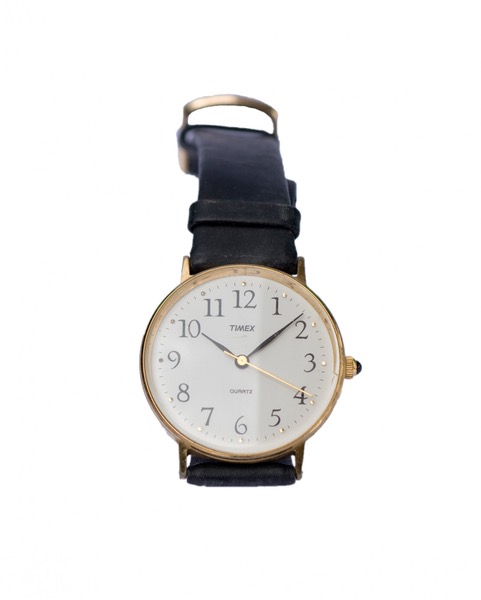
Perhaps the use of energy in the World Wars, when we used mountains of coal, was a factor, but it really isn’t these days when we use natural gas renewables and even clean coal. In fact, the energy saving these days is from slim to zero. Work at the Oak Ridge National Laboratory finds that since electricity has become so efficient in the recent past, the cost savings of power is negligible.
Now let’s take a look at accidents. Peer-reviewed information from Current Biology shows that there is a 6% increase in car accidents for several days when we “spring forward.” (There are lots more journal articles–I just don’t want to bore you.) And that also means a significant increase in ER visits. Everything from a few bumps and bruises to traumatic injuries and death. And ever if we didn’t care about peoples, (though I believe most of do) the increase in medical costs is significant.

Why all the accidents? Because of sleep deprivation. And one hour can definitely make a difference. We all have a circadian rhythm–and internal clock–which tells each of us when we need sleep. What happens when we don’t? If we’re lucky we just feel tired and out of sorts for several days. But we can also end up in the ER. And if we drill down a bit, according to the Journal of Clinical Medicine in a 2019 report, they find higher numbers of heart attacks when both “sprinting forward” and “falling back.” The American Association of Cancer Research journal Cancer Epidemiology, Biomarkers and Prevention discussed the influence on Daylight Savings and Standard time with cancer. A 2015 Finnish study Sleep Medicine discusses the fact that in addition to cancer and heart attacks, there is an 8% increase in strokes in the days after the transition in DST. Most people who do shift work will tell you that even if they are careful and try to get sleep during the day, it’s still more difficult to work at night.
Because of these, and so many more issues, 15 states want Congress to stop changing the time twice a year. They don’t care which one, just pick on and stay there!!!
 Historical Lense