Dereliction of Duty

This is my 100th post, and I had planned to write something completely different. But things can change in the blink of an eye, so I hope you won’t mind my personal thoughts on what’s going on in Afghanistan as someone who grew up with Marines, and has been a military historian for 45 years.

First, let’s define the phrase “dereliction of duty.” Basically it’s either deliberately refusing to perform one’s duties, or being incapable on some level of performing his/her duties. If you want to read the specifics, take a look at Article 92 of the Uniform Code of Military Justice. As Commander-in-Chief of the US military, the President of the United States is in charge of overseeing all diplomatic and military missions. My personal belief is that the President has been derelict in his duties in the drawdown in Afghanistan.

The problem is not whether or not we should leave Afghanistan. Presidents of both parties have wanted to leave, though keeping s small residual force to provide intelligence and avoiding a resurgence of al Qada. The problem is HOW we’re leaving. We are in the middle of an unmitigated disaster which the President brought on his country. Specifically, our military, our civilians in Afghanistan, the translators and other Afghanis who worked with the Americans, our NATO allies who fought (and died) alongside us. And the Afghan women and girls who have become doctors, nurses, journalists, teachers, lawyers etc., are now being send back into the Stone Age. (And if that weren’t bad enough, in the cut-and run orders, we left billions of dollars in in weapons from bullets to night vision goggles, to helicopters.) He received numerous intelligence estimates for months., and much the same from high-ranking officers in both the Pentagon and State Department.

He was tole that if he wished to draw down from Afghanistan, there’s a reasonable way to do so. You quietly start taking out our civilians first. Then you quietly start taking out the Afghanis and their families who worked with us. You make sure that our allies are getting their people out, then the few remaining embassy personnel. Only then does our military leave.

Instead the C-in-C has left tens of thousands of people stuck in Kabul and other parts of the country. The military was ordered to leave immediately–including Bagram Air Base–the safest and fastest airport to use. Then, when it became clear that the Taliban were in charge, the State Department told the Americans and Afghan partners to get to the Hamid Karzai Airport in Kabul. Of course, they would have to get through Taliban check-points and through the gates which are help by the Taliban. This entire debacle has little to do with military options. The decision was made for purely political reasons–and even that isn’t working out the way it was expected.

If you don’t believe me, ask a friend who’s spent time in the military. I did an informal pole this morning with several of them–including a Marine who’s been a second lieutenant for all of two months–and every one said that this drawdown was an obvious disaster from the beginning. Or take a look at the Wall Street Journal or The Washington Post or the Examiner. You can look at Reuters or the AP or the Daily Mail online. Maybe watch some of the discussions in the British Parliament on Wednesday evening. Go online and listen to what Emmanuel Macron of France, Angela Merke of Germanyl, or even Prime Minister Draghi of Italy. It’s the same everywhere.

Think about Wake Island. Chosin Reservoir. The burning of the Capital during the War of 1812. Americans have lost many times. But we have never run away. No president has ordered our men to leave. And that’s why I believe that he had been derelict in his duty, and should resign.
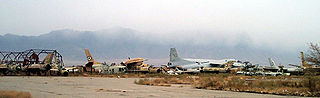
Hamid Karzai Airport’s commercial terminal

BATTLEGROUND–Review

Right before I started reading H.R. McMaster’s new book, Battleground, I got a phone call that left me speechless with my hair on fire🤯 . . . and I don’t have any hair to spare!!! Someone I’ve known since high school told me that the Board of Ed has decided to drop history from the core curriculum–it will only be an elective. I’ve paid attention to that school over the years, and it’s been one of the three best schools in the state. Have they lost their minds? I took a quick survey of other school districts, and was . . . let’s just say not a happy camper . . . to see that it’s happened is some other schools.😱 Now, I’m a great proponent of STEM (science, technology, engineering and math). Most of my family is involved in those areas–I’m the outlier. But even they are grudgingly glad that they learned some history. As a cousin (another science-type) recently said to me, if we don’t know where we came from–the good, bad and ugly–we won’t know where to go from here. So, to calm myself down a bit, I picked up McMaster’s book, and as I turned the pages, I found an interesting sub-text about history, in addition to his commentary.

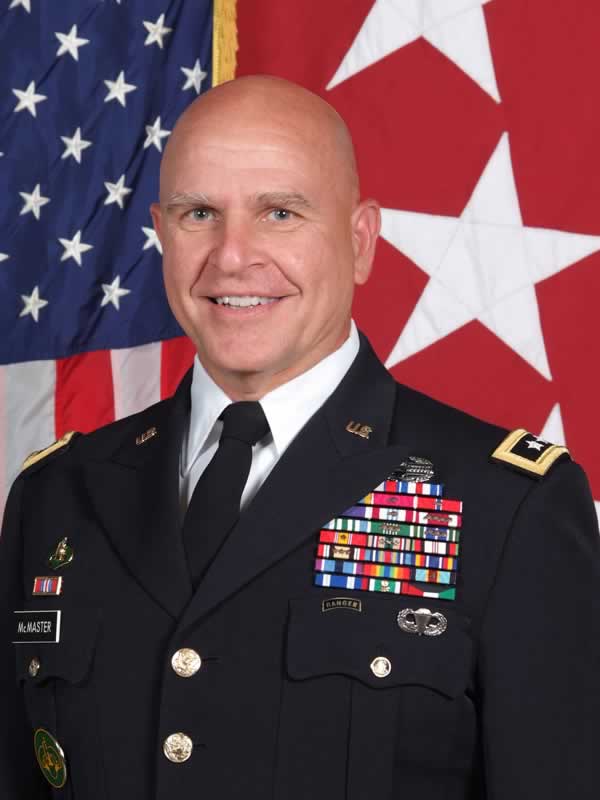
So who is Herbert Raymond McMaster, and why did he write this book? McMaster was born in Philadelphia in 1962, and graduated from the US Military Academy at West Point in 1984. He later earned a Ph.D. in American History from the University of North Carolina at Chapel Hill where he wrote his dissertation on the Vietnam War. He later turned it into an important book, Dereliction of Duty. During the 1991 Gulf War he was a captain commanding Eagle Troop of the 2d Cavalry Regiment at the Battle of 73 Easting. He later taught Military History at West Point, and held a number of positions in US Central Command. In 2004 McMaster served as commander of the 3d Cavalry Regiment and fought the Iraqi insurrection at Tal Afar. By 2012 he was Deputy Commanding General of Army Training and Doctrine Command. He was surprised when, in February 2017, he was offered the job as National Security Adviser to the President, which he held until April 2018.

MajGen. H.R. McMaster

Many people looked forward to McMaster’s book, hoping to read about his relations with President Trump. They were disappointed. After his time as National Security Adviser, McMaster preferred to write about current geopolitical issues. He has an interesting perspective–actually an historical perspective. (And there’s the sub-text. He believes that an understanding of history is key to how we can, and should, deal with other nations.) He’s not an isolationist. Nor does he believe that the US must atone for all the sins ever done throughout the world. He is much more of a realist who uses diplomatic and military history, current geopolitical events, personal discussions and intel to put together solid options for an administration.

He frequently suggests that American “strategic narcissism” is a serious issue and has been for many years. Hans Morgenthau originally came up with that term explaining that it is a way of “viewing the world only in relations to the US.” McMaster suggests that both Democratic and Republican administrations have the same problem, and perhaps we need to make a subtle, but difficult shift to “strategic empathy.” Using his personal experiences, and his serious understanding of history, he discusses significant issues with China, Russia, North Korea, Afghanistan and Iraq. He clearly and concisely explains what we did wrong, and then makes some suggestions of ways to move forward, including, in some cases, working in conjunction with our allies.

This was an outstanding book on many levels, and I had some solid discussions about it with several colleagues. Not only did we talk about McMaster’s perspectives, but it was so obvious to us that there is a very sensible reason to keep teaching history. It’s actually useful. It can show you what didn’t work, and what did work. Nice not to make the same mistakes over and over isn’t it? You don’t need to believe me or my colleagues, we’re historians. We’re biased. Ask someone like McMasters.

Link for more information on this book. https://www.harpercollins.com/products/battlegrounds-h-r-mcmaster