In honor of Woman’s History Month, I thought we could take a look at an amazing Ukrainian woman, Lyudmila Pavlichenko. She was born on July 12, 1916, in Bila Tserkva in the Kyiv Oblast of what was then Russia. Her family moved to Kyiv in 1930 where she worked as a grinder at the Kyiv Arsenal Factory. She admitted that she was extremely competitive and a bit of a tomboy, and was delighted to join a shooting club in Kyiv, where she became an excellent sharpshooter. In 1937 Lyudmila entered the Kyiv University (studying history🥰). But life changed on June 22, 1941, when Germany invaded the Soviet Union.
Lieutenant Lyudmila Pavicenko, Hero of the Soviet Union
Like so many others, she immediately volunteered, and ended up in Odessa, where she was ordered to Nurses Training. She refused, insisting that she would be more useful as a marksman. She was assigned to the Red Army’s 25th Rifle Division. Weapons were in short supply, but when a sniper in her unit was wounded, she took his Mosin-Nagant 189 bolt-action rifle and immediately shot two Germans. With that, she officially became a sniper. Pavlichenko spent the next ten weeks at the siege of Odessa, during which she accrue 187 kills and quickly was nicknamed “Lady Death.”
As the Romanians wrested Odessa from the Soviets in October 1941, the Russians withdrew toward Sevastopol, in Crimea, which also came under siege. By May 1942, the new Lieutenant was cited by the Southern Army Council for having another 257 kills. In June, she was hit with shrapnel from a mortar. She was evacuated via submarine and spent a month in a hospital in Moscow.
Lyudmila Pavlichenko c.1942
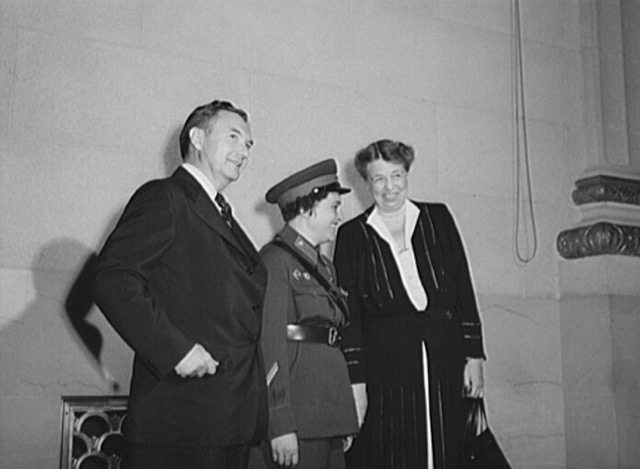
With a total of 309 kills, Pavlichenko was more important to the Soviets as a spokesman than sending her back to the front. Instead, she went on a propaganda tour throughout the country. She then was out a tour to both Canada and the US where she met both Franklin and Eleanor Roosevelt at the White House, and spoke in both Chicago and New York City. On returning to the Soviet Union, she trained new sharpshooters and snipers until the end of the war.
Justice Robert Jackson, Lt. Lyudmila Pavlichenko and Eleanor Roosevelt
After the war, she went back to Kyiv and graduated from the University with her history degree. Ultimately she became the Senior Researcher for the USSR’s Navy Headquarters. After dealing with what we now understand to be PTSD for years, she died of a stroke at the age of 58 in 1974.
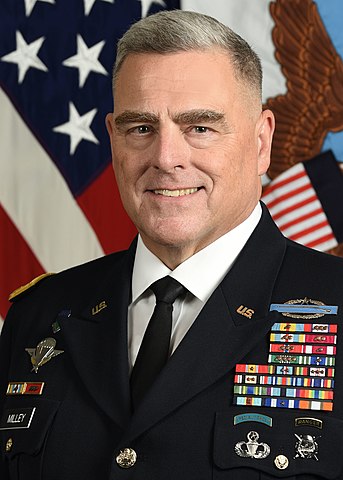
Next week, the head of the Joint Chiefs of Staff(JCS), General Mark Milley, is going to be on the hot seat in Congress regarding his involvement in the US debacle in Afghanistan. Add to that the comments in the new Woodward and Costa book regarding the General’s conversations with his opposite numbers in China. Some say they were standard discussions. Others believe that he was trying to overthrow the duly elected president and at the very lease should resign immediately. Should he stay? Or should he go? The Congressional hearings will be key to his future.
U.S. Army Gen. Mark A. Milley, 20th Chairman, Joint Chiefs of Staff, poses for a command portrait in the Army portrait studio at the Pentagon in Arlington, Va., Sept. 26, 2019. (U.S. Army photo by Monica King)
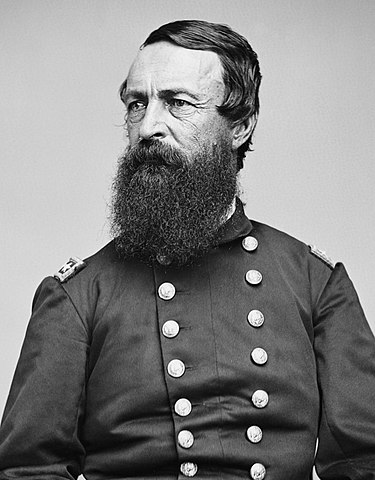
Yet a number of my students—friends, too, don’t really know how the JCS came about. For that we really should go back to the War of 1812. The war’s ground campaigns were key, yet the naval battles on Lake Champlain under Capt. Thomas MacDonough were a major component of the ultimate success of the War. President Madison and the Secretaries of War and the Navy understood that joint operations were vital. Nor can we forget the importance of the joint operations of General Ulysses S. Grant and Admiral David D. Porter during the Battle of Vicksburg. By 1900, war had become so complicated that it was clear that joint operations could not be done on an “as needed” basis. In 1903, the US established a Joint Army and Navy Board that could set up joint ops. However, it wasn’t a fully integrated Board. Rather it was simply a planning board which could discuss issues. By the Great War, is still was not truly involved in the actual conduct of joint operations. After the War, the Secretaries of War and of the Navy redefined the Joint Board. It now included the two services’ Chiefs, Deputy Chiefs, the Chief of War Plans Division of the Army and the Director of Plans Division of the Navy. The Joint Board could now make recommendations for joint operations.
Admiral David D. Porter
This was headed in the right direction, until the attack on Pearl Harbor on December 7, 1941. In the Arcadia Conference (December 22, 1941-January 14, 1942) President Franklin Roosevelt and Prime Minister Winston Churchill set up the Combined Chiefs of Staff. For some time, the British Chiefs of Staff had established administrative, strategic and tactical coordination. It was clear to the Americans that to work closely with the Combined Chiefs, they would finally have to expand and coordinate the US Army and Navy planning and intelligence structures in an effort to provide advice to the Secretaries of War and the Navy, and to the President himself. To do so, the US set up a combined high command in 1942 that was called the US Joint Chiefs of Staff. Roosevelt wanted someone to be in charge, and looked to Admiral William Leahy.
Leahy was born in Iowa in May, 1875, and was graduated from the US Naval Academy in 1897. He served in the Spanish-American War, the Philippines, China, Nicaragua, Haiti and Mexico. During World War I, Leahy captained a dispatch boat that the Assistant Secretary of the Navy, Franklin Roosevelt used, and they developed a lifelong friendship. During the inter-war years Leahy held numerous posts and by 1937 he became the Chief of Naval Operation which he held until his retirement in 1939. Roosevelt then named him governor of Puerto Rico which he held until January 1941 when the President found that Leahy would be the best man to serve as ambassador to France–that is Vichy France. As ambassador he worked tirelessly to try to lessen the grip the Nazis held Vichy, but to no avail. After Pearl Harbor, Roosevelt ordered Leahy home, to serve as his senior military officer who would liaise with the chiefs of the Army and Navy. The US needed someone to work both with the President, and the chiefs, as well as the Combined Chiefs. All agreed that Admiral Leahy was the man for the job. He became the Chief of Staff to the Command-in-Chief of the United States on July 6, 1942.
Admiral William Leahy
With years of experience as a naval officer, and an innate understanding of diplomacy, he was able to wrangle all three US chiefs of staff–General George Marshall (USA), General Henry (Hap) Arnold (USAAF) and Admiral Ernest King (USN), and worked extremely well the the Combined Chiefs from the UK. When President Roosevelt died in April, 1945, President Truman requested that Leahy continue as Chief of Staff which he held until he retired again in March, 1949. He died at the Bethesda Naval Hospital in July 1959.
After the war, Leahy published his memoir, I Was There, which is one of the most honest memoirs I’ve read. He was not trying to add “spin” to any answers, wasn’t trying to “cover his six” by shifting responsibility to others. He was not a “political Admiral” like so many are these days. What would Leahy have thought about General Milley?
You may be interested in Leahy’s book, or a full biography of the Admiral as listed below
They started to inoculate the first group of people with the Pfizer covid-19 vaccine on December 14th, and the Moderna vaccine is on its way. We really are standing right at the end of the tunnel–and it’s taken all of TEN MONTHS to do it! I’m old enough to remember the Polio epidemic of the 1950s and the breakthrough vaccine. How very different it is today, both in the development of the vaccine and its distribution.
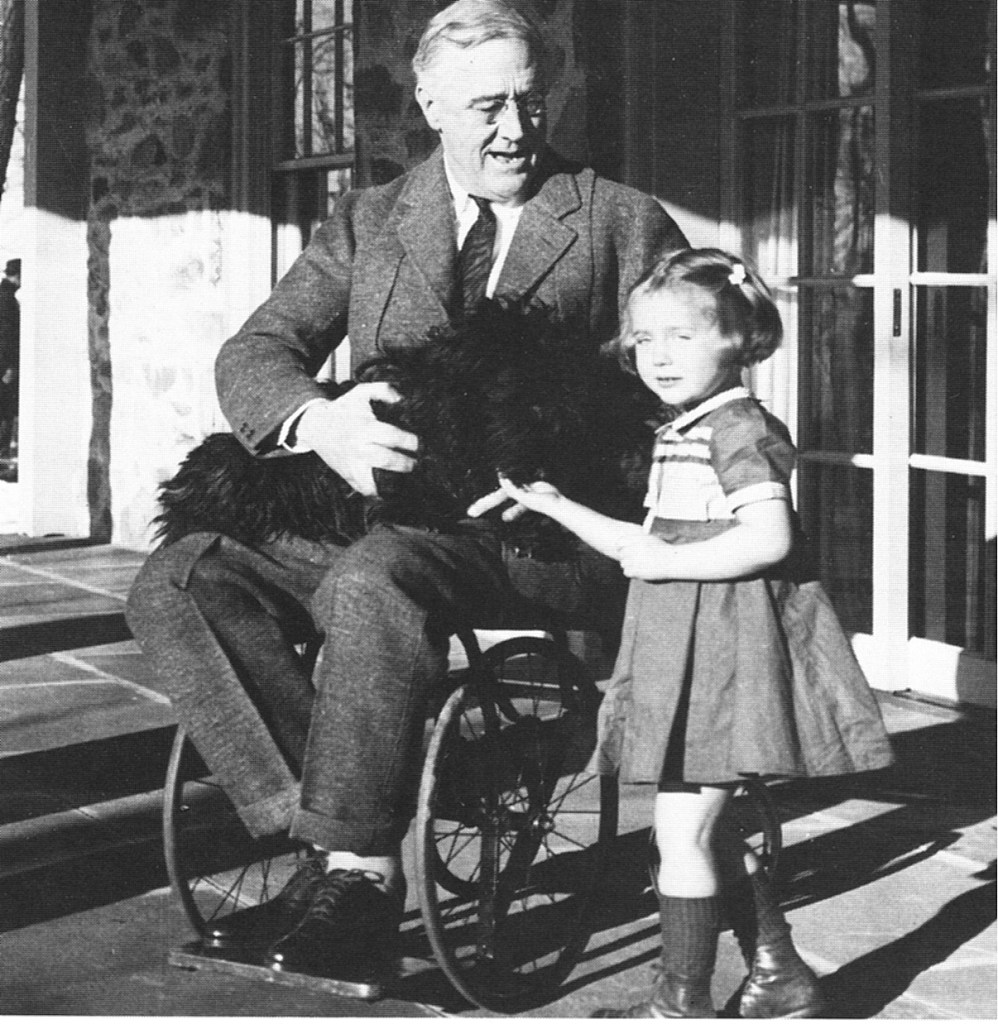
People have known about polio for years, but it became increasingly rampant in the beginning of the 20th century. Everyone was shocked when Franklin Roosevelt was diagnosed with polio in 1921. You’ll rarely see pictures of him standing–most of the time he’s sitting at a desk or in a car. On those rare photos where he is standing, he’s actually wearing very heavy metal braces and holding someone’s arm.
Franklin Roosevelt holding his dog Fala, with a young girl handing him a dime
In 1938 Roosevelt established the National Foundation for Infantile Paralysis to raise money for research and assistance for children with polio. It was the entertainer, Eddie Cantor, who came up with the name The March of Dimes. Cantor suggested that people send dimes to the President for his birthday on January 30. FDR liked the idea, but was extremely surprised that $85,000 in dimes (nickels and quarters too) arrived at the White House for his birthday. Between 1938 and 1955, when Dr. Jonas Salk announced that his vaccine worked, the March of Dimes received $233 million dollars to find a cure.
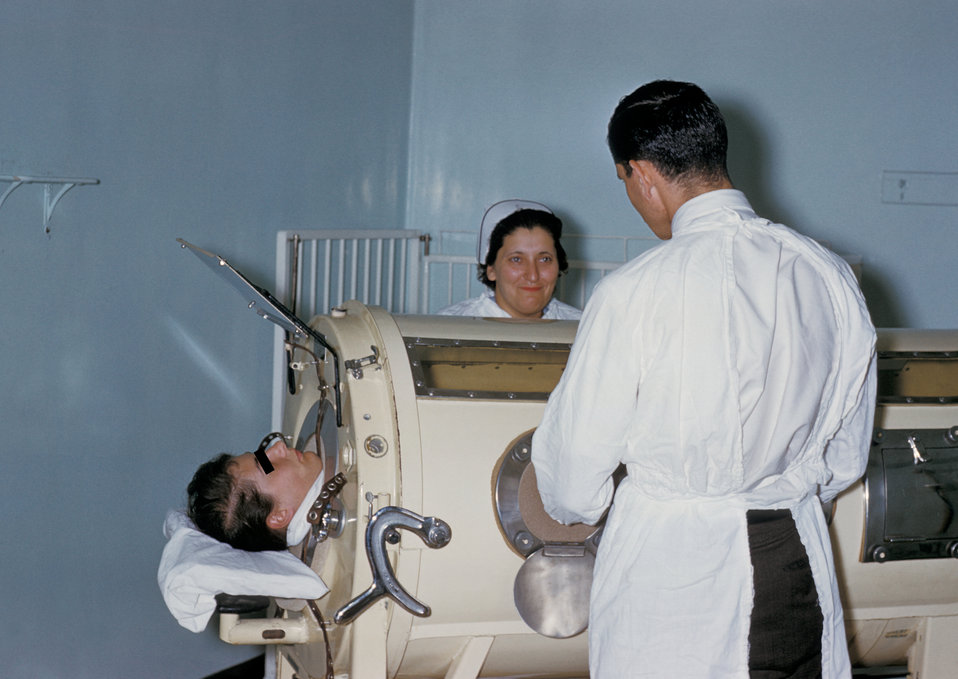
The number of polio cases grew rapidly in the 20th century, and it almost always affected children. In 1952, 57,000 children were infected, 21,000 were paralyzed, and 3,145 died from it. It was always worse in the spring and summer, and jittery parents refused to allow their kids to play in pools, or going to theaters. They were terrified that their children might spend the rest of the lives in “iron lungs” which were the only way some of them could breath. I lived about a mile away from a hospital called the Children’s Country Home (now the Children’s Specialized Hospital) in Mountainside, where children received important physical therapy. There were also too many children who needed the assistance of an iron lung.
Patient using an iron lung
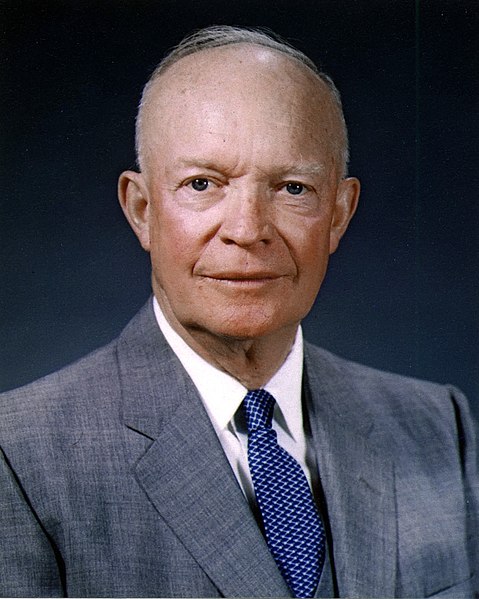
One of the best day for millions of parents was April 12, 1955, when President Dwight Eisenhower and Jonas Salk stood in the White House Rose Garden and announced the vaccine. A father and grandfather himself, Ike told Salk, “I have no words to thank you. I am very, very happy.” High praise from the General who had commanded the European Theater during World War II.
Dr Jones Edward Salk
Speaking to Edward R. Murrow, Salk told him that the doctors and researchers had done their jobs. Now the government had to figure out how to get it to those who needed it. Many people thought that the government had been quietly stockpiling a huge number of doses of the vaccine to immediately give to all children. Not so. On April 13, Oveta Culp Hobby, the Secretary of Health, Education and Welfare (now Health and Human Services) told Congress that states and individuals should be in charge, not the federal government. The President was not happy. Having spent his life in the Army, he understood the importance of logistics. He told her to put together a sensible plan ASAP, because summer was coming and polio was always worse in the summer. When she didn’t move fast enough, he called a Cabinet meeting and again told her to get it done. She finally developed a plan to assist impoverished children, but insisted that the government should not be involved. By July 1955, 4 million children had been vaccinated, and Hoppy had resigned.
President Dwight D. Eisenhower
Eisenhower was not satisfied. He was getting information that parents were so concerned that black markets for the polio vaccine had been popping up in some areas. In 1955, the shot cost $2.00 on the open market, yet they were going for up to $20.00 in the black market. (Remember, the median income in 1955 was $3,400.) The President signed the Polio Vaccine Assistant Act of 1955 under which $30 million dollars would fund the vaccine. By the following summer, 30 million children (including myself) had been vaccinated.
Fast forward 65 years. The world is dealing with a pandemic not seen for 100 years. How to develop a vaccine? Once you have a vaccine, how do you distribute it? Should it be done the was it was during the Polio epidemic? Under that scenario it would have taken four to five years to develop a vaccine, and only then would anyone think about how it should be distributed. Yet today, the first of at least four vaccines has rolled out in barely 10 months. People have complained that we had a slow start. Well, we also had a slow start at the beginning of World War II. Yet once they got things up and running they were finishing roughly three Liberty ships every two days, and built 300,000 planes between 1941 and 1945. How did they do it? A public-private partnership and American logistics. Sound familiar?? For one minute, just one, let’s act like adults and agree that Operation Warp Speed did the job–and did it faster and better than anyone expected. Whether you like or hate the current President, be honest and give the devil his due. He got something done that no one believed would be possible. It wouldn’t hurt to say thank you for that.
I had a wonderful history teacher in high school, Dana L. Stivers. Everyone loved him–and I do mean EVERYONE. Even the kids who hated history loved his classes. I still have all of his notes because they are that good. Whenever we were moving on to a new topic he’d start with a joke or a game. One time he came in and told us we were going to play charades. We would had 9 minutes to figure it out–three word, the middle one was “the,” and it was something that happened during FDR’s second term. It took a while, but Brian finally guessed the first word was “pack.” We never got the third word which was “court.” We were going to spend the hour discussing Roosevelt’s 1937 attempt to pact the court. Mr. S. also explained why it would have been a disaster for the country. I learned much more about it in college and grad school but I’ve never forgotten Mr. Stiver’s funny but very wise words–but apparently some people have. Let me give you his five-minute version.
Front row–Justices Brandies, Van Devater, Hughes, Reynolds, Sutherland Back row, Justices Roberts, Butler, Stone, Cardozo
Having had a stunning victory in the 1936 election, also sweeping a democratic majority in both the Senate and House of Representatives, Franklin Roosevelt was still not a happy camper. He was extremely annoyed because the Supreme Court had struck down some of the bills that he felt were at the core of the New Deal, particularly the National Recovery Administration and pieces of the Agricultural Adjustment Act. FDR decided that he would do whatever was needed to push through his regulations, even if it meant changing the Supreme Court from an independent judiciary to an arm of the legislative branch. He came up with a bill, the Judicial Procedures Reform Bill of 1937 (the court packing bill) which stated that for every Justice who was 70 or older, the president would nominate another Justice–but no more than six. (I can hear Gary now–a smart kid and great football player shouting out–“So Roosevelt was a sore looser!) I don’t think Justice Ruth Bader Ginsburg would put it those terms, but she did comment to NPR last year that not packing the court would maintain “the safeguards of judicial independence . . . that are as great or greater than anyplace else in the world.”
Justice Ruth Bader Ginsburg
FDR’s attempt to pack the court went nowhere. The Senate Judiciary Committee (his own Democratic majority) believed “ultimately the effect would undermine the independence of the court . . . and expand political control over the judicial department.” And Republicans wanted no part of it either. Both sides understood that it would be a short term solution, and a terrible one at that! The Court would loose its credibility, and the public would not accept its rulings. People throughout the country understood that it was a blatant power grab. An independent judiciary was one of the reasons that the US broke from Great Britain. Roosevelt said that he only wanted to make those reforms was because the Court was bogged down. However, Chief Justice Charles Evans Hughes spoke to Congress and made it very clear that the Court was up to date with all its work, and didn’t need any help.
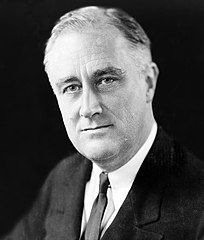
Franklin Delano Roosevelt
If Roosevelt had taken a longer view, he would have understood that eventually the Republicans would hold the majority and they would simply pack the court even more–and on and on. So the US would end up with an increasingly large number of Justices of the Supreme Court. How would they get anything done? Who would believe their judgment? The Judiciary Committee concluded that “It is far better that we (in 1937) await orderly but inevitable change of personnel than that we impatiently overwhelm them with new members.” And low and behold, in the coming years, seven Justices retired and Roosevelt was able to calmly nominate even more new Justices that he had hoped for.
Chief Justice William Rehnquist
Over the past 83 years, people have agreed that packing the court is NOT a good idea. Why change now? Are the current Senators more intelligent than those from 1937? Some of them may think they are, but most Americans don’t!! Are we in more dire straights now than in the depths of the Great Depression? Things are difficult, but not quite to that level. What is the same is the way both Roosevelt and a small number of Congressmen and Senators want what they want IMMEDIATELY. Both FDR and the current group of “court packers” seem to believe that their particular issues are more important than an independent judiciary. Again, look at the long term implications–a quick, down and dirty change that will eventually end up toppling the entire court system. That’s not the thoughts of some fringe groups of conspiracy theorists. It’s coming from judges and lawyers on both sides of the aisle, from common-sense members of Congress, from historians who understand that this has happened in other nations, and it didn’t end up well, and from average people who were lucky enough to learn civics in school. Congressional leaders need to act for the good of the whole country, not their own partisan interests. Chief Justice William Rehnquist said that “judicial independence is the crown jewel of our system of government.” We need to listen to people like Rehnquist and Ginsberg and not petulant children who want what they want when they want it.
The phrase “quid pro quo” is all over the TV, radio, and internet these days. It’s a phrase that’s been used for literally hundreds of years (hence the Latin) and lots of people are acting like it’s unusual—something that only professors or lawyers would use. It’s not. It literally means “what for what” or “something for something” or “give and take.” My old Webster’s dictionary says that it’s something given or received for something else. If we put it that way, there’s nothing fascinating about it.
We use quid pro quo’s all the time. Everything from “I’ll take out the trash if you make the bed” to buying a car (money in return for a car) to the Louisiana Purchase when the US paid France $15 million (that was in 1803 dollars!!) for 828,000 square miles of land. Since then, hundreds of quid pro quo’s had been part of the foreign policies in the US, and most other countries. One quid pro quo of tremendous significant was the destroyers-for-bases deal of 1940.
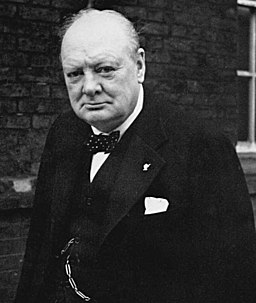
Prime Minister Winston Churchill
After World War I, Congress passed a Neutrality Act in 1935 which banned the sale of arms to any belligerent nation. Fast forward to September 1939 when Germany went to war again. Initially it seemed that Hitler’s Wehrmacht was only interested in Central and Northern Europe. Those not involved actually called it the “Phony War”—until May 10, 1940, when Germany attacked Western Europe, crushing the Netherlands, Luxembourg, and Belgium. Then they turned toward France, which surrendered on June 22, 1940. Shortly before the French capitulated, 800+ British boats of every imaginary type plucked 338,000 members of the British Expeditionary Forces, along with thousands of French, Belgian, Polish and Dutch soldiers, off the beaches of Dunkirk. (If you don’t know much about this, watch the film Dunkirk. Fantastic!! ) Yet while they managed to get the men to Britain, they lost an astonishing amount of materiel, and even worse, six destroyers went to the bottom, and 19 were badly damaged. Great Britain was on her own, and needed help!
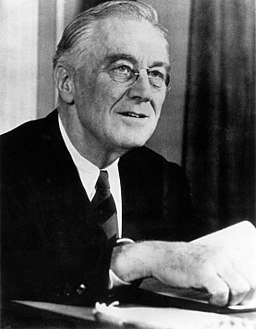
President Franklin Roosevelt
Prime Minister Winston Churchill and President Franklin Roosevelt already had a good working relationship, and on May 20, shortly after Churchill became PM, he wrote to FDR saying that Britain could really use help from the US, particularly regarding shipping, and asked if it would be possible to get 40 or 50 World War I destroyers. Little came of it. At the end of July, Churchill wrote again. Not only was England basically on her own, but now it was clear that Germany was making plans to cross the Channel. (Operation Sea Lion—thankfully the Battle of Britain prevented the cross-channel invasion) It was vital for Britain to have those ships while she repaired the damaged destroyers and ramped up new ships. Churchill also reminded Roosevelt that if Britain fell, it would leave the Americans alone, and it would be much better for the two nations to fight Hitler together.
At the same time that Churchill was asking for help, Roosevelt was running for his third term as President. He had recently pledged not to get involved in any overseas wars unless the US was actually attacked. But he knew that Churchill was right—Hitler had to be stopped, and the further from American shores the better! However, he couldn’t just sent theships to England—that would clearly violate numerous laws. At the same time, he wanted to start expanding our own military, but many Americans were isolationists to whom he had just given his word not to get involved, and he needed their votes. How to do both?
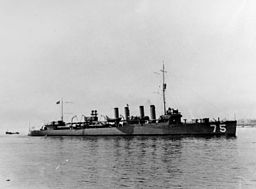
Wickes-class destroyer c. 1917-1919
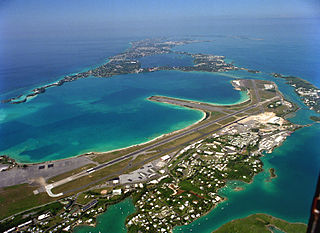
Roosevelt concluded that the way to do what he wanted was another quid pro quo. The US should let the British have the destroyers but in exchange, Britain would lease bases to the Americans. But would it cause a Constitutional problem? Roosevelt turned to the Attorney General, Robert H. Jackson, later Associate Supreme Court Justice and Chief US Prosecutor of the International Military Tribunal at Nuremberg. Jackson advised the President that he could go ahead with the deal because of his authority as Commander in Chief. So, on September 3, 1940, FDR signed the Executive agreement that gave 50 Caldwell, Wickes and Clemson-class World War I destroyers to Britain in return for bases in Newfoundland, Bermuda, the Bahama, British Guinea, Antigua, Jamaica, St. Lucia and Trinidad. Churchill got his destroyers, and FDR got the bases—and despite vocal isolationist opposition, the President went on to have both a third, and ultimately a fourth tern. Over the following 80 years there have been thousands of win-wins (aka quip pro quo’s) between individuals, companies, and nations. Something to think about?









 Historical Lense