Guadalcanal Diary–a movie based on a memoir written by war correspondent Richard Tregaskis. Why am I posting about a movie made 77 years ago, when there are so many current issues that need our attention? Because I’m done hearing words like defund, defame, slander, woke, and on and on. And there is absolutely NO excuse for any elected official to tolerate violence from either the right or the left. Whether we’re happy or furious with the election, we are all Americans and as such, we must treat all Americans with respect. The Marines at Guadalcanal came from every walk of life, every state of the Union, every denomination (or no denomination), had dropped out of school or held advanced degrees, had voted for Republicans or Democrats, and none of it mattered to them. They were Americans. Would they be proud of any of us today????
So what about Guadalcanal Diary? The movie is one of the most intense and realistic films that ever came out of the war, and actually was opened on November 5, 1943, just months after the end of the campaign that lasted from August 7, 1942 to February 9, 1943. Guadalcanal is one of a chain of islands in the eastern Solomon Islands. After the Battles of the Coral Seas and Midway, the US began its “island hopping” campaign to eventually reach Tokyo.
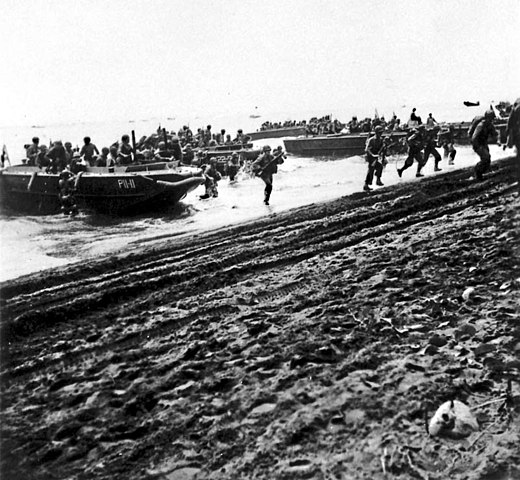
Seventy-five warships and transports arrive at Guadalcanal, with 11,000 Marines, led by MajGen. Alexander A. Vandegrift. They surprising the Japanese in what’s known as the “Midnight Raid of Guadalcanal.” They quickly secured the area around Lunga Point and found that the Japanese had been in the process of setting up an airstrip. The Marines immediately took charge of it, renaming it Henderson Field. By August 30th there were Wildcats, Dauntlesses, Aircobras and assorted other planes, all part of the Cactus Air Force (Cactus was the codename of Guadalcanal). They would attack ships in the “Tokyo Express” which were delivering men and materiel from Rabaul to the Guadalcanal, as well as provide support for the Marines.
On the 8th, it became clear that Japanese aircraft and naval vessels at Rabaul were close enough to do significant damage to the Americans. Seamen and Marines off-loaded as much of the supplies as possible, but the Navy sailed away early on August 9, taking with them roughly half of the supplies needed by the Marines. That left some bad feelings for years. In defense of the Navy, one Australian cruiser was sunk and three US cruisers and two destroyers were badly damaged that same night in what’s called the Battle of Savo Island. Over the following months tens of ships sank into what we still call Ironbottom Sound.
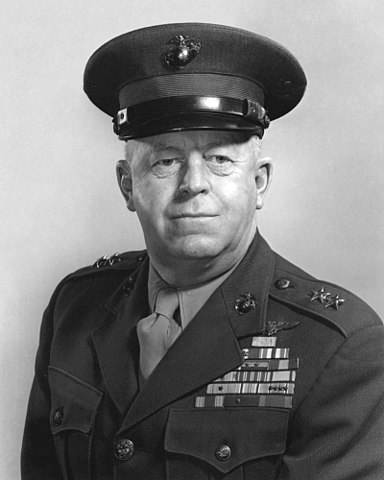
Over the next four month, the Japanese attempted to retake Guadalcanal, while the Americans kept expanding their perimeter. During the Battle of Tenaru on August 21, the Americans counterattacked several companies of Japanese infantry, killing two-thirds of then near the Lunga River. Early in September, coast watchers informed the Marines that the Japanese were planning another massive raid. Major “Red Mike” (Merritt) Edson and his men carried out several raids, bringing back information that 3000 Japanese were planning to move from Lunga River to Henderson Field. With that, he and more than 800 Marines took up their places on what became know as Edson Ridge. Over the next three days, the fighting on and around the Ridge was brutal—often hand-to-hand. By the 14th, when the Japanese began to pull back, they had lost 850 men—the Marines has lost 104.

The Marines began strengthening and expanding their perimeter, with sporadic Navy convoys bringing much needed supplies and ammunition. At the same time, the Japanese were moving 20,000 troops from Rabaul to Guadalcanal. By October 17, they were ready to take Henderson Field. They were expecting about 10,000 US troops. Actually there were about 23,000 Americans. The fighting began on the 23d and for the following two nights there were constant attacks all around the Lunga River. A few Japanese troops even managed to break through to the airfield, but the Marines, some Army infantry, cooks, Navy medics–anyone who could use a rifle–won the Battle of Henderson Field.
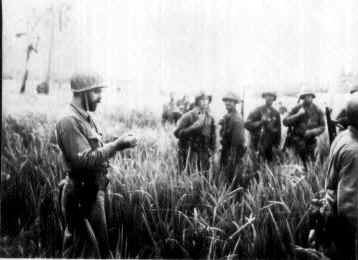
From there, the Marines went on the offensive, and by early November the Japanese were trying to blend into the jungle. By the 12th the remaining Japanese were at Koli Point. Evan Carlson (of Carlson’s Raiders) made a 29-day trek along the expanding American perimeter, carrying out a number of small engagements and forcing the Japanese to constantly retreat. By the time the Japanese had returned to the Lunga River, only 700-800 of the 20,000 troops remained.
By the end of the month, the Japanese were truly desperate, with virtually no supplies or food. Intelligence told the US that Japanese destroyers were going to attempt to resupply them. Task Force 64, with four cruisers and six destroyers, attempted to torpedo the Japanese ships, but in just four minutes, the Japanese destroyers turn and torpedo the American ships, severely damaging three cruisers, and sinking one at Iron Bottom Sound during the short Battle of Tassafaronga. Nonetheless, the Japanese realized that they could not retake Guadalcanal. Though they limped along until February the Japanese began to abandon Guadalcanal to the Americans in December 1942.
So watch the movie and then really, honestly think about how we are acting. Are we really trying to work together, or prefer to tear the nation apart? And if you want some additional information, you can read Tregaskis’ book. It really gives us something to think about this Thanksgiving.


 Historical Lense