Do you have any photos in your office? Many of us do. I have four–not huge ones–just two small pictures of my children and two equally small ones of my parents. They definitely keep me grounded. If I ever have a question of what to do, one look at their photos gives me the right answer.
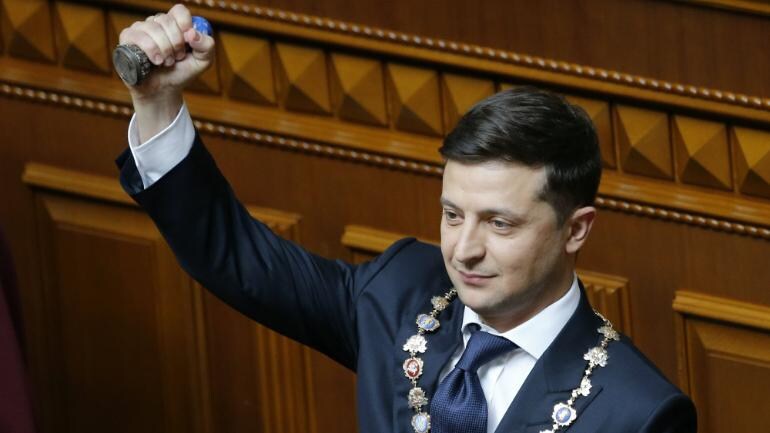
Apparently I’m not the only person who thinks that way. During his inauguration on May 20, 2019, President Zelensky of the Ukraine said:
I really do not want my pictures in your offices, for the President is not an icon, an idol or a portrait. Hang your kids’ photos instead, and look at them each time you are making a decision,”
That probably explains why so many Ukrainians have decided to stay and fight. It must be the hardest decision they’ve ever had to make, but they are trying to do what’s right for their family.
God Bless Ukraine
Ukrainian new President Volodymyr Zelenskyy holds the Ukrainian symbols of power during his inauguration ceremony in Kiev, Ukraine, Monday, May 20, 2019–India Today
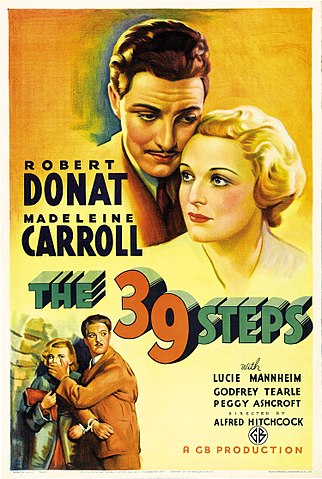
So here we, are in the middle of the dog days of August. In the “good old days” we’d be looking forward to the beach or the mountains, or maybe taking a trip to see family. This has been, again, a very stranger year. We’re thinking about things like pandemics, Olympics with no crowds, massive border breaches and cyber-crimes and espionage. Many of us have distracted ourselves by watching movies. Last night I watched a classic–espionage from a bygone day–The 39 Steps, based on a 1915 novel by John Buchan, also called The 39 Steps.
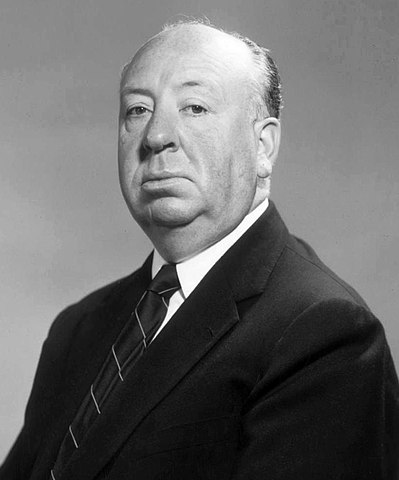
Alfred Hitchcocj
Released in 1935, The 39 Steps was directed by Alfred Hitchcock, (1899-1980) and is considered one of the most important British films of the 20th century. The plot explains that while on vacation in London, Canadian Richard Hannay (played by Robert Donat) finds himself trying to stop a spy ring called the “39 Steps” from stealing British military secrets. He’s soon mistaken as a man who shot a British agent, and heads to Scotland with his friend and unwilling accomplice, Pamela, (played by Madeleine Carroll) to try to clear his name. At first it seems like a simple “who done it” but you’re quickly drawn is as you watch them peel away layer upon layer to get to the truth. I’m not going to give your the ending, but I will tell you that the music you’ll hear throughout the movie is an important element in the film.
It’s in black and white while many people don’t enjoy, but give it a change. When Orson Welles says it’s a “masterpiece” it’s worth taking a look. So, keep cool and enjoy!
In the past, I know that’s I’ve posted several reviews of outstanding books–at least I thought they were outstanding. Actually some of the best books I’ve read in the past have come from a radio program that I’ve listened to for the past 20 years. No, it’s not one of the loud call-in radio talk-shows. Those rarely have any interesting information–just rehashing what’s been said all day and doing it loudly, as if the higher the decibel the more important they are.😵💫 No, it’s CBS Eye On The World with John Batchelor (it used to be The John Batchelor Show)
Born in Bryn Mawr, PA, in 1948 Mr. Batchelor graduated from Princeton University and the Union Theological Seminary, but ultimately because an author who wrote some excellent political novels. I first heard him and his colleague, Paul Alexander, on the weekends when they discussing a wide range of topics with interesting guests. I happened to tune in on Saturday, September 8, 2001, when they were talking about the USS Cole-who might have cause the explosion and why the perpetrators hadn’t been caught. The name “al Qada” came up a number of time during their interviews with people in the military, diplomats and people in both US and foreign politics. According to Batchelor, three days later, on the afternoon of 9/11, he got a phone call from WABC. They remembered the discussions from last Saturday. Did he know what this al Qada group was? Well, he’d done a tremendous amount of prep work for their interviews so he had at least a passing understanding. OK–we want you to got on tonight. (And except for about two years he’s been six days a week ever since.)
Like most of us, I clearly remember the following days. Given my job, I did have some information on al Qada, but almost no one on radio or TV had a clue. Most of them were parroting everyone else, and I spent too much time yelling back at them. In a world turned upside down, it was actually a calming feeling to hear Batchelor interview people who knew so much more than most people, including myself, about bin Laden’s group and at least some of what was going on both in New York, and the rest of the country. He really did get thrown into the deep end, but very quickly developed his own style. Since then he’s been listened to by literally millions of people each night (10pm-1am), because they want to hear an ongoing, and respectful, dialogue between interesting people on interesting topics.
Eye on the World is a smart, nuanced discussion–sometimes called the BBC with an American accent, or NPR on steroids. Whatever. Mr. Batchelor makes you think, and I believe that thinking is a good thing! You become familiar with people from Colombia to Azerbaijan. War correspondents. People doing solid work on climate change and space exploration. People involved in our own national debates. Medical professionals with up-to-date information on the virus. I’ve suggested that my students listen to him. I’ve brought segments up when appropriate with family members and colleagues, and many have become ardent listeners too.
Now, I will confess that I don’t stay up till 1 am every morning. That’s why Podcasts are a wonderful thing.😇 I can listen to all three hours in the course of the day. Below I’ve found a video of the 10th anniversary of 9/11. I’ll be interested to see what he does on the 20th anniversary.
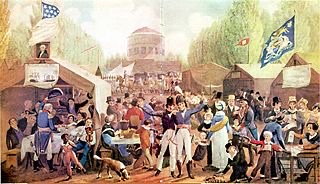
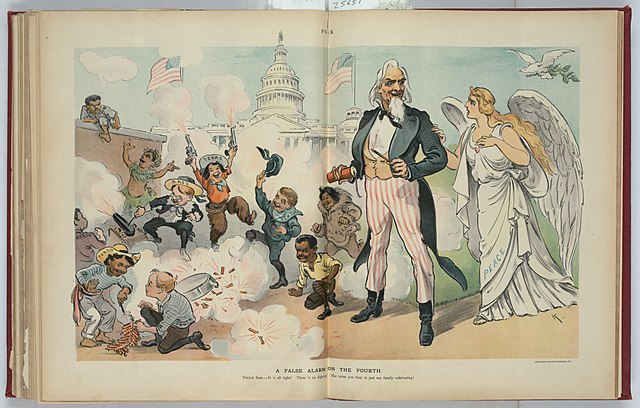
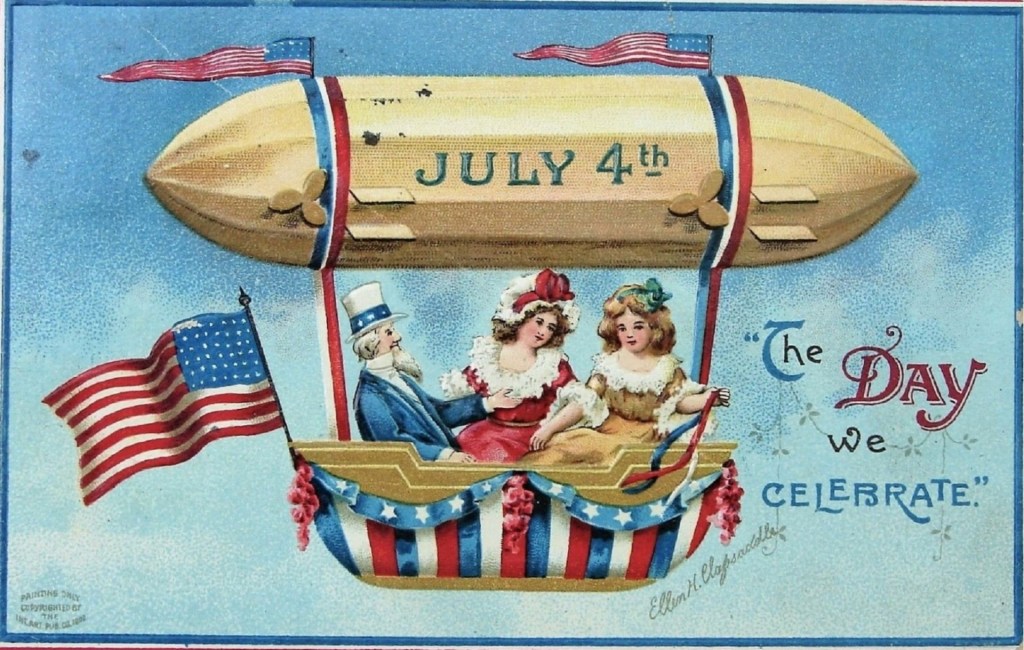
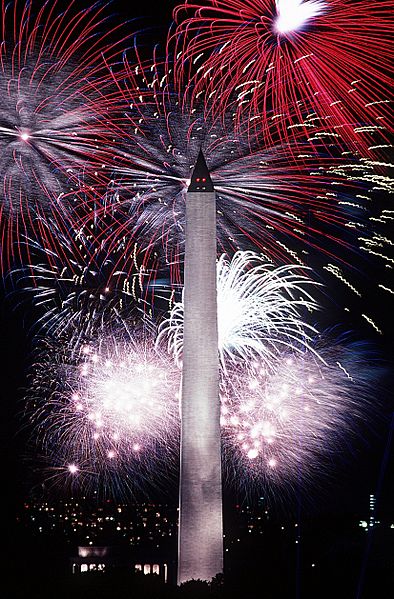
Rather than discussing something historical about our national celebration, I’ve included several photos, posters and paintings that have celebrated the 4th of July over the years. Hope you find a few of interest–and have a wonderful 4th of July!!!
Painting of 4th of July in Philadelphia, 1819
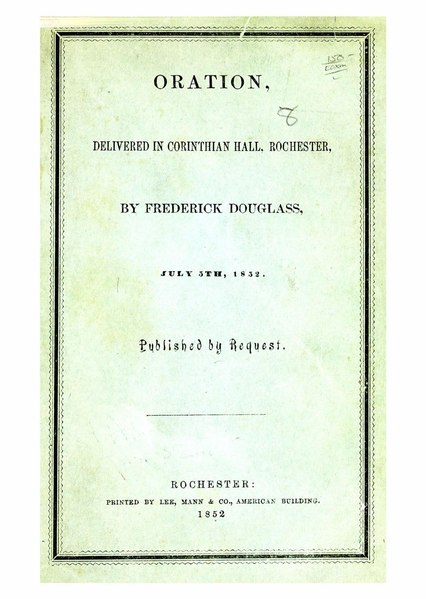
Frederick Douglass speech, 1852
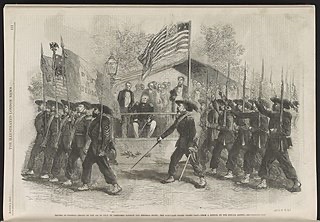
4th of July review of Federal troops watched by President Lincoln and General Scott
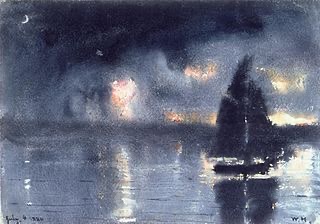
Winslow Homer painting–Sailboat and 4th of July Fireworks, 1880
Clippings c. 1902
Poster c. 1920
Norman Rockwell painting, 4th of July 1924 in the Saturday Evening Post
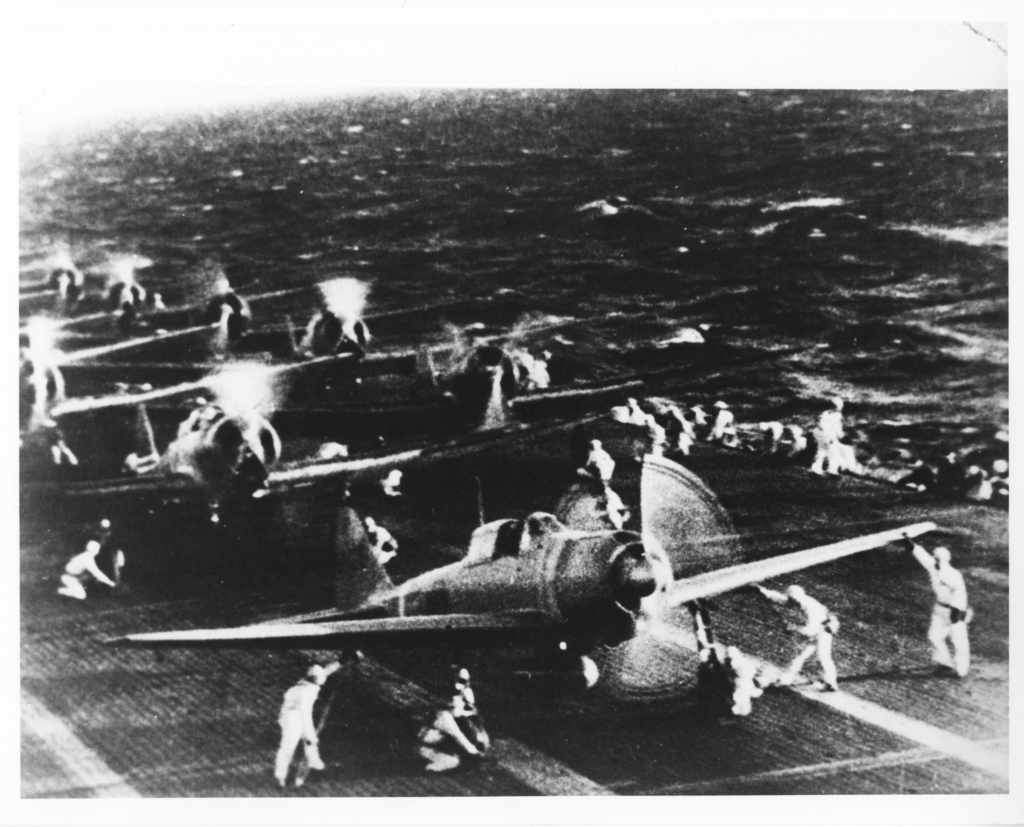
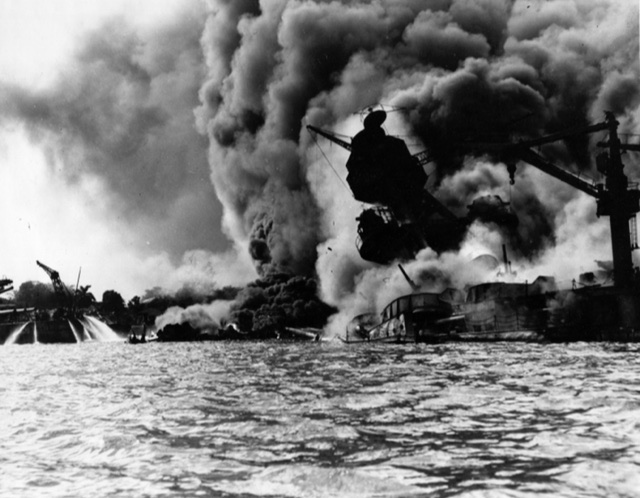
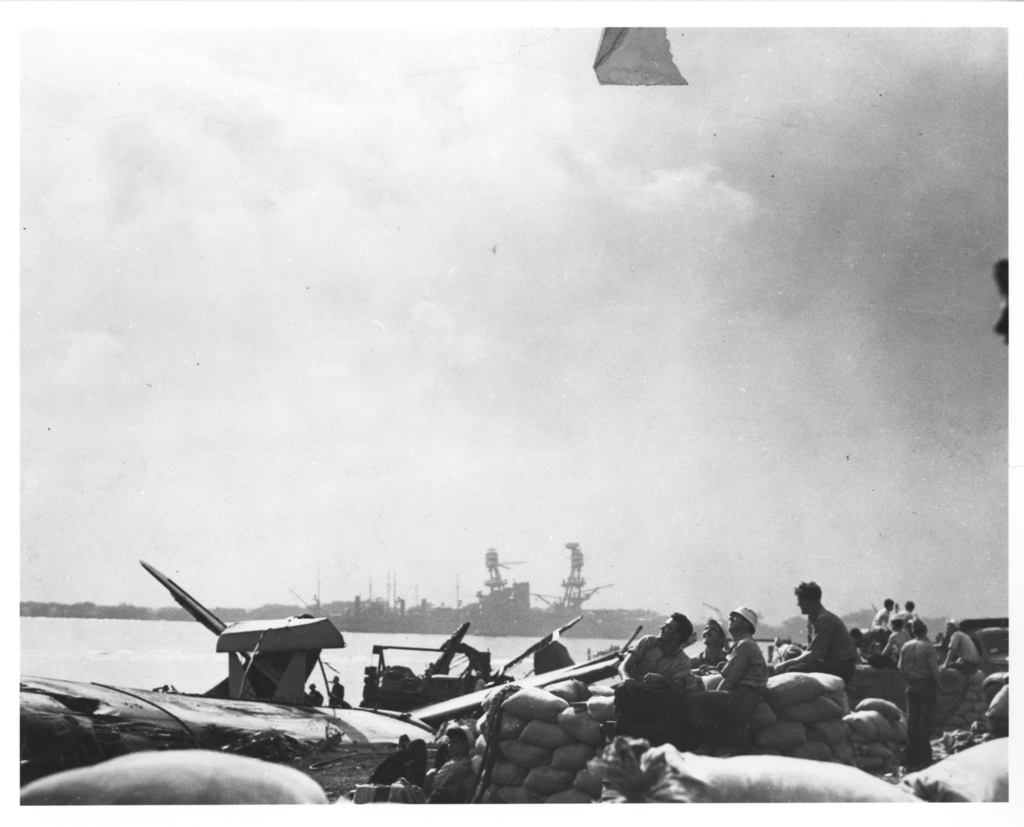
My mother was 14 that day, home in bed with pneumonia. My father was 20 and studying for a physics final exam at the Naval Academy. To this day they can tell you the most minute detail of December 7th. The world changed for them, and so many others, in the blink of an eye. The further we get from that day, the dimmer it becomes. Will my children remember it? Will my grandchildren? Rather than discussing any of the history involved, I’ve put up some of the photos which we don’t often see.
A photo of Japanese Mitsubishi dive-bombers warming up on their carrier decks getting ready to fly out to attack Pearl Harbor.
USS Arizona sinking. What’s left of it at that point is an inferno. To the far left, men at the stern of the USS Tennessee are hosing water down from the deck, trying to keep the burning oil away from their own ship.
I had a wonderful history teacher in high school, Dana L. Stivers. Everyone loved him–and I do mean EVERYONE. Even the kids who hated history loved his classes. I still have all of his notes because they are that good. Whenever we were moving on to a new topic he’d start with a joke or a game. One time he came in and told us we were going to play charades. We would had 9 minutes to figure it out–three word, the middle one was “the,” and it was something that happened during FDR’s second term. It took a while, but Brian finally guessed the first word was “pack.” We never got the third word which was “court.” We were going to spend the hour discussing Roosevelt’s 1937 attempt to pact the court. Mr. S. also explained why it would have been a disaster for the country. I learned much more about it in college and grad school but I’ve never forgotten Mr. Stiver’s funny but very wise words–but apparently some people have. Let me give you his five-minute version.
Front row–Justices Brandies, Van Devater, Hughes, Reynolds, Sutherland Back row, Justices Roberts, Butler, Stone, Cardozo
Having had a stunning victory in the 1936 election, also sweeping a democratic majority in both the Senate and House of Representatives, Franklin Roosevelt was still not a happy camper. He was extremely annoyed because the Supreme Court had struck down some of the bills that he felt were at the core of the New Deal, particularly the National Recovery Administration and pieces of the Agricultural Adjustment Act. FDR decided that he would do whatever was needed to push through his regulations, even if it meant changing the Supreme Court from an independent judiciary to an arm of the legislative branch. He came up with a bill, the Judicial Procedures Reform Bill of 1937 (the court packing bill) which stated that for every Justice who was 70 or older, the president would nominate another Justice–but no more than six. (I can hear Gary now–a smart kid and great football player shouting out–“So Roosevelt was a sore looser!) I don’t think Justice Ruth Bader Ginsburg would put it those terms, but she did comment to NPR last year that not packing the court would maintain “the safeguards of judicial independence . . . that are as great or greater than anyplace else in the world.”
Justice Ruth Bader Ginsburg
FDR’s attempt to pack the court went nowhere. The Senate Judiciary Committee (his own Democratic majority) believed “ultimately the effect would undermine the independence of the court . . . and expand political control over the judicial department.” And Republicans wanted no part of it either. Both sides understood that it would be a short term solution, and a terrible one at that! The Court would loose its credibility, and the public would not accept its rulings. People throughout the country understood that it was a blatant power grab. An independent judiciary was one of the reasons that the US broke from Great Britain. Roosevelt said that he only wanted to make those reforms was because the Court was bogged down. However, Chief Justice Charles Evans Hughes spoke to Congress and made it very clear that the Court was up to date with all its work, and didn’t need any help.
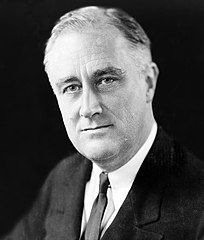
Franklin Delano Roosevelt
If Roosevelt had taken a longer view, he would have understood that eventually the Republicans would hold the majority and they would simply pack the court even more–and on and on. So the US would end up with an increasingly large number of Justices of the Supreme Court. How would they get anything done? Who would believe their judgment? The Judiciary Committee concluded that “It is far better that we (in 1937) await orderly but inevitable change of personnel than that we impatiently overwhelm them with new members.” And low and behold, in the coming years, seven Justices retired and Roosevelt was able to calmly nominate even more new Justices that he had hoped for.
Chief Justice William Rehnquist
Over the past 83 years, people have agreed that packing the court is NOT a good idea. Why change now? Are the current Senators more intelligent than those from 1937? Some of them may think they are, but most Americans don’t!! Are we in more dire straights now than in the depths of the Great Depression? Things are difficult, but not quite to that level. What is the same is the way both Roosevelt and a small number of Congressmen and Senators want what they want IMMEDIATELY. Both FDR and the current group of “court packers” seem to believe that their particular issues are more important than an independent judiciary. Again, look at the long term implications–a quick, down and dirty change that will eventually end up toppling the entire court system. That’s not the thoughts of some fringe groups of conspiracy theorists. It’s coming from judges and lawyers on both sides of the aisle, from common-sense members of Congress, from historians who understand that this has happened in other nations, and it didn’t end up well, and from average people who were lucky enough to learn civics in school. Congressional leaders need to act for the good of the whole country, not their own partisan interests. Chief Justice William Rehnquist said that “judicial independence is the crown jewel of our system of government.” We need to listen to people like Rehnquist and Ginsberg and not petulant children who want what they want when they want it.
Christmas, Hanukkah and New Years are only a few days away. We’re thinking about the importance of these holidays, friends and family, Christmas trees, menorahs, carols and dreidels. One of the wonderful things of the holidays is the food. My aunt made a fantastic stolen. My grandmother made amazing cucidati cookies. A dear friend’s ruggala was delicious. Two of my uncles had a competition to see who would make the best eggnog, but eventually they agreed that the best eggnog ever came from one my old, tattered book (you know me and my ancient books) called Taft and Roosevelt: The Intimate Life of Archie Butt. So who was Archie Butt and exactly how did he make his eggnog?
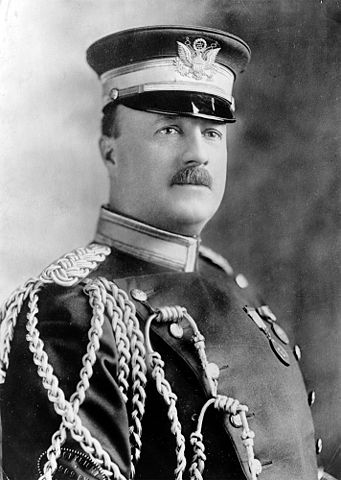
Captain Archie Butt, c. 1910
Archie Butt (aka Archibald Willingham DeGraffe Clarendon Butt) was born in Augusta, GA, on September 26, 1865, the middle of five children. He went to the University of the South at Sewanee where he became Editor the college newspaper. He graduated in 1888 and moved to Louisville, KY, where he worked for the Louisville Courier-Journal for three years, and then wrote for the Macon Telegraph. The Telegraph sent him to Washington, D.C., where he wrote for the Atlanta Constitution, Augusta Chronicle, Nashville Banner, and Sewenee Morning News. Everywhere he went, Butt made friends easily. One of them was former Senator Matthew Ransom who became U.S. Minister to Mexico in August 1895. He promptly made Archie his 1st Secretary. Butt worked with Ransom for the next two years, returning to Washington when Ransom resigned.
When the U.S.S. Maine blew up in Havana harbor on the night of February 15, 1898, Butt used his numerous contacts to receive a commission as a Lieutenant in the U.S. Army Volunteers at the start of the Spanish-American War. He became Assistant Quartermaster and ended up—with 500 mules in tow—in the Philippines. He was discharged in June 1901, but he’d found his true calling and managed to receive a commission as a Captain in the regular U.S. Army. He returned to Washington in 1904 and became the Depot Quartermaster there. In 1906 he sailed to Havana where he served as the U.S. Depot Quartermaster during the revolt against Tomas Estrada Palma, but was back in DC in March 1908.
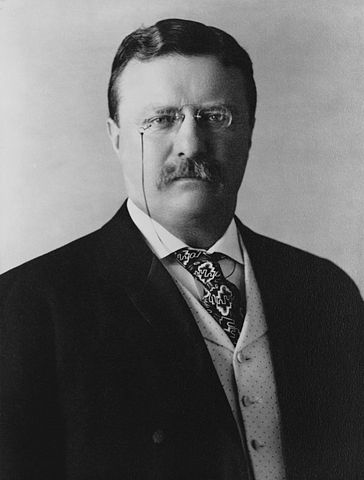
Theodore Roosevelt c. 1904
Teddy Roosevelt had known Butt in Washington before he went to Havana, and upon his return, asked him to serve as the President’s military aide-de-camp (ADC). He knew that Butt would do a excellent job of keeping TR on track. Besides, Archie was one of the men who could keep up with the President as he hiked, swam, rode his horses and played tennis with gusto. Butt was only in the White House for a year when William Howard Taft became president, but Taft asked Butt to stay on as ADC. Butt continued to do an outstanding job for Taft—though Taft was not interested in the same “strenuous life” as Roosevelt!! And that brings us to New Year’s Day, 1910.
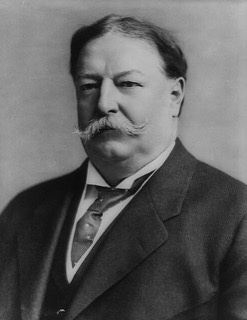
William Howard Taft, c. 1909
Early that afternoon Butt, as the Taft’s aide-de-camp, attended a New Year’s reception for about 5,500 people. As soon as that was over, Butt raced home to get ready for an “eggnog party” for his own friends. It was a good think that he had a large house because his 50 invited guests ended up being 300 people!! In a letter to his sister, Clara, he told her that he’d used their mother’s recipe, reminding here that it was so stiff you couldn’t drink it, but had to eat it with a spoon.😳 Apparently it was a great success because he told Clara that not a drop was left over.
In honor of the season, I’ve included the actual recipe that Butt included to his sister. I wish you all the very best of holidays!!
From Taft and Roosevelt: The Intimate Letters of Archie Butt, Military Aide (Garden City, NY: Doubleday, Doran and Co., 1930), Vol. 1, page 248. For one dozen eggs, use one quart double thick cream, nearly one quart of whisky and two tablespoons of Jamaican rum. Beat the yolks to a cream, add a dessert spoon of sugar to each egg, and whip again. Then add whisky and rum slowly. The cream should be whipped very stiff, and so should the whites of the eggs. When mixed it will remain indefinitely without separating.
(Sadly, Major Butt died on the RMS Titanic on April 15, 1912.)





 Historical Lense