Today is the 77th anniversary of the beginning of the Battle of Iwo Jima. (February 19-March 26, 1945) In many ways it was the hardest battle ever fought by the USMC. I normally hold a three-hour seminar on the battle. But I don’t think you want to listen to me drone on or ask you probing questions. (If you do have any questions, I’m happy to answer them!) You’ve probably already see the Marines raising the flag on Mt. Suribachi, so instead, I’ve included several photos you might not have seen before.
USS New York bombarding the Japanese defenses of Iwo Jima, February 16, 1945
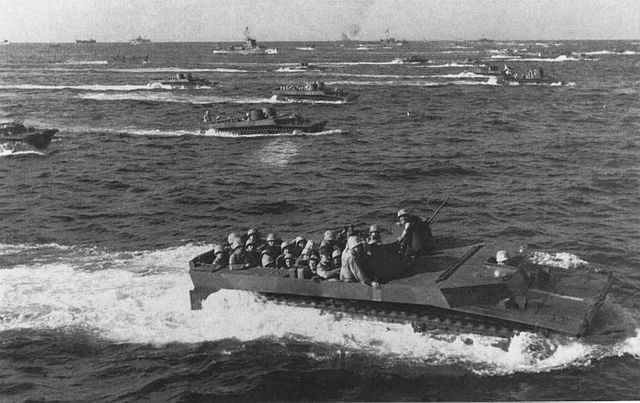
LVTs approaching the beachhead of Iwo Jima, February 19, 1945
Marine Corps landing on the black beaches of Iwo Jima
It was extremely difficult to walk, much less run, through the volcanic sand
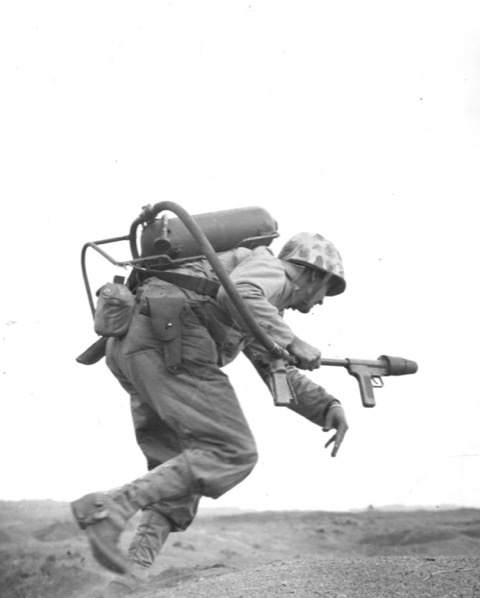
Flamethrower operator running under fire
Ultimately, 6,102 Marines dies at Iwo Jima. Thousands more were wounded.
Or, if you want to just watch a movie–an old movie but one which does give you a fairly good feeling of what happened–take a look at http://Sands of Iwo Jima
The actual rant comes from the movie Network (1976) in which Howard Beale, played by Peter Finch, yells out, “I’m mad as hell and I’m not gonna take this any more.” These days many of us immediately equate Beale’s comment with the truckers’ convoy in Canada. After two years of working on the front lines, delivering everything we needed while so many of us worked from home, it’s time for them to be taken seriously and given the respect they deserve. However, theirs is not the first convoy that has demands that they be heard.
Tractors c. 1970s
Raise you hand if you remember Tractorgate from 1979. The 1970s were a period of serious inflation and stagflation which hit the farmers extremely hard. In fact, farmers in the early 1900s made much more per acre when adjusted for inflation than they did in the 1970s. The farmers were also extremely concerned about the foreclosures coming from the Farmers Home Administration. In 1977 a group of farmers in Campo, Colorado, formed the American Agriculture Movement (AAM). President Jimmy Carter, a farmer himself, supported them, saying “I don’t know of any other group that has suffered more from inflation than farmers.” In December, 1977 roughly 5,000 farmers rallied in Lincoln, Nebraska–many of them driving their tractors to the rally. Though they had widespread support from a number of other states, they didn’t get the attention from the Department of Agriculture they had hoped for. They needed something more dramatic.
In January 1979, farmers from as far away as Colorado got on their tractors and headed east. The Movement’s slogan was “Parity not Charity.” On February 5, 1977, roughly 900 tractors, along with a number of people who came by bus or plane, arrived in Washington, D.C. They blocked roads and drove right past the Capital building, and onto the National Mall near the Washington Monument, where police convinced them to stay. There were only a few rogue tractor drivers. Some of the farmers became lobbyists, speaking with Congressmen, Senators and member of the Department of Agriculture. Others became protestors, demanding parity, and that their voices be heard.
And then came President’s Day weekend, with a massive blizzard. With 23″ of snow it was the third largest storm in DC to this day, smaller only than the 1922 and 1898 blizzards. In Washington, the city comes to a complete standstill with just a few inches of snow, but this was a “mother of all blizzards.” The farmers with their tractors were some of the very few people in the city who could move. They put aside their protesting and lobbying, and started to dig out the Capital and much of the rest of Washington.
After seven weeks, most of the farmers turned their tractors around and headed home. Change didn’t happen in days, or even weeks. It took months, often years. I do hope that Ottawa treats the Canadian truckers better than Washington treated the farmers. As I said in an earlier post on truckers, they deserve our respect and thanks rather than being treated with distain.
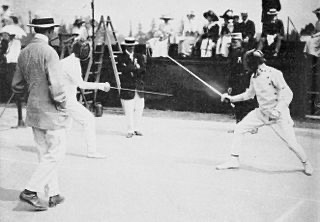
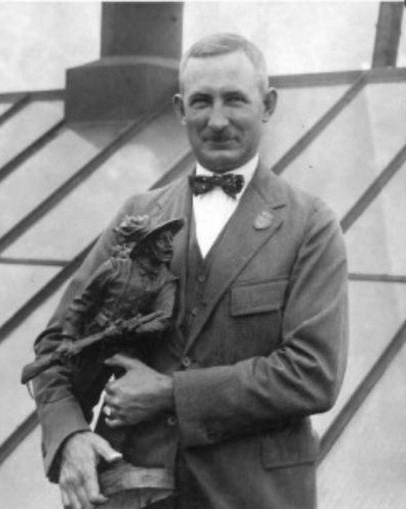
With the Olympics up and running, some of my students wanted to spend a little time discussing it. None of them are happy about where it’s being held, calling it the “genocide games.” (Personally I agree with them wholeheartedly.) Then one student asked me what I remember of the Olympics in the “old days.” Really? Define “old!” With that, it was time to get back to our discussion of Jackie Fisher and Dreadnoughts. But since this is a military history class, I did find some photos of men who were in the US military and competed in the Olympics–before even I was born. The students enjoyed, them, and I thought you might like them too.
George Patton, USA, pentathlon, 1912 Olympics, Stockholm
Carl Osburn, USN, shooter, 1912 Olympics, Stockholm
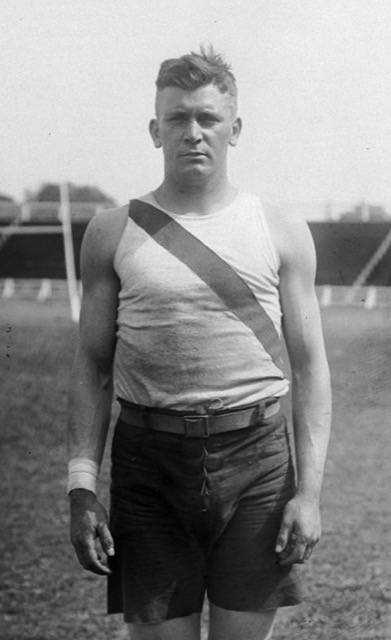
Harry Liversedge, USMC, shot put, 1920 Olympics, Belgium
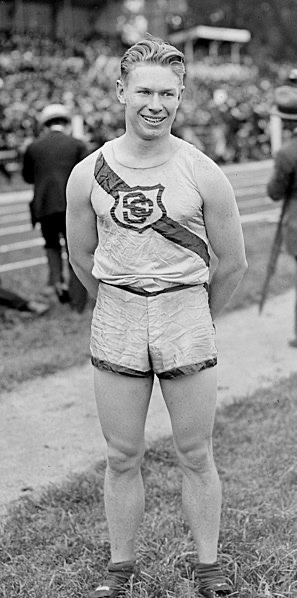
Charlie Paddock, USMC, 100m sprint, 1920 Olympics, Belgium
Champerlin, Thomson and Tuttle, USA, equestrian, 1932 Olympics, Los Angeles
With the Olympics taking place shortly, a lot of my friends have been pulling out their DVDs, or getting on Netflix, to watch one of our favorite movies (even though it’s about the summer Olympics) Chariots of Fire. Filmed in 1981, it’s based on the real story of two of the 1924 British Olympians, Eric Liddell, played by Ian Charleson, and Harold Abrahams, played by Ben Cross. It’s just too good for me to tell you anything about it. You have to watch it!🤓🤓
Eric Liddell, Summer Olympics, Paris, 1924
However, what I will do is tell you something about the real men of Chariots of Fire. Eric Liddell was born in Tianjin, China, on January 16, 1902, to Scottish missionary parents. When he was six, his parents returned to the UK on furlough with him and his eight-year-old brother. At the end of the family’s holiday in Edinburgh, Scotland, both boys went to boarding school at Eltham College that was attended by many children of missionaries. He did well academically, and his rugby and sprinting made his a star athlete.
Liddell attended the University of Edinburgh where he studied Pure Science. He also played rugby for the University Club, and continued to work on his 100m and 220m sprints. (He was often called the “Flying Scotsman.”) Liddell was part of the British Olympic team that went to Paris in 1924. Everyone expected him to win the 100m. But the times for all of the races were announced early in the spring, and the 100m was going to be held on a Sunday. As a devout Christian, he would not run on the Sabbath, regardless of all the pleas from the most senior members of the British Olympic committee. Instead he trained for the 400m. The finals were on July 11, and the Americans were likely to win. Liddell ended up running the last 200m like a sprint. He won the gold, breaking both the world and Olympic records at 47.6 seconds.
Liddell graduated from the University in 1925, and returned to China as a teaching missionary. He was there throughout the Chinese Civil War, only returning to Scotland on a furlough in 1932 when he became an ordained minister of the Congressional Union of Scotland. He returned home again just before World War II, but was back in China when the war started and was interned in a civilian camp in 1943. He was the bedrock of the camp, but died in February 1945.
Harold Abraham, Summer Olympics, 1924
Harold Abrahams is the other main protagonist in the film. Born on December 15, 1899, he had served as a Lieutenant in the British Army in the Great War, and then attended Gonville and Caius College, Cambridge. He had been a runner since he was a child, and while at Cambridge was a member of the Athletic Club as well as a member of the Cambridge and Oxford the Achille’s Club for track and field. He competed in the 1920 Olympics, but lost in the quarter finals.
Abrahams graduated from Cambridge in 1923, but wanted to compete in the Olympics the following year. He hired Sam Mussabini as his personal coach who got him ready for the 100m and 200m sprints. He did win the 100m run, beating the American Charley Paddock who had been expected to win. Abrahams expected to continue running, but broke his leg in 1925 which ended his career. Instead, he returned to his legal career, but also worked as a sports commentator for more than 40 years, including attending the 1936 Olympics in Berlin. In addition, Abrahams was the President of the Jewish Athletic Association, and Chairman of the Amateur Athletic Association. He died on January 12, 1978.
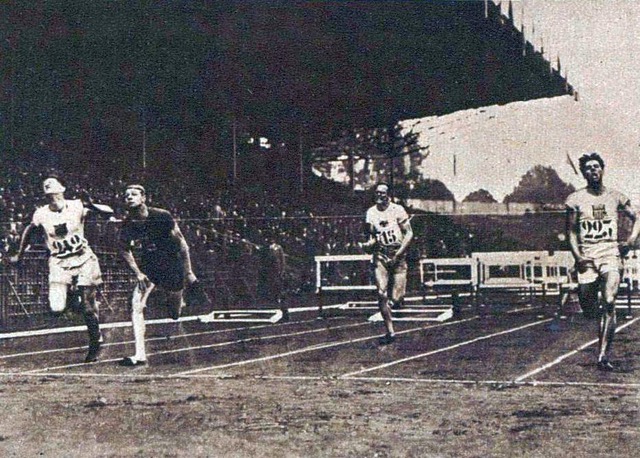
1924 Olympics 110m hurdles
I can’t let you go without mentioning one other person at the 1924 British Olympic team–David Cecil, Lord Burghley–who was know as the “King of the Hurdlers.” Cecil won the 440 hurtles that year. He’s not one of the main characters in Chariot of Fire, but it’s fascinating to watch him fly over the hurdles.
I was catching up with a friend who lives in LA a few days ago. Talked about our kids and grandchildren, our work, new books, etc. Then she told me that she’s seriously thinking of selling her part of her business to her partner and moving back to Iowa where she grew up and where most of her family still lives. Why??? She said that she’d reached her limit about two weeks ago when she saw Union Pacific trains stopped on their way to the LA rail yards. They were being plundered by coordinated groups of gangs. And not just a few cars. Ninety rail cars a day. Apparently members of the gangs use bolt cutters to open the cars, grab all the packages and take whatever they want–everything from medicine and high-end electronics to books and toys–leaving masses of garbage everywhere. The Union Pacific has begged for help from the city with no results. At this point, the Union Pacific is seriously considering moving their trains out of LA. This isn’t the first time there has been troubles on the trains, but when that happened they found a swift way to fix it. They called in the Marines!
Marines guarding the US mail in the 1920s
The “Roaring Twenties” were more than Flappers, Speak Easies and rumble seats. It was a time of Al Capone, the St. Valentine’s Day Massacre, and bank robberies. In those days, money was moved by truck and train via the Post Office. Between April 1920 and April 1921, $6.3 million dollars were stolen from the USPS. The Post Office tried to arm members of the USPS, with minimal success. Between April and October 1921, another $300,000 were stolen, with several post office workers killed. Postmaster General William Hays asked President Warren Harding for help from the Marines. Harding approved the request and Secretary of the Navy Edwin Denby immediately authorizes a contingent of Marines to guard main Post Offices, transfer stations, truck and trains.
Initially, 53 officers and 2,200 enlisted personnel were divided between the eastern and western zones in the US. Armed with standard M1911 pistols, the famous M1903 Springfield rifles, Thompson submachine guns and a few trench guns, their orders were basically to do whatever they needed to do so that the mail would get through. It took just four months for the Marines to have things in hand. (No one who had learned about the Marines on the Western Front during the Great War wanted to take on the Devil Dogs.) Marines returned to their normal duty in the spring of 1922.
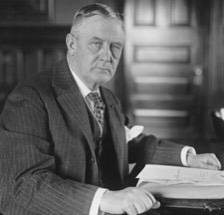
Postmaster General Harry New
Unfortunately, not everyone got the memo. 0n October 15, 1926, thugs attacked and killed a mail truck driver, wounded his helper and carried away $160,000 in broad daylight in Elizabeth, NJ. The current Postmaster General, Harry New, asked President Calvin Coolidge for help. Coolidge had Secretary of the Navy Curtis Wilbur call on the Marines to guard Post Office cars, trucks carrying registered mail and all major railroad and postal facilities until the Post Office itself could organize its own proper Postal Police force.
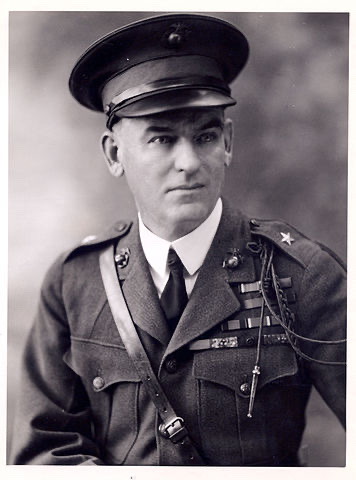
BGen. Logan Feland, USMC
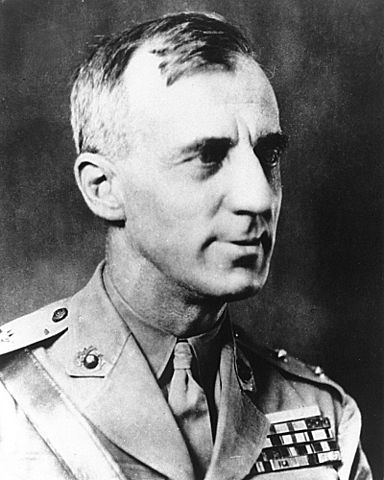
The Marines took up their duties on October 21. BGen. Logan Feland, USMC, commander of the Marine Barracks at Quantico, directed the Eastern Region. BGen. Smedley Butler, based in California, commanded the Western Region which reached as far East as North Dakota, Colorado and El Paso, TX. It included 40,000 miles of railroad track and twenty-eight major post offices. The Marines carried .45 automatics, 12-gauge shotguns and Thompson submachine guns, and were expected to “shot first and ask questions afterward.” That ended the problem. By the end of February 1927, the last of the Marines had returned to their bases. They had seen no action, but it had bought the Post Office some time to set up proper security.
BGen. Smedley Butler, USMC
Right now, the Union Pacific has a very small number of security to deal with the current situation. I wonder what would happen if the Marines took over the mess in Los Angeles for a few months.🤔
January 17 is Rev. Martin Luther King Jr.’s Day–a day when we celebrate one of America’s guiding lights who helped changed the direction of our country for the better. We can learn a great deal about Dr. King’s life and work, but as a teacher, I though it might be interesting to take a look at Morehouse College, Dr. King’s alma mater and one of the first historically black men’s colleges.
In 1867, just two years after the end of the Civil War, Willian J. White, with help from James Tate, Rev. Richard Coulter and Rev. Edmund Turner, established the National Theological Institute in Augusta, Georgia. With assistance from the American Baptist Home Mission, the Institute moved to Atlanta, GA, in 1879 where Rev. Joseph Roberts served as its first President. The Institute also changed its name to the Atlanta Baptist Seminary.
Obelisk near the King Chapel of Morehouse College
Eight years later, Samuel Graves became its second President. With the help of John D. Rockefeller, the industrialist and a Baptist himself, the Seminary moved to what is now its main campus in Atlanta. George Sale served as it’s third President from 1890 to 1906, when John Hope became the fourth President, and the first African-American President of the Seminary. It wasn’t until 1913 that the Atlanta Baptist Seminary changed it name to Morehouse College in honor of Henry Morehouse who had been the secretary of the American Baptist Home Mission and who had worked closely with Rockefeller to expand the college. Samuel Archer became the sixth President during the nadir of the Depression from 1931 to 1940.
President Benjamin Mays (1940-1967)
In 1940 Benjamin Mays became the sixth president of Morehouse. During his tenure he expanded the number of students, including international students. Dr. King entered Morehouse in 1944, following his father’s and maternal grandfather’s footsteps. Years later he commented that Mays was “one of the greatest influences in my life.” Mays preached every Tuesday morning at the chapel. It was there that he explained Gandhi’s methods of non-violence. In addition, Mays made a number of speeches during the 1950s that helped students and faculty decide what direction they would follow in the emerging Civil Rights issues.
Dr. King was graduated in 1948, and we all know how his work improved, and continues to improve, our nation. Morehouse has also grown into an important institution. There have been 11 Fulbright scholars, five Rhodes scholars and five Marshall scholars, and in addition to Dr. King there have been men like Julian Bond, Spike Lee, Samuel L. Jackson, and countless scientists, doctors, state and federal officials and important industrialists and entrepreneurs. The next century at Morehouse should be a bright one.
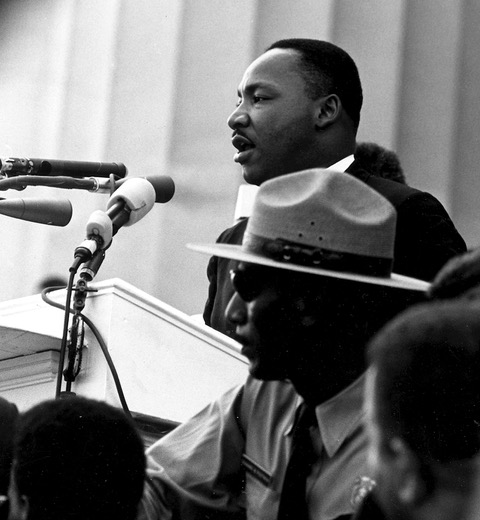
Dr. Martin Luther King, Jr. at the March on Washington, August 1963
During the holidays I visited some of my family in New Jersey. Believe it or not, the state is much more than the Turnpike, the Parkway, and run-down cities. There are also rolling hills, gorgeous lakes, great hiking trails, pine barrens, working farms, historic battlegrounds and homes and churches dating back to the American Revolution. I used to take my kids to the Ford Mansion and Jockey Hollow in Morris County, where George Washington and his troops spent the winter of 1777. While I was there last week we drove past the old Speedwell Ironworks where Samuel F.B. Morse worked on his new invention–the telegraph. The Ironworks are a museum now, but it’s also where, on January 11, 1838, that Morse first demonstrated his telegraph to the local families who lived in Morristown.
Self-portrait of Samuel F.B. Morse
Morse was born on April 27, 1791, in Charlestown, MA, to Elizabeth Ann Finley Breese and Jedidiah Morse, an eminent Calvinist cleric. After graduating from Phillips Academy in Andover, Samuel attended Yale University. In addition to studying religious philosophy and mathematics, he was extremely interested in lectures by Benjamin Silliman and Jeremiah Day on electricity. Morse graduated Phi Beta Kappa from Yale in 1810.
To pay their way through school, many young men worked for their professors or merchants in New Haven, CT. Others took a variety of odd jobs. However, it turned out that Morse was an accomplished painter (portraits, not houses), and earned his tuition with his brushes. After his graduation, he made his living as an artist. His first major work was Landing of the Pilgrims in 1811. He then sailed to Great Britain where he worked with Washington Allston, a major British artist of that time. Morse’s important work, Dying Hercules, was well-known in the Royal Academy. Returning home, he had numerous commissions including those for Presidents John Adams and James Monroe, the Marquis de Lafayette, and the U.S. House of Representatives. In 1826, Morse became one of the founders of the National Academy of Design in New York City.
Earliest version of the Morse Telegraph
Morse’s first wife, Lucretia, died in February 1825. He was devastated, not only because of her death, but also because he had been away when she became ill. By the time the mail telling him of her illness arrived, she was already gone. In addition to being a serious painter, Morse had remained fascinated by electricity. With his wife’s death, he put away his brushed. In the late 1820s he started work on electromagnetism and developed the single-wire telegraph. No longer would it take weeks to receive urgent mail. Though William Cooke and Charles Wheatstone developed a similar telegraph in the UK, their equipment required multiple lines. Ultimately Morse’s single-wire method became the standard throughout the world.
The next issue was how to send a telegram more than 10 feet. Morse began working with Professor Leonard Gale of New York University and they developed a system of relay circuits that would send a message up to 10 miles from where the original information was sent. (At the same time, he developed Morse Code, which is still in use today.) Much of their work was done at the Speedwell Ironworks in Morristown, NJ. On January 11, 1838, after laying an very long cable, Morse made his first demonstration of the telegraph to members of the community, sending them a message saying “A patient waiter is no loser.” In 1842, Congress invited Morse and his telegraph to the Capital, where he strung a number of cables to different committee rooms, and sent messages back and forth to them. Members saw that the telegraph could be a true game-changer. Two years later Morse tapped out “What hath God Wrought,” on the line linking Washington, D.C. with Baltimore, MD.
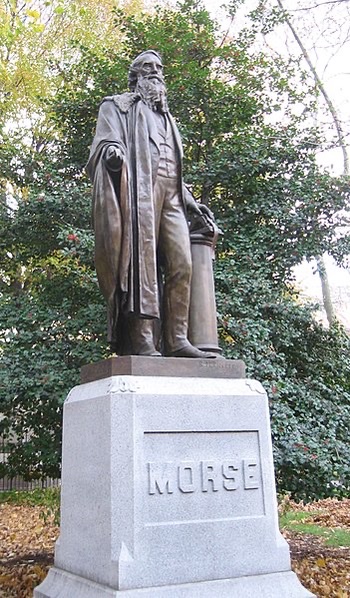
Statue of Morse in Central Park
Similar to inventions like the telephone and radio, the telegraph started slowly, but gradually picked up speed, constantly moving messages further and faster. Eventually it was used for everything from troop movements to congratulations for wedding parties. After an illustrious career, and world-wide accolades, Morse died on April 2, 1872–truly a man of many talents.
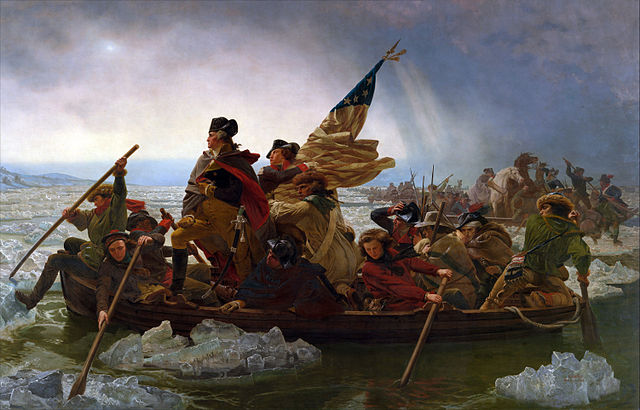
Painting of Washington Crossing the Delaware by Emanuel Leutze
During the holidays, some people have a tradition of settling down to watch a classic movie like “It’s a Wonderful Life,” “Holiday Affair,” or even “Home Alone.” Let me suggest another one–one that’s a true Christmas miracle. Take a look at The Crossing (2000). With Jeff Daniels as George Washington, Sebastian Roche as John Glover, Steven McCarthy as Alexander Hamilton and John Henry Canavan as General Henry Knox, it’s an extremely accurate portrayal of Washington’s crossing of the Delaware on Christmas 1776. (Along with some very funny moments)Two thousand ragtag Americans attacked the German Hessian mercenaries in what was truly the American’s last stand. All of their enlistments would end in January. Many had already left for home. Those who remained were freezing and famished, marching in rags, many without shoes. They had managed to cross into Pennsylvania barely ahead of the Hessians.
In a last attempt to keep the Americans fighting for their new country, Washington decided to cross back into New Jersey and attack the Hessians who were quartering in Trenton. Colonel John Glover, a mariner from Marblehead, MA, was in charge of rowing all of the American troops, including General Knox’s men, back to New Jersey, where they would attack the Hessians. It was a miserable night with snow, sleet and freezing rain. Everyone moved as quietly as possible, lest the Hessians hear them coming. The battle itself stunned the Germans who almost never fought in the winter, much less on Christmas Day.
I do hope that you’ll take a little time and watch the film. You’ll come away with a very different understanding of what happened that Christmas.
General John Glover
The men in Washington’s inner circle were an interesting group, particularly General John Glover (really, watch the movie!) I just finished a great book, The Indispensables (2021) by Patrick O’Donnell, in which Glover plays a major role. Glover came from Marblehead where, almost 10 years before the start of the Revolution, breaking with Great Britain became a quiet reality. By early 1775, Glover led the Marblehead Regiment, which really became “indispensable.” They fought at Lexington, at Bunker Hill, guarded Washington, brought the Americans across the East River from Brooklyn to Manhattan in what became the first “American Dunkirk,” and on Christmas night, 1776, rowed Washington and his men back across the Delaware, allowing them to take Trenton, and ultimately change the American Revolution.
Besides the book’s quick pace and outstanding details, O’Donnell discusses the truly diverse group of Marbleheaders. Men of all faiths, creeds and colors–whites, Native Americans, black and hispanic, all fought side by side. It was a forgotten page in American history which didn’t fully appear again until 1948. So if you’re not into movies, or if you want to learn more about Washington crossing the Delaware, and the Marbleheaders, this is a great choice.
historical LenseThis afternoon I will be watching the 122d meeting of the Army-Navy Game. Members of my family have graduated from the United States Naval Academy since 1944 (and one is hoping to attend with the class of 2029) so clearly I root–loudly–for Navy. But I was taught early on–like at age five–that at the end of the game, both Midshipman and Cadets, stand together. They are brothers in arms. The are all Americans. It is a wonderful display of the best of the US.
I’ve watched the game since 1957, through all sorts of serious issues both domestic and foreign. At the end of the game, people in the stands stood there quietly as both teams moved over to the side of the looser, and together sang the song of their alma mater, and then jogged back to the winning side, and again, both of them sang their alma mater. Ofter there were groups of Congressmen and Senators, cabinet members, and diplomats, standing there next to veterans, active duty military, and people who simply loved the game. There was no arguing about current issues. No snide comments. We were all Americans. Sadly in the recent past that attitude seems to have changed. From Congress to family members. And it’s not changed for the better. I hope that people on both sides can truly pay attention to the REAL meaning of the game.
Pearl Harbor took place in the early morning of December 7th eighty years ago this week. All of us know at least the broad outlines of what happened that day. Even history-haters in school heard their teachers drone on about it. But if you somehow managed to avoid it, Google it!!! You’ll see the “before and after” of the ships on Battleship Row–the beginning of the US involvement in World War II. Rather than giving you a short course on Pearl Harbor, let’s take a look at one of the hundreds of men who fought at Pearl Harbor. Doris Miller
Mess Attendant Second Class Doris Miller.
Doris Miller was born in Waco, Texas, on October 12, 1919, one of four children. He was named after the midwife who had assisted his mother–both ladies had expected he would be a girl!😳 Most of his family and friends ended up calling him Dorie. His parents owned a farm, and like most farmers, all four children worked on the farm when they weren’t it school, though Dorie did enjoy doing a lot of cooking for his mother. He was a fullback at Alexander James Moore High School, but left school to work with his father on the farm.
USS West Virginia, c. 1934
Miller enlisted in the Navy in September 1939, and went through the segregated Naval Training Center, Naval Operation Base at Norfolk, VA. After training he joined the USS Pyro, an ammunition ship. He transferred to the USS West Virginia in January of 1940. He started competitive boxing there, and quickly became the heavy-weight champion on the West Virginia. In July 1940 he was temporarily ordered to the USS Nevada to attend Secondary Battery Gunnery School, returning to the WestVirginia that August.
He was serving breakfast at 7:57 am when planes from the Japanese carrier Akagi fired the first torpedo to hit the West Virginia. Miller immediately went to his battle-station, an anti-aircraft battery magazine amidship. When he got there, he saw that it had been blown to smithereens. He then headed to “Time Square” to see who needed help. He joined Lt Cmdr. Doir Johnson to move the ship’s captain, Capt. Marvin Bennion, who had been catastrophically wounded, to a safer spot. Miller then joined Lt. Frederick White to load the unmanned 1st and 2d Browning .50 caliber anti-aircraft guns. White thought Miller would just feed the ammunition, but he briefly turned away to speak to someone, and when he turned back, Miller was firing the the gun. He downed at least two planes, possibly three, firing the gun until he ran out of ammunition.
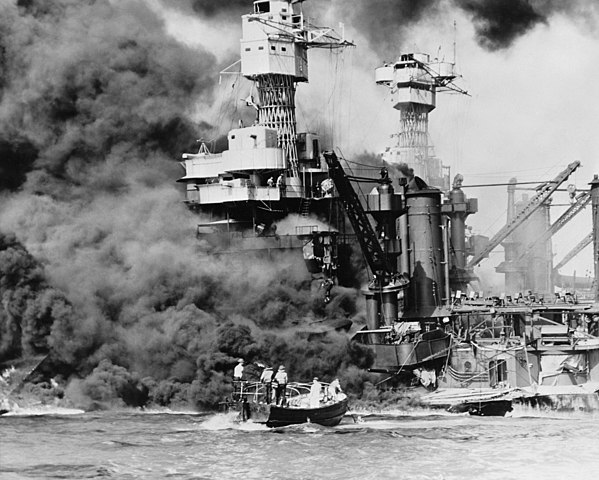
USS West Virginia, December 7, 1941
Finally, two Japanese armor-piercing bombs hit the West Virginia, and passed through the deck. Five additional aircraft torpedoes hit the ship. The crew managed to prevent the ship from capsizing–it sank upright in shallow water. Attacks from the Japanese planes slowed a bit, giving Miller the opportunity to carry many injured men to the quarterdeck. He also helped many of them to safely abandon the upright ship. In February, 1942, Doris Miller was the first Black American to receive the Navy Cross. Papers throughout the country called him “The First U.S. Hero of World War II.”
After Pearl Harbor, Miller reported to the USS Indianapolis, and later transferred to the escort carrier USS Liscom Bay, which, in November 1943, was sunk at the battle of Makin during the Gilbert Campaign.
In honor of Miller, the new Gerald Ford Class nuclear-powered air-craft carrier will be named the USS Doris Miller. It will be laid down on 2023, and will be launched in 2028.














 Historical Lense