Our Family Thanksgiving

Rather than telling you something historic about Thanksgiving, this year I asked my mother if she would mind if I told you about our family Thanksgiving. She was fine with it, because in our family it’s an extra-special day, even more than Christmas, New Years Eve or Easter.

My grandfather (my mother’s father) was born in 1900. Three years later, his father had to flee from their country, because he was preaching democracy which was a no-no there. His wife agreed with him, and if it were just the two of them they would have continued, but they had to think of the future for their three children, ages six to one. They decided that he would go to America, find work, save his money, and send for them, as soon as possible. He was a well-educated man and found work as a bookkeeper for one of the railways. In late October, 1904, his wife and children boarded a ship headed to the US.

Ellis Island, c. 1900

The ship arrived at Ellis Island on November 24, 1904. Everyone was excited to go ashore, by the crew told them that they had to wait until the following day. They explained that it was a holiday–something called Thanksgiving–and all the Americans who worked at Ellis Island had the day off. They explained in broad terms what the holiday was, but many of the ship’s crew weren’t American themselves and didn’t know about the holiday. Finally one of the crewmen told them that it was “Chicken Day.” 🤨 A holiday for chickens?? Well, in very few areas of Europe did people know about turkeys, so chicken seemed to be a close similarity. The passengers disembarked the following, and my family found their husband/father waiting for them when they landed on the Battery in Manhattan.

Live was not easy for the family in the early days, but that had done clear goal–to becoming naturalized citizens. The children went to PS 29 in Brooklyn while both of their parents worked and the children got jobs after school. Occasionally there would be class trips, and the one he remembered most clearly was to the Statue of Liberty. From there, he could see Ellis Island which was as busy as ever. And they never missed a Thanksgiving. A few years later, their father ended up almost blind, so he could no longer work. My grandfather was apprenticed to a tailor, and eventually became a master tailor. But when the Depression hit, he took a job as a salesman, and they left New York. He ended up with a great job, a lovely family, and children who graduated from college and went on to significant careers.

For the rest of his life–and Grandpa lived to 100–Thanksgiving THE day. I can hear him now. “Thanksgiving is the most important day in our lives. Do you know how lucky you are to live in the US?” He’d point to his Naturalization Papers which were in the frame that was in pride of place in their house. “You live in a democracy–we didn’t. And even though it took a lot of work, we did it LEGALLY!” He’d point to his briefcase and papers on his desk. “If you work hard in America, you can achieve anything.” I’d hear him say that every year, and I must say I agree with him. So Happy Thanksgiving to you all.
The Tomb of the Unknown Soldier 1921-2021

One of the tragedies of war is the death of so many soldiers and sailors. Even worse is the fact that there are so many who are unknown. Going back to the Peloponnesian War, there have been monuments for soldiers who remained unknown. In many wars, large numbers were buried in mass graves, often with monuments with the appropriate dates. Things changed during World War I.

At that time, most nations started requiring their men to wear ā€dog tagsā€ of some sort. (The Americans tags were made of aluminum and literally held the person’s name, rank and serial number.) The armies also set up new units which would keep track of those who had died. (Graves Registration Services in the US) At the end of the war, many of the deceased were re-interned in their own nation. However, there were so many who had died during the war, that it would have been impossible to repatriate everyone. Many families decided to allow their service member to remain with their brothers-in-arms and are buried in national cemeteries in France.

In 1920, Great Britain brought one of the Unknown Soldiers home and solemnly re-interned the soldier in Westminster Abby. Similarly, an Unknown Soldier is guarded at the base of the Arc de Triomphe in Paris. In early 1921, Hamilton Fish, Jr., a World War I veteran and member of Congress offered legislation ā€To bring home the body of an unknown American warrior who in himself represents no section, creed or race in the late war and who typifies moreover, the soul of America and the supreme sacrifice of her heroic deeds.ā€ The legislation passed, and it was decided that the Soldier would be placed in a tomb in Arlington National Cemetery.

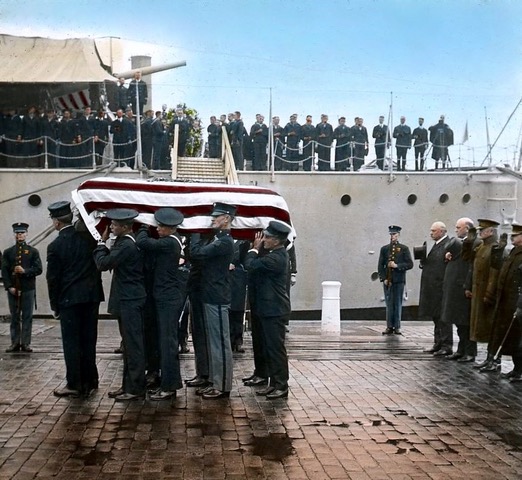
Work began on the tomb that spring, and in October, 1921, four bodies of unknown soldiers were exhumed from four different cemeteries in France. On the 23th they arrived at Chalon-sur-Marne. The following day, Maj. Robert Harbord, USA, with a group of French and US soldiers, placed each casket on top of a shipping case. The Major then asked Sgt. Edward F. Younger to select one of the men. Younger walked gravely around the four caskets several times, then stopped and put a spray of white roses on one. The others were returned to the cemeteries they had left, while the fourth casket was placed in its shipping case and was moved on a caisson, and later by train, to the port of La Havre. From there it boarded the USS Olympia bound for the US.

Unknown Soldier from World War I being taken from the USS Olympia at the Washington Navy Yard and transported to the US Capitol to lay in state. On November 11, 1921 the body was intered at Arlington National Cemetery (photographed by E.B. Thompson) http://www.flickr.com/photos/dcplcommons/3423377913/ http://www.flickr.com/people/dcplcommons/ District of Columbia Public Library

The Olympia arrived at Washington D.C. on November 9th. From there the coffin moved to the Capital where it lay in state at the Capital Rotunda. Over 90,000 people paid their respect on the 10th. The following day, the Unknown Soldier was placed on another horse-drawn caisson and slowly wended its way through Washington, D.C., crossed the Potomac, and moved on to the Arlington National Cemetery. President Warren G. Harding presided at the state funeral at the Arlington Memorial Amphitheater which included the two minutes of silence to commemorate the end of the War (Known as Armistice day–the 11th hour of the 11th day of the 11th month.)

Soldiers from Ft. Myers began guarding the Tomb in March 1926. They only did so during the day to make sure that family members didn’t become distraught, and that others remained respectful. In 1937 soldiers began guarding the Tomb 24/7, and in 1948 the 3d US Infantry Regiment, known as the ā€Old Guardā€ took charge of the Tomb. Since then, the US has added men from both World War II and the Korean War to the Tomb. It can be the dead of night, in blazing sun or two feet of snow, the Old Guard is on duty.

Changing of the Guard at the Tomb of the Unknown Soldier

Thursday, November 2021 is the 100th anniversary of the Tomb of the Unknown Solder—Never Forget!

Happy 246th Birthday Marines!

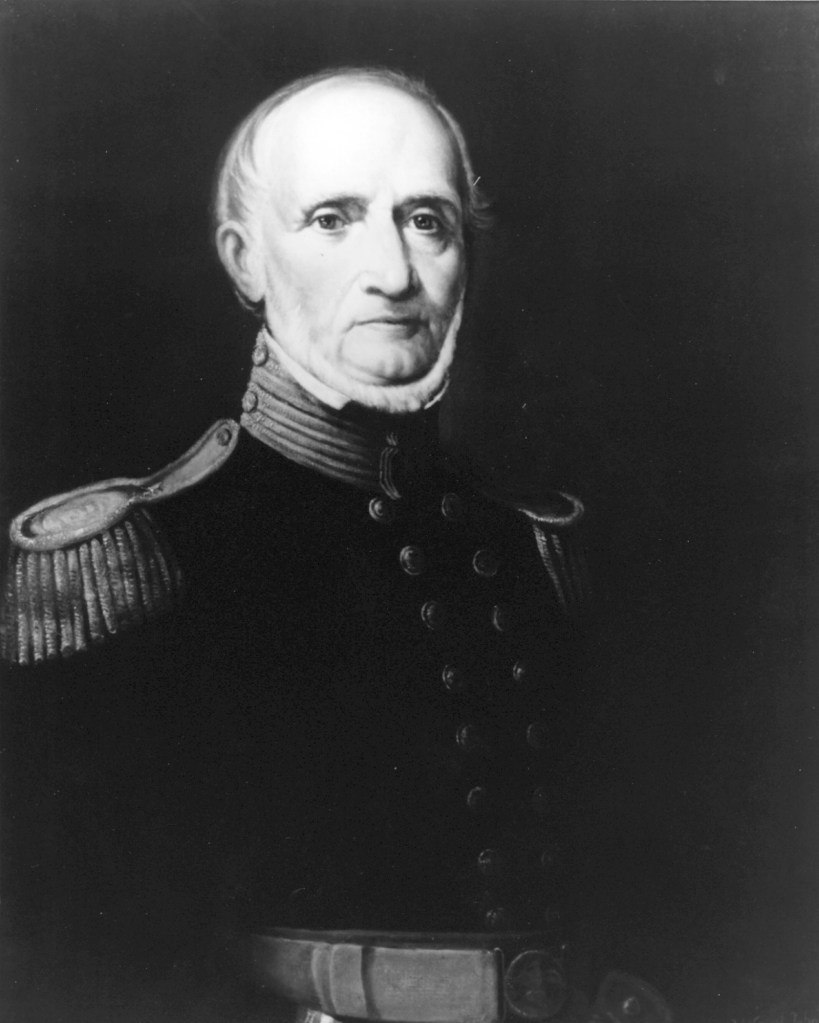
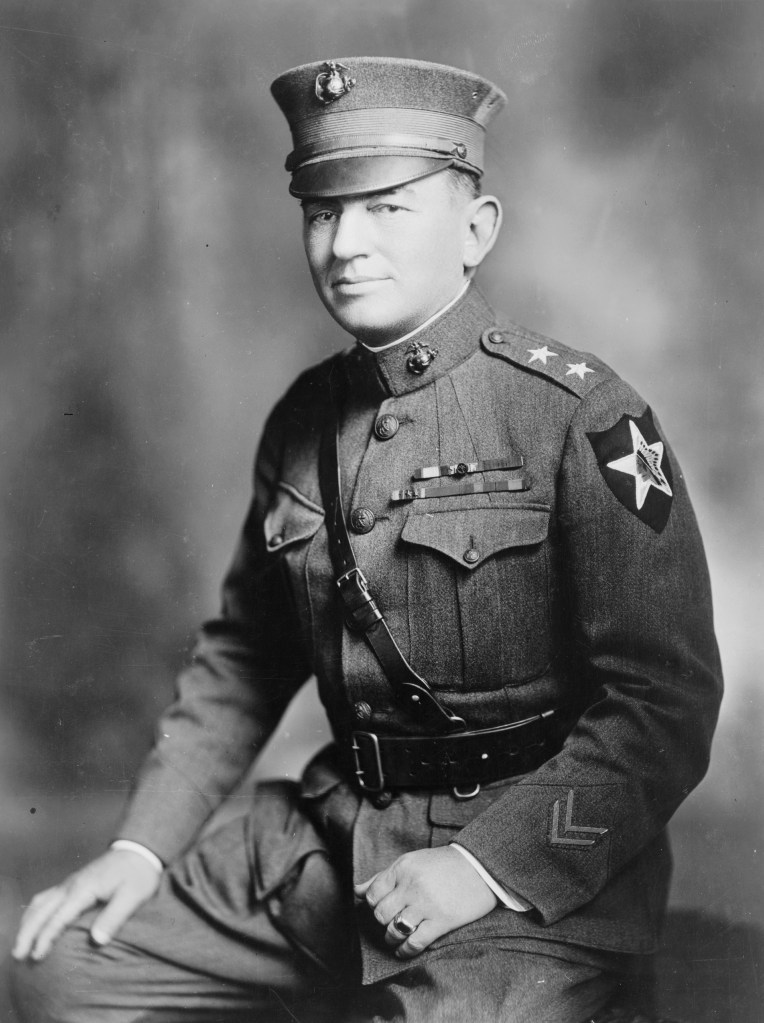
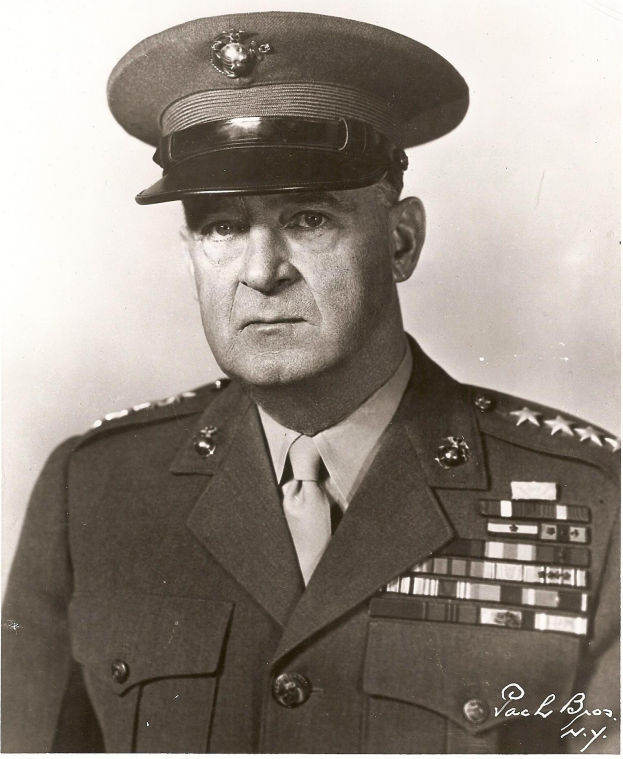
It was 246 days ago today that Captain Samuel Nicholas started recruiting Marines at Tun Tavern located at Water Street in Philadelphia. They have had a long and storied career with no end in sight. (You might want to take a look at last year’s birthday post.) Here are a few portraits/photos of some of the past Commandants of the United States Marine Corps.

BGen. Archibald Henderson
BGen. Jacob Zeilin
Lt.Gen. John A. Lejeune
Gen. Alexander A. Vandegrift

So Happy Birthday Marines, and many more!!

Fall Back–AND STAY THERE!! ā°

The US and about 40% of the nations in the world switch between standard time and daylight savings time. This Saturday/Sunday, November 6/7 is the day when the US turns our clocks back one hour–we “fall back.” Then we “spring forward” an hour on the second Saturday/Sunday in March. I did a quick survey this week–asked over 45 people I ran into when I was out and about–if they think this is a good idea. Two said yes. Forty-three said no. (With a variety of expletives which I can’t say in polite society.) Where did this idea come from? And is it really a good idea?

Benjamin Franklin first came up with the idea. He believed that having another hour of daylight would save money on candles, but it didn’t take off the way so many of his other ideas did. It really came to national attention in May, 1916, in the middle of World War I, when the German government believed that daylight savings would save fuel. The British and French started doing the same in 1917, and in 1918, the US joined them. At the end of the war, President Wilson wanted to continue that system, but many people, particularly in the rural US, hated the idea because they would loose an hour of daylight they needed on their farms. Wilson relented. Daylight Savings Time–then called War Time–returned during World War II, again because the government believed it would save fuel.

Daylight savings remained after the war, though the times were different in different parts of the country. In 1966 Congress passed the Uniform Time Act in which Daylight Savings Time began on the first Saturday/Sunday in April and changed to Standard Time on the last Saturday/Sunday of October. Congress again changed it in 2007 to the current November and March system. Why do we do this? Largely because the Department of Transportation (DOT) thinks that it saves energy and prevents accidents. As usual, I dod some research. It does NOT seems to work out like the DOT believes it does. In fact it’s pretty much the opposite.

Perhaps the use of energy in the World Wars, when we used mountains of coal, was a factor, but it really isn’t these days when we use natural gas renewables and even clean coal. In fact, the energy saving these days is from slim to zero. Work at the Oak Ridge National Laboratory finds that since electricity has become so efficient in the recent past, the cost savings of power is negligible.

Now let’s take a look at accidents. Peer-reviewed information from Current Biology shows that there is a 6% increase in car accidents for several days when we “spring forward.” (There are lots more journal articles–I just don’t want to bore you.) And that also means a significant increase in ER visits. Everything from a few bumps and bruises to traumatic injuries and death. And ever if we didn’t care about peoples, (though I believe most of do) the increase in medical costs is significant.

Why all the accidents? Because of sleep deprivation. And one hour can definitely make a difference. We all have a circadian rhythm–and internal clock–which tells each of us when we need sleep. What happens when we don’t? If we’re lucky we just feel tired and out of sorts for several days. But we can also end up in the ER. And if we drill down a bit, according to the Journal of Clinical Medicine in a 2019 report, they find higher numbers of heart attacks when both “sprinting forward” and “falling back.” The American Association of Cancer Research journal Cancer Epidemiology, Biomarkers and Prevention discussed the influence on Daylight Savings and Standard time with cancer. A 2015 Finnish study Sleep Medicine discusses the fact that in addition to cancer and heart attacks, there is an 8% increase in strokes in the days after the transition in DST. Most people who do shift work will tell you that even if they are careful and try to get sleep during the day, it’s still more difficult to work at night.

Because of these, and so many more issues, 15 states want Congress to stop changing the time twice a year. They don’t care which one, just pick on and stay there!!!

Should We Have Sputnik 2.0 šŸš€šŸš€šŸš€

About ten days ago I turned on the radio and opened the door to get my newspapers, and both my eyes and ears left me surprised. Seriously surprised–and seriously annoyed. 😤Apparently back in August the Chinese military launched a hypersonic low glide missile. What was so irksome was the fact that it appears that US intelligence hadn’t known about it until just days before it was announced in both the radio and newspaper (and TV news later). If that’s the case, and I really hope it’s not, then I can only ask what the %(#^ has our Intel been doing???

What is a hypersonic vehicle? It’s one which moves at 5+ times the speed of light. In this case, the vehicle was in low-earth orbit, went around the earth, and missed its target by 20 miles–and easy tweet to get it right the next time. That is extremely concerning because at this point in time, it’s virtually impossible to stop such a vehicle. Both the US and Russia have been working on hypersonic vehicles, but they are both far behind the PRC. It should definitely be a wake-up call, similar to what happened with Sputnik in 1957. I have a feeling that we need a Sputnik 2.0 right now!

So what was Sputnik? In April 1957, the US and USSR agreed to the International Geophysical Year (April 1957-December 1958). Eventually 67 nations took part. That summer, President Eisenhower received a briefing in which he heard that the Soviets were working on the first artificial satellite. After serious internal discussions the US quietly began Project Vanguard. The Russians, however, were farther along, and actually scaled back their work in order to launch Sputnik (which means Satellite) first.

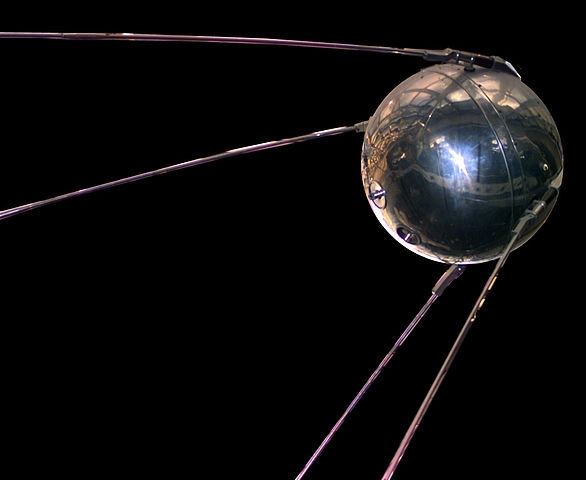
Sputnik October 4, 1957

On October 4, 1957, the vehicle launched from Site 1/5 in Kazakh SSR (now known as Baikonur Cosmodrome). It was a spherical metal structure with four radio antenna attached to the exterior. Stations across the USSR would track radar, optical instruments and communications to gain a great deal of information. It would orbit the earth every 98 minutes, and would do so for 21 days, until the batteries died on October 26. At that point, Sputnik would continue to orbit in silence until January 4, 1958, when it burned up during reentry.

Very shortly before the launch, the Soviets enlisted amateur radio operators around the globe to listen for Sputnik as it flew across their area. They were told to listen for a constant “Beep. . .Beep. . .Beep.” Many people joined in, including the American Radio League, and the ham radio station at Columbia University. The Soviets also told certain groups that they might be able to see Sputnik as it passed certain areas in the early evening. Canada’s Newbrook Observatory was the first to photograph Sputnik in North America, and the USAF Cambridge Research Center, Westinghouse Broadcast and the Smithsonian Astrophysical Observatory go videos of Sputnik as it crossed Baltimore.

Sputnik was massive wake-up call in the US, and the Space Race was on. The US cranked up their work with the new Vanguard rockets–the first one failed in December 1957, the second one failed in February 1958. The third Vanguard finally got into orbit in March 1958. That was only the beginning. In short order NASA was up and running, and by July 1969 the US had landed on the moon.

Beyond that, most Americans–everyday Americans–wanted to know why we were so far behind, and what to do about it? Besides things like NASA, schools immediately began changing their curriculum from standard reading, writing and arithmetic to a LOT more math and science for everyone–whether you enjoyed it or not. And that happened rapidly. Where I lived, things changed over the summer of my kindergarten and first grade.

Not as many girls were involved in math and science during the Space Race, though I do have girlfriends who went on to get degrees in biology, math, chemistry and physics. Today there’s a real push to provide STEM (science, technology, engineering and math) for our students, much the same way we shifted to the sciences 60+ years ago. after Sputnik Given the current use of technology and the internet, STEM is incredibly important today. But I think finding out about the Chinese hypersonic low glide missile is an ever more important wake-up call to the US. First, we should immediately improve our intelligence and second, either immediately go full-bore on our work on hypersonic vehicles–or start learning Mandarin.

National Police Week–Never Forget

It’s been a difficult few years for police. In 2020, 374 members of law enforcement died in the line of duty, and so far this year, 356 have died serving the public. Perhaps I’m particular attentive to what’s gone on because my grandfather was a volunteer police officer during World War II, and one of my family members is a detective. It’s funny how little we thing of them–until we need them! They come out any time, day or night, in every kind of weather, and do whatever they can to help–from finding a lost child to breaking up violent gangs to domestic violence to catching homicide suspects and everything in between. It’s incredibly hard work for little pay and yet they still try to do their job professionally and compassionately. Yes there are some very bad apples, but that is an infinitesimally small number.

Police Week 2019

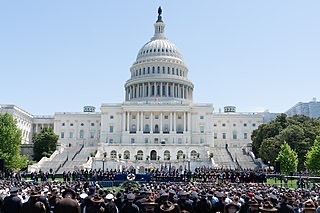
In 1962, President John Kennedy signed a proclamation making May 15 Peace Officer’s Memorial Day, which eventually became known as Police Week. Numerous events are planned each year throughout the country to honor men and women of law enforcement who died in the line of duty that year. Major events are slated for Washington, D.C. A Memorial Service took place in the Senate Park in 1982 with 120 surviving family members and supporters of law enforcement officer. It has grown each year, with more than 30,000 law enforcement officers from every state and a number of them from other nations attend the week-long event. It now include a number of events, notably a Candlelight Vigil and the Police Week Blue Mass.

Due to the pandemic, Police Week was be put on hold. Rather than taking place in May 2021, it’s being held this week, will all the appropriate solemnity that it always has. Though many of the functions have been watched virtually, thousands of men and women have still participated in Thursday’s Candlelight Vigil, today’s National Police Survivor Conference, and Saturday’s National Police Officer’s Memorial Service and the Wreath Laying Ceremony and Standing Watch for the Fallen.

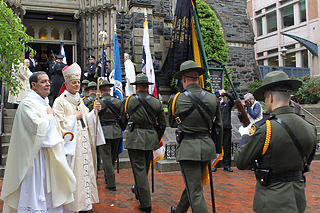
Police Week Blue Mass, 2013

The Book, The Movie, A Bridge Too Far

My last post was titled A Bridge Too Far, and I was discussing the IRS. However, I promised that I’d tell you about the actually book. So I’m circling back to discuss both the book, and the movie. Both book and film were written by Cornelius Ryan, a war correspondent who went on to write several excellent military histories, especially The Longest Day, about D-Day, and A Bridge Too Far about Operation Market Garden and the Battle of Arnhem. The 1974 film received four BAFTA awards. It was an impressive ensemble case including Dirk Bogarde, James Caan, Michael Caine, Sean Connery, Edward Fox, Elliot Gould, Gene Hackman, Anthony Hopkins, Hardy Kruger, Laurence Olivier, Ryan O’Neal, Robert Redford, Maximilian Schell and Liv Ullman.

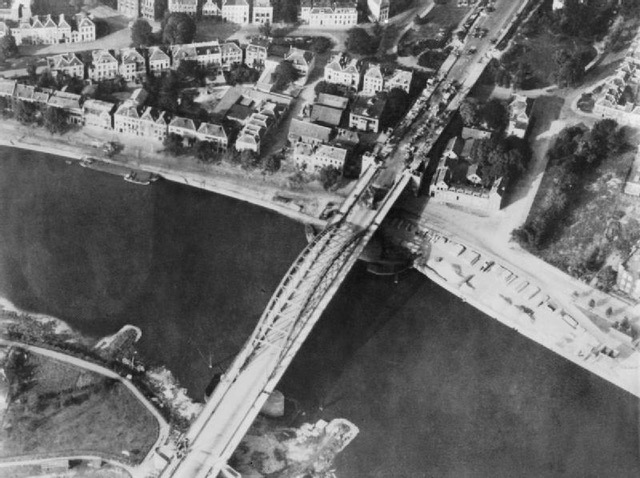
Most of us know a fair amount about D-Day, but not as much about Operation Market Garden (September 17-26, 1944). Once the Allies had broken through the bocage in Normandy, they crossed northern France and through Belgium. From there, some commanders, particularly Field Marshal Sir Bernard Montgomery, hoped that the Allies could rush across The Netherlands and make a run through the Ruhr toward Berlin, and end the war. Montgomery particularly wanted the Allies to take The Netherlands because that’s where the Germans were staging their new V-2 rocks which landed indiscriminately in the UK. He pressed General Eisenhower to agree to Market Garden, a combined operation in which paratroopers and gliders from the UK, US, and Polish Parachute Brigade would seize the Nederrijn bridge across the Rhine at Arnhem, and hold it for two days while the XXX Corps would move up and the combined troops could then press on toward the Ruhr.

Neherrijh Bridge at Arnhem

Problems began immediately. The 1st Airborne Division (UK) landed at least a mile from the bridge. Unfortunately, they also landed relatively close to the Headquarters of Field Marshal Walter Model, and the German 9th SS Panzer Division. Ultimately, only about 700 Allied troops managed to cross to the northern side of the bridge. The main force was stuck on the southern side on outskirts of Arnhem. Then, due to deteriorating weather, the XXX Corps couldn’t move up as quickly as expected to reinforce the paratroopers.

After nine days of fighting, the XXX Corps still could barely supply the men on the northern side, much less get troops across to help the beleaguered men. The 9th and 10th SS Panzer Divisions were doing a good job of keeping the Allies pinned down. By September 25, the few remaining men who clung to a toe-hold on the norther side were ordered to withdraw to the southern side. Even that was difficult, requiring them to find a variety of small boats. Ultimately a number of men swan to safety, while others were captured. The operation was a dismal failure.

The ultimate problem in Operation Market Garden was that the Allies had not truly secured Antwerp before moving on toward Arnhem. Without being able to smoothly move all the materiel from Antwerp to Arnhem, and having to simultaneously deal with the Panzer Divisions and taking the bridges, it really was a bridge too far.

A Bridge Too Far is an outstanding book—meticulously researched and written like a page-turner. At the same time, it’s a striking film, as both a movie and as a solid piece of history. I hope you’ll take a look at least one of them.

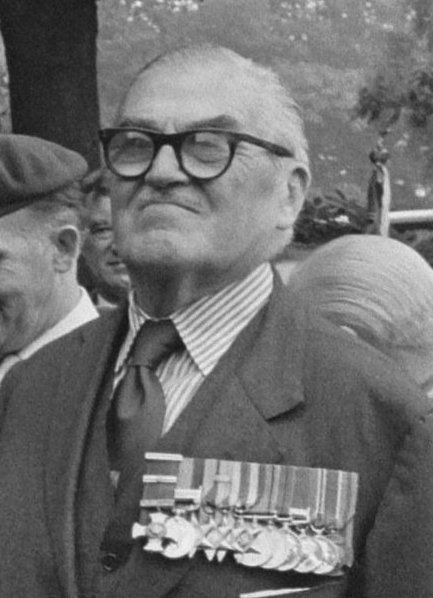
The actors did an excellent job of portraying the men involved in Market Garden. Since it’s easy to find photos of the actors, I decided to included some photos of the real men involved.

MajGen. John Frost
MajGen Robert Urquhart
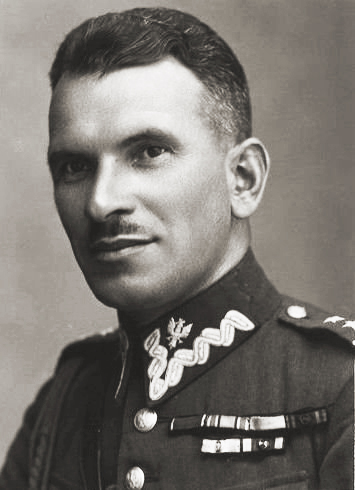
Gen. Stanislaw Sosadowski
LtGen Sir Frederick Browning
Maj. Robert Cain

A Bridge Too Far

No, I’m not talking about that great movie. I’m talking about the IRS šŸ™„. I’m sure we all pay our taxes every year, though it’s not the most enjoyable task we do each April. But a variety of taxes have existed in the US since the beginning of the Constitution in 1789. “The Congress shall have the power to lay and collect taxes, duties, imposts, and excesses to pay the debt and provide for the common defense. . .” It wasn’t until 1862, in the middle of the Civil War, that President Lincoln signed the second internal tax measure.

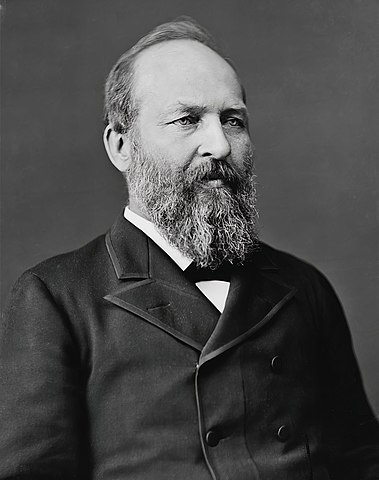
President James A. Garfield

What’s particularly important, but little remembers, is that in 1870 Representative James Garfield (later President Garfield) worked to make tax information private. On July 14, 1870, the Internal Revenue Commissioner, Columbus Delano, made it clear that “no collector . . . shall be permitted to be published in any manner such as income returns or any part thereof except such general statistics.” And that remains–even when the 16th Amendment to the Constitution, giving Congress the ability to level both corporate and personal incomes.

So why am I so aggravated? Because if you read the fine print in the Build Back Better plan (and I’m one of those nerds who does read things like that) part of the 3.4 trillion dollars šŸ˜µā€šŸ’« is 80 billion dollars to go to the IRS to add thousands of auditors and other workers. Why? Because they want to look through every person’s bank account if he or she has more than a $600.00 balance, or more than $600.00 in transactions every year. 😔 That will include almost all of the middle class and many people who are truly struggling. Do we really want the IRS knowing when we pay our rent or our electric or heat bills? Is it OK is we’ve saved for years to take our family on a vacation? Silly me–I though that if I carefully figured our my taxes, and paid them on time every year, the IRS would leave me alone. Apparently not. The theory is that there are so many tax cheats that we need more people drilling down to really see what we’ve been doing. Frankly this is sounding like Bid Brother wanting to watch us.

How about a hard NO.(Remember Commissioner Delano) It’s my business, and your business, if we want to spend our money on food or couture clothes, books or the ballet, a bus pass or a Maserati, a road trip to see family or a Mediterranean cruise . . . and what if we decide to give money to a candidate that the IRS doesn’t like? That’s why I said this is a bridge too far. Look into it and see what you think.

IRS

If you want some more information, take a look at “The IRS and Your Bank Account” pg A16 on October 5th’s Wall Street Journal

Should He Stay or Should He Go?

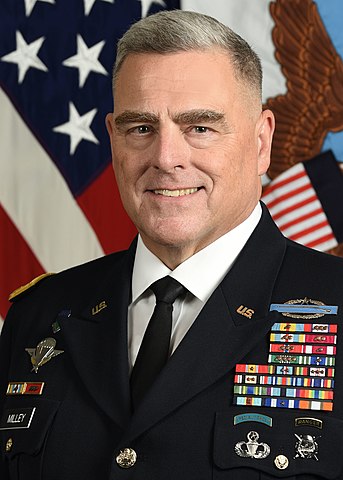
Next week, the head of the Joint Chiefs of Staff(JCS), General Mark Milley, is going to be on the hot seat in Congress regarding his involvement in the US debacle in Afghanistan. Add to that the comments in the new Woodward and Costa book regarding the General’s conversations with his opposite numbers in China. Some say they were standard discussions. Others believe that he was trying to overthrow the duly elected president and at the very lease should resign immediately. Should he stay? Or should he go? The Congressional hearings will be key to his future.

U.S. Army Gen. Mark A. Milley, 20th Chairman, Joint Chiefs of Staff, poses for a command portrait in the Army portrait studio at the Pentagon in Arlington, Va., Sept. 26, 2019. (U.S. Army photo by Monica King)

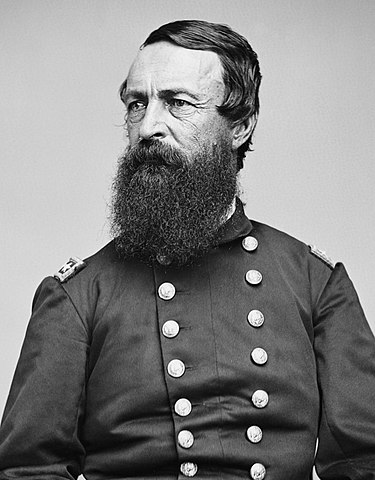
Yet a number of my students—friends, too, don’t really know how the JCS came about. For that we really should go back to the War of 1812. The war’s ground campaigns were key, yet the naval battles on Lake Champlain under Capt. Thomas MacDonough were a major component of the ultimate success of the War. President Madison and the Secretaries of War and the Navy understood that joint operations were vital. Nor can we forget the importance of the joint operations of General Ulysses S. Grant and Admiral David D. Porter during the Battle of Vicksburg. By 1900, war had become so complicated that it was clear that joint operations could not be done on an ā€œas neededā€ basis. In 1903, the US established a Joint Army and Navy Board that could set up joint ops. However, it wasn’t a fully integrated Board. Rather it was simply a planning board which could discuss issues. By the Great War, is still was not truly involved in the actual conduct of joint operations. After the War, the Secretaries of War and of the Navy redefined the Joint Board. It now included the two services’ Chiefs, Deputy Chiefs, the Chief of War Plans Division of the Army and the Director of Plans Division of the Navy. The Joint Board could now make recommendations for joint operations.

Admiral David D. Porter

This was headed in the right direction, until the attack on Pearl Harbor on December 7, 1941. In the Arcadia Conference (December 22, 1941-January 14, 1942) President Franklin Roosevelt and Prime Minister Winston Churchill set up the Combined Chiefs of Staff. For some time, the British Chiefs of Staff had established administrative, strategic and tactical coordination. It was clear to the Americans that to work closely with the Combined Chiefs, they would finally have to expand and coordinate the US Army and Navy planning and intelligence structures in an effort to provide advice to the Secretaries of War and the Navy, and to the President himself. To do so, the US set up a combined high command in 1942 that was called the US Joint Chiefs of Staff. Roosevelt wanted someone to be in charge, and looked to Admiral William Leahy.

Leahy was born in Iowa in May, 1875, and was graduated from the US Naval Academy in 1897. He served in the Spanish-American War, the Philippines, China, Nicaragua, Haiti and Mexico. During World War I, Leahy captained a dispatch boat that the Assistant Secretary of the Navy, Franklin Roosevelt used, and they developed a lifelong friendship. During the inter-war years Leahy held numerous posts and by 1937 he became the Chief of Naval Operation which he held until his retirement in 1939. Roosevelt then named him governor of Puerto Rico which he held until January 1941 when the President found that Leahy would be the best man to serve as ambassador to France–that is Vichy France. As ambassador he worked tirelessly to try to lessen the grip the Nazis held Vichy, but to no avail. After Pearl Harbor, Roosevelt ordered Leahy home, to serve as his senior military officer who would liaise with the chiefs of the Army and Navy. The US needed someone to work both with the President, and the chiefs, as well as the Combined Chiefs. All agreed that Admiral Leahy was the man for the job. He became the Chief of Staff to the Command-in-Chief of the United States on July 6, 1942.

Admiral William Leahy

With years of experience as a naval officer, and an innate understanding of diplomacy, he was able to wrangle all three US chiefs of staff–General George Marshall (USA), General Henry (Hap) Arnold (USAAF) and Admiral Ernest King (USN), and worked extremely well the the Combined Chiefs from the UK. When President Roosevelt died in April, 1945, President Truman requested that Leahy continue as Chief of Staff which he held until he retired again in March, 1949. He died at the Bethesda Naval Hospital in July 1959.

After the war, Leahy published his memoir, I Was There, which is one of the most honest memoirs I’ve read. He was not trying to add ā€œspinā€ to any answers, wasn’t trying to “cover his six” by shifting responsibility to others. He was not a “political Admiral” like so many are these days. What would Leahy have thought about General Milley?

You may be interested in Leahy’s book, or a full biography of the Admiral as listed below

http://William Leahy, I Was There. (1950)

http://William Adams, Witness to Power, 1985

After You, Marco Polo

While we continue to look for ways for Americans and Afghans who worked with worked with us to leave Afghanistan, we might want to take a few hours to see what the nation was like prior to 1973. Yes, it was a loosely held nation, but it was a nation which was trying to develop into a more modern nation which worked for them. I just re-read a book that I first year 55 years ago. It’s more a travelogue that a history, but it gives the reader a great understanding of what Afghanistan was like before the Soviets, and the Taliban took hold.

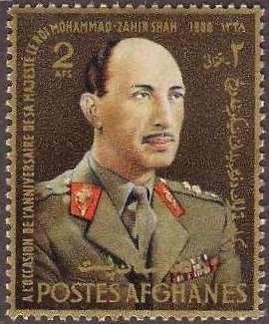
After they honeymooned in the Gobi Desert, Jean Bowie Shor and her husband Franc Shor, decided that they would literally follow the travels of Marco Polo from Venice to Beijing that he took between 1271 and 1295. (Hence their 1956 book titled After You, Marco Polo.) The two wended their way from Venice through Turkey and crossed into Iran where they spent several days with King Reza Pahlavi. From there they moved into Afghanistan, where finally reached Kabul and met King Mohammed Zahir Shah.

King Mohammed Zahir Shah

Born in 1914, he began his reign with the death of his father in 1933. He was a truly impartial person interested in improving the lives of his countrymen. He expanded Afghanistan’s relations with a number of nations, both in the West and the East. In the 1950s he began a concerted effort to modernize the country, and in 1964 established its first constitution, and was pleased to become a constitutional monarch. The new constitution included universal suffrage, civil rights, women’s rights and a significant expansion of education for both men and women. Unfortunately, in 1973, when King Zahir was in Italy for medical treatment, a former Prime Minister, Mohammed Daud Khan, carried out a coup, ending the 225-year monarchy. Zahir Shah stayed quietly in Italy until he returned to Afghanistan in 2002 at the breakup of the Taliban ,to see the Loya Jirga which established the new government. A very frail man at that time, he was known by everyone as the Father of the Nation until his death in 2007.

In the course of their trek, the Shors had to get special permission from the King himself to ride through the Wakhan Corridor and cross the Pamir Mountains. He was the consummate gentleman and in short order they continued their journey.

In the course of their travels, the Shors used cars, horses, yaks and walked on foot. The book described the customs, religion, institutions, habits, even diets of each region. They dealt with warring tribes, robbers, hunger, and terrible weather. They also met extremely generous and helpful people regardless of the language barriers. At one point, Franc Shor was deathly ill. The people of the village were kind and helpful to both him and his wife. Though the King had given them permission to go through the Wakhan Corridor, they weren’t allowed to finish their journey, because shortly before they reached China, the Communist regime seized the entire nation. All they could do was to look at the last part of their trip from the Afghan border.

Rereading this last week reminded me how things have changed in half a century. In some ways, it was a calmer age. After You Marco Polo is a great (and quick) read, and you may enjoy finding out what things were like before the rise of the Soviets, Mujahedin, Taliban and al Qada. You can find it on this link.

http://Jean Bowie Shor, After You, Marco Polo