Brrrrrr

I’m good at remembering all kinds of anniversaries. For instance, today is the 80th anniversary of the beginning of Operation Barbarossa, the German invasion of the Soviet Union. But it’s so hot right now that I want to think about something cold–and the coldest thing I can think of that has anything to do with World War II is the Winter War, also known as the Russo-Finnish War.

Finland had a checkered past with Russia/Soviet Union. Finland had actually been the Duchy of Finland, part of the Russian Empire until the Bolshevik November Revolution in 1917, at which point the Finns broke away from the Soviets and fought its own civil war between the Whites and the Reds. Eventually the Whites won, but throughout the 1920s remained very wary of the Bolsheviks. Finland developed a defensive treaty with Estonia, Latvia and Poland, but never got around to ratifying it. The Finns and Soviets did sign a nonaggression pact in 1932, but still remained extremely cautious. As soon as Germany invaded Poland in September 1939, Finland declared its neutrality, and a few weeks later, when Germany and the Soviet Union partitioned Poland, the Finns went on high alert.
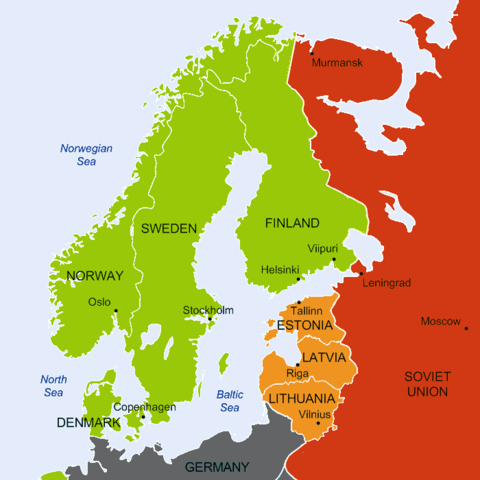
Despite the fact that the Soviets were allied with the Germany, the USSR was concerned enough to want a buffer between the Karelian Isthmus and the USSR, especially Leningrad, just in case the Germans did turn on their “ally.” They opened talks with the Finns, requesting several islands in the Gulf of Finland, a 30-year lease to build a base at the Hanko Peninsula, and an additional 16-mile stretch of land on the Karelian Isthmus. In return, the Soviets offered Finland a significant amount of land to the north, though the Finns really weren’t interested. The Finns knew that that wasn’t a request, but entered negations simply to buy time to mobilize. That came to a crashing halt on November 30th, 1939.

THE SOVIET-FINNISH WAR (WINTER WAR), NOVEMBER 1939-MARCH 1940 (HU 55566) A Finnish ski patrol, lying in the snow on the outskirts of a wood in Northern Finland, on the alert for Russian troops, 12 January 1940. Copyright: © IWM. Original Source: http://www.iwm.org.uk/collections/item/object/205187864

Just as the Germans had done in Poland, the Russians faked a border incident, and thousands of Soviets rushed into Finland, expecting an easy win. In fact, because they expected a rout, the Russians did not send their “A Team.” They were poorly led, poorly trained, poorly equipped, did not understand the terrain, and, thinking that they would be done in a few weeks, forgot about the brutal winters. Most of all, they didn’t understand the Finns. The Finns were fighting for their homes. They had thousands of ski troops. They often embraced unconventional warfare. They had some amazing snipers (notably Simo Hayha), and they were led by Marshall Carl Gustaf Mannerhiem.
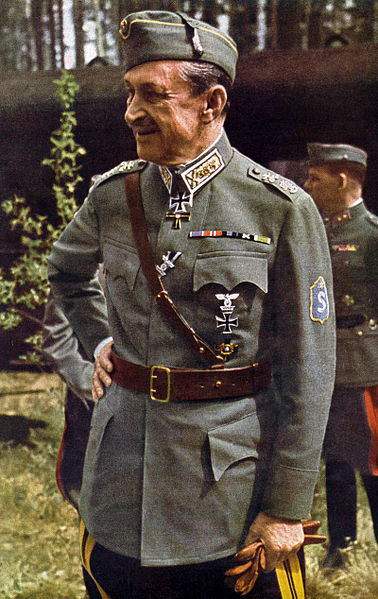
Marshall Carl Gustaf Mannerheim (1867-1951)

Marshall Mannerheim was born on June 4, 1867, in what known as the Duchy of Finland. It was actually part of the Russian Empire. He served in the Russian Army, becoming a Lieutenant General shortly before the November Revolution. As a member of the aristocracy, he fled back to Finland which had declared itself an independent nation. But almost as soon as he arrived, he was caught up in the civil war (January-May 1918)–Red Revolt (Bolsheviks) against White Guards (non-communists). Ultimately the Whites succeeded. He had held a variety of positions in the coming decades, but as war clouds gathered, he was again asked to lead the country’s defense.
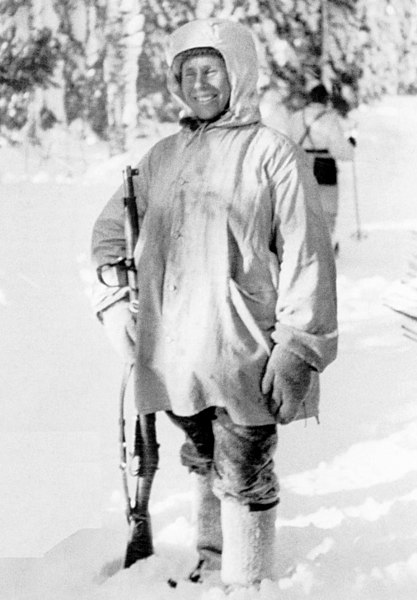
Second Lieutenant Simo Hayha–Finnish sniper known to have achieved 500 shots

The Finns knew they were grossly outnumbered and out gunned. They immediately requested support from both Great Britain and France, but got very little help. However, they held out valiantly. Using white camouflage and their intimate understanding of the terrain, they held the Soviets at bay for three months. Eventually the Russians changed their command and tactics, and brought in masses of modern equipment, particularly artillery. They broke through the Karelian Isthmus and moved north to Viipuri. At that point, there was little more the Finns could. Anything else would have been a useless slaughter of their men, women and children. They signed the Treaty of Moscow on March 12, 1940, in which the USSR received western Karelia, and the naval base on the Hanko Peninsula.

Two excellent books on this subject are http://William Trotter, A Frozen Hell and http://Jonathan Clements, Mannerheim
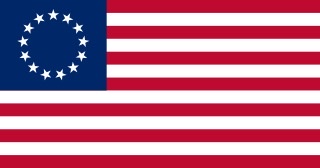
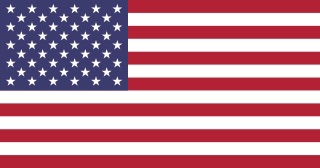
It’s Flag Day! 🇺🇸

Betsy Ross Flag

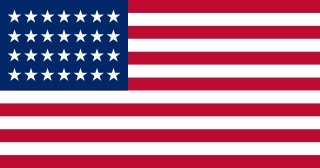
On June 14, 1777, the Second Continental Congress passed a resolution stating that the flag of the new country would have thirteen alternating red and white stripes, with thirteen white star on a blue field. One of the first flags, and possibly the most well-known of that era, is the round Betsy Ross flag that you can see above. As each new state entered the Union, another star would be added. The one below shows 28 stars, first appearing on the 4th of July, 1846, after Texas joined the Union in 1845.

American flag circa 1846

Over the years, people in different parts of the country sporadically held Flag Day celebrations. But the first known discussion of a day honoring the flag came from Victor Morris from Hartford, CT, who held a day of prayers and patriotic events during the early days of the Civil War. However, Bernard J. Cigrand is known as the “Father of Flag Day.” A teacher in Waubeka, WI, he held the first real celebration of Flag Day on June 14, 1885. From there he traveled throughout the US, explaining the importance of honoring our flag, and why it should be observed on June 14. Ultimately he became the president of the American Flag Day Association, which was originally founded by William T. Kerr in western Pennsylvania. The day gradually expanded to different states. Numerous town in Illinois held Flag Day celebrations, and a teacher in Buffalo, NY, Sarah Hudson, also began holding Flag Day observances on June 14.

In 1907, the Benevolent and Protective Order of Elks (BPOE) passed a resolution setting Flag Day, June 14, as a required observation by all BPOE Lodges. (We think that the longest running Flag Day parade takes place in Fairfield, Washington State, which started in 1910.) The Elks also tried to convince President Woodrow Wilson to recognize Flag Day nationally. The President did issue a proclamation in 1916 making June 14 Flag Day. In 1949 an Act of Congress established National Flag Day–again, on June 14. Though it isn’t a national holiday, all government agencies are expected to display the flag that day. And some states, such as Pennsylvania, New York, Massachusetts, Washington State and Wisconsin do consider Flag Day as a state holiday.

Current American Flag

Happy Birthday Vince🥳

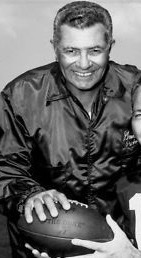
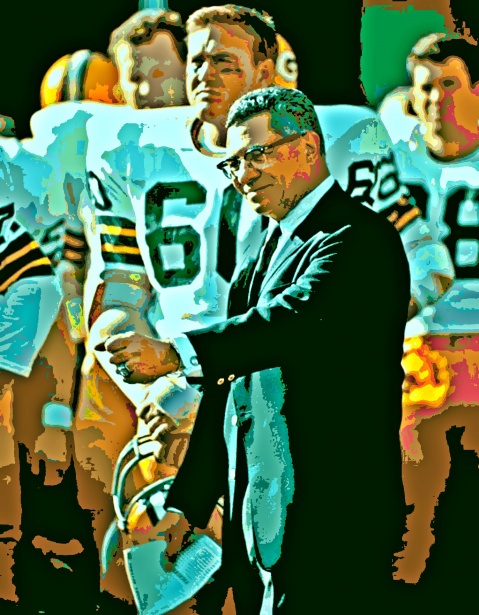
There’s more to history than diplomacy, politics and battles. I had a great time talking about football–yes, football– with my Uber driver yesterday. He’s actually more interested in the coaches than the players. Knute Rockne, Ara Parsegian, Tom Landry, Joe Gibbs, Bill Parcell–it was a long ride and he was great. But the one we spent the most time talking about was Vince Lombardi. And today, June 11, is his birthday, so Happy Birthday Coach Lombardi!

Lombardi was the oldest of five children, and was born on June 11, 1913 to Harry and Matilda Lombardi in Sheepshead Bay, an area of Brooklyn, New York. He attended public school, and joined a local football league when he was 12. He went on and attended the Cathedral Preparatory Seminary, expecting to become a priest. The administrators discouraged the boys from playing football, so he played both basketball and baseball–not very well. But to the priests’ dismay, he did continue to play in his old football league. Ultimately he transferred to St. Francis Preparatory High School and played fullback for the St. Francis Terriers.

In 1933 Lombardi received a football scholarship for Fordham University where he played right guard, and met head coach Jim Crowley, who had been one of the Four Horses of Notre Dame. He graduated in June, 1937, but that was basically the second wave of the Depression. He took a variety of jobs but finally found a position teaching Latin, chemistry, physics . . . and assistant football coach🤓 at St. Cecilia Catholic High School in Englewood, N.J. In the next eight years, the team won six championships. 1947 saw him become coach of Fordham‘s freshman team, and the following year he became the assistant coach of Fordham’s varsity football team. Lombardi really came into his own in 1949, when he served as the assistant coach at the United States Military Academy at West Point.

Five years later, Coach Lombardi moved from collegiate to professional football, becoming assistant coach – – now called an offensive coordinator – – to the New York Giants. The following year, he and defensive coordinator Tom Landry led the Giants into a championship season. He, the staff and most of the players believed that he was a terrific coach, but he felt that he would never get a head coach position, because of his Italian origin. (Believe it or not, it’s an issue which still has pockets of resistance) Finally, however, the Green Bay Packers offered him the head coast position and he happily took it . . . though at that point Green Bay was the worst team in the conference.

Coach Vince Lombardi and quarterback Bart Starr

Lombardi was a tough and demanding coach, but in 1959, the Packers went from 1-10-1 to 7-5, and he was named Coach of the year. In 1960, the team won the Western Conference for the first time since 1944, and people started calling him “the Pope.“ though they did lose the 1960 championship game to the Philadelphia Eagles. However, the Packers did win the next nine years. Then came the Super Bowl. Green Bay won the first Super Bowl in 1966, as well as the second Super Bowl in 1967– – known as the ice bowl because it was a chilly 13° below zero that day.

“The Pope” left coaching in 1968 but continued as the general manager of the Green Bay Packers. He had no intention of coaching again, but in 1969 the then Washington Redskins (now Washington’s Football Team) practically begged him to coach. They had not had a winning season since 1955. He took over as both head coach and general managed. And they won🤩

Unfortunately, doctors at Georgetown University Hospital found that he had terminal colon cancer in June, 1970. He died on September 3, 1970, at the age of 57. We all know that the name of the Super Bowl trophy is the Lombardi trophy. But possibly more important is The Lombardi Cancer Center at Georgetown University Hospital which provides life-saving therapies for so many people every year.

K

D-DAY June 6, 1944

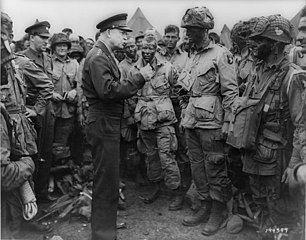
Sunday will the be the 77th anniversary of the D-Day landing on the Normandy beaches in France. Most of us remember the stories of the thousands of American, British and Canadian troops who landed on the beached–though there were also men from Australia, Belgium, Czechoslovakia, Denmark, France, Greece, the Netherlands, New Zealand, Norway and Poland who participated in the amphibious assault. What we often forget is that earlier that morning, MajGen Matthew Ridgeway and paratroopers from the 82d (All American) and BGen Maxwell Taylor and the 101st (Screaming Eagles) Airborne Divisions parachuted into France. Called Operation Neptune, the plan was to assist in taking Cherbourg, which would be the fasted way to land supplies needed for the long road to Berlin.

The airborne landings of Operation Neptune in red

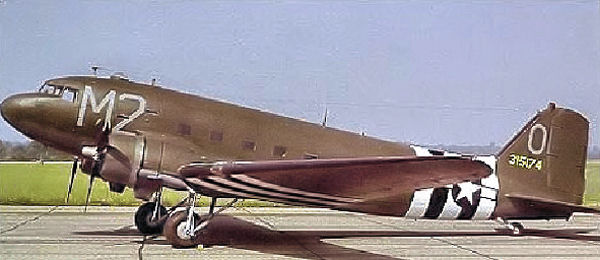
Work on Operation Neptune started in late February 1944. Originally the paratroopers expected to prevent German troops from attacking the Allies landing at Utah Beach, defend the causeway coming off the beaches, and holding the Douve River at Carentan to give time for the American V Corp to merge the two US beachheads. Ultimately planners decided that the 101st would hold the area west of Utah beach, while the 82d would land more inland and hold the bridge along the Douve. During most of March and early April, well over 1000 C-47 Douglas Skytrain troop carriers arrived in Great Britain. Pilots, navigators and paratroopers trained both separately and together. By the end of April both planners and troops believed they were ready to go.

General Dwight D. Eisenhower speaks with a group of paratroopers

Shortly before midnight on June 5, the first planes–companies of Pathfinders–took off. The Pathfinders would land earlier than the paratroopers and set up transponder radar ground beacons and holoplane marking lights to guide the rest of the troops to their designated landings. Unfortunately, many of the beacons and lights in both the 82d and 101st divisions had a variety of problems–some worked intermittently, while others didn’t work at all. But that was only the beginning of the issues that befell the paratroopers that morning. Despite all the training of the past three months, they were still needed additional navigators. Radio silence meant that pilots could not exchange important information. Given the bad cloud cover and fog, pilots often dropped the paratroopers either too high or too low, or in the wrong landing zone. And of course, antiaircraft and flak was always a problem.

C-47 Douglas Skytrain Troop Carriers

Despite all those issues, the 82d and 101st Divisions took off from Portland Bill on the southeast coast of British shortly after the Pathfinders. Their jump started at 00:48 am June 6. Unfortunately, because of the lack of the lights and beacons, in addition to the same issues that the Pathfinders had had to deal with, many of the landings went horribly wrong. Often blown off course, many men had no idea where they ended up. Many of them didn’t land anywhere near other members of the platoon they had jumped with. Gradually small groups of men met up and put together squads from a number of different units. Eventually they hooked up with other larger units and started to move toward their assignments. It took days for the units to get straightened out. However, despite all the confusion, members of the 82d did take and hold Ste-Mere-Eglise, and the 101st did protect the Carentan’s flank.

So as we remember D-Day and the men who stormed the beaches at Utah, Omaha, Juno, Sword and Gold beaches, we should also remember the paratroopers of the 82d and 101st Division. Three hundred and thirty-four men died, 904 were wounded, and 1257 were missing in action. Hopefully we thought about them on Memorial Day. If not, now may be a good time to do so.

🙏 D-Day . . . Never Forget

Happy Memorial Day🇺🇸

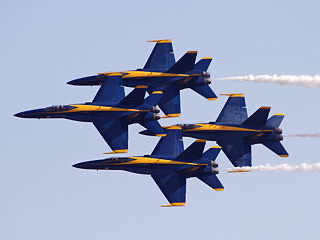
US Navy Blue Angels

Happy Memorial Day!! It’s the beginning of the summer season, and this year it should be a much better holiday that the last one! We have a relatively small family, but I’m looking forward to have some of them see each other for the first time in a loonnngggg time😎. But before I head out, I have to offer a quick remembrance of the real reason for Memorial Day. We actually called it Decoration Day until 1971, but the meaning is the same.

MajGen John A. Logan

Decoration/Memorial Day was observed for the first time in 1868, shortly after the end of the Civil War, to honor and mourn the men and women who had died in that conflict. That year, Major General John A. Logan, who served in the Union army, issued a proclamation calling for people on both sides to observe Decoration Day in cemeteries across the country. By 1869 events were held in 335 cemeteries around the nation. Logan suggested the date May 30 because by then most flowers would be in bloom even in the northern part of the country, and could be used to decorate the graves.

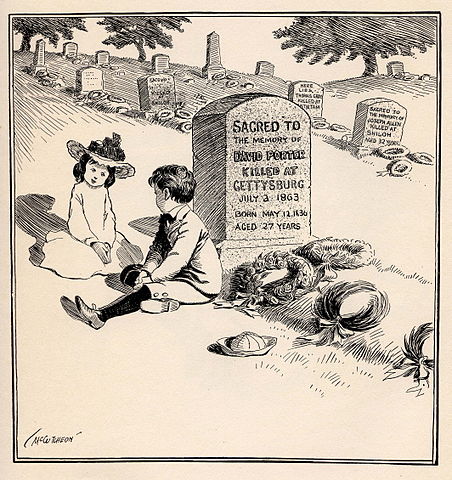
“ON DECORATION DAY” Political cartoon. A young boy and a young girl are in a graveyard with tombs of soldiers killed in the American Civil War. Caption: “You bet I’m goin’ to be a soldier, too, like my Uncle David, when I grow up.” circa 1890

Many volunteers began placing American flags in national cemeteries, and as years went by, people started to hold church services and patriotic parades, give speeches, place flags not only in cemeteries but throughout large cities and small towns alike. Unfortunately, the number of fallen grew over the next 150 years. In addition to honoring our fallen, it became a patriotic and celebratory holiday. If you’re lucky, you may even see one of the fantastic fly-overs of the Navy’s Blue Angels or the Air Force Thunderbirds (Though today it’s also a weekend of huge sales) It wasn’t until 1971 that, as part of the Uniform Monday Holiday Act, that Memorial Day was designated the last Monday in May, allowing for a three-day weekend.

I would love to go on at length about the history of Memorial Day, but I have to catch my train. I hope that you’ll take a few minutes to learn more about the solemnity of the holiday, and some of the people who dies to keep us free. I wish you all a very Happy Memorial Day,

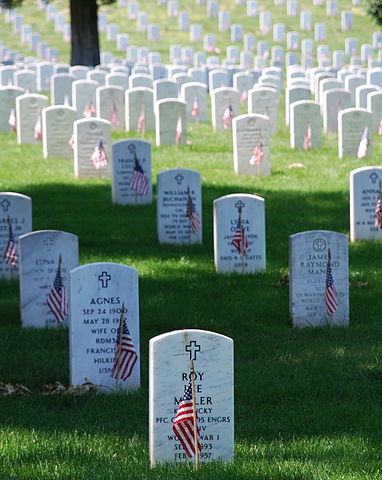
Arlington National Cemetery

Marque? Do You Mean Mark?

No, I mean Marque, part of a Letter of Marque and Reprisal. I’ve been thinking about it because of the recent massive problems of the Colonial Pipeline. Remember, a few weeks ago a group of hackers stopped a 5000-mile gas pipeline, leaving much of the east coast with no gas. What does a Letters of Marque have to do with a pipeline? Just keep readings-it will all make sense.

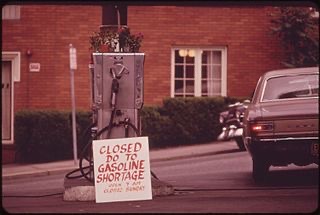
If you recall, the pipeline was stopped when hackers extort $4 million from the company to get the gas flowing again. In some ways, it was worse that the energy crisis of the 1970s. Then you might get gas on an odd or even day, or only get a certain number of gallons, and there were always huge lines. The worst thing was when it was your turn, and you’d pulled up to the pump just as the light turned red–no gas😢. Hopefully they’d have some the next day, or a station close by was open. This time it was worse. Stations closed in 80 percent of a state., and there was no information as to when it would be available. How could you get to work? The market? The doctor? School? How could truckers deliver anything? How could planes move cross-country? What about the military? The ultimate goal is to harden our infrastructure so that it can’t happen again. But that’s going to take some time. What do we do in the meantime, to prevent hackers from trying it again?

So, here’s a question. What is piracy? According to Merriam-Webster, it’s “the unauthorized use of another’s production, investment or conception.” I think we could make a pretty good case that hacking is a form of piracy. We all know something about piracy–if nothing else, we’re seen films like Pirates of the Caribbean or Captain Blood, of The Sea Hawk and so many more. And how the governments stop piracy? Well, long before there were large navies that could deal with pirates, there were Letters of Marque and Reprisal. A government literally would put together a Letter of Marque allowing a private shipowner to use his own vessel to seize a ship that was stealing goods–even people–from other vessels. They would bring the ship in to port, and share the profits between the owner, the seamen, and the government. Letters of Marque and Reprisal were first used in 1293 under Edward I of Great Britain, but over the years were used by the French, the Dutch, and other countries.

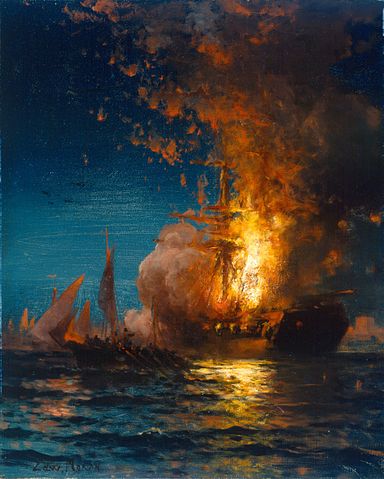
Burning of the USS Philadelphia during the Barbary Wars

As written in our Constitution, Article 1 Section 8 includes enumerated powers– taxation, the power to declare war, and the ability to give Letters of Marque and Reprisal. With a very small Navy in our nation’s early days, Letters of Marque were used frequently, especially during the American Revolution, Barbary Wars and the War of 1812. But as navies grew, the need for Letters of Marque and Reprisal diminished. Part of the Paris Declaration of 1856 included a ban on Letters of Marque, but the US wasn’t ready to sign on. In fact, during the Civil War, both the Union and Confederacy used Letters of Marque. However, Americans really haven’t been used them since 1865.

Hacking

Fast forward to 9/11. Al Qada seemed reminiscent to the Barbary Pirates, and there was considerable discussion about the possibility of bringing a new version of Letters of Marque out of mothballs. Though it wasn’t used at that point, it’s been sitting in the wings and people have periodically discussed it since then. At the same time, many companies and government agencies have been dealing with an increasing number of hackers recently–including the police department of Washington, D.C.😡And then came the Continental pipeline. As I said before, hardening the infrastructure is the first order of business. Much has been done behind the scenes, but it needs to be an all-hands-on-deck priority. In addition, it also may be a very good idea to make it clear to hackers that they need to look somewhere else, just as they learned during the Age of Sail. In fact in a recent Op-Ed in the Wall Street Journal, Thomas Ayres suggested just that in “A Maritime Solution for Cyber Piracy.” Letters of Marque and Reprisal should be expanded to include cyber-security companies which can keep the US safer from hackers. It’s an interesting possibility, and one which deserves serious discussion.

Opportunity Knocks–Review

I’m one of those people who watches both the State of the Union Address and the response which comes after it. It’s usually a long, boring speech followed by a shorter, boring speech. I’m a nerd, what can I say. (There actually wasn’t a State of the Union this year–which violated the Constitution,🤯 but that’s for another time.) However, we did have a Joint Session of Congress. So I expected that this year would be no different. I listened. The President’s comments were pretty standard. The response was different.

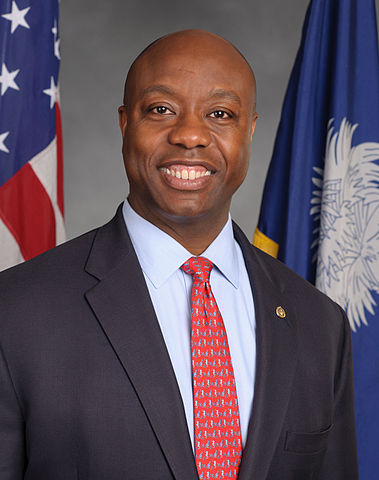
Senator Tim Scott from South Caro

It was given by Senator Tim Scott from South Carolina who serves on the Committee on Finance, the Committee on Banking, Housing and Urban Affairs, and the Committee on Health, Education, Labor and Pensions. He’s also the only Black Republican in the Senate. It was one of the shorter responses. He didn’t speak in the standard platitudes. No “pie in the sky.” He sounded more like John Kennedy and MKL than what I call a Santa Claus speech. I wanted to hear/read more. He was on some radio programs the following morning and I found several of his policy papers on line. I also found his book Opportunity Knocks.

This is a relatively short book (not one of my 750-page tomes) that combines his memoir with his mission. Adversity is common in North Charleston, South Carolina, where Scott grew up with a single mother–but a mother who believed in perseverance not handouts, and a family that believes that education was the way up. Hard work and some wonderful mentors helped him on his way. He became an entrepreneur who quickly realized that he also was called to help his community, and first ran for County Council in 1995. Now in the U.S. Senate, one piece of legislation he’s extremely proud of is “opportunity zones” which provide tax incentives for companies that invest in low-income urban areas. In the past four years those opportunity zones have made important changes throughout the country by starting good jobs in formerly distressed areas.

Senator Scott also discusses his own thoughts on racism and racial inequality. He’s had to deal with it all too often–even sometimes in the United States Capital itself. He believes that the country really has come a long way, but still has things which we need to come together to change. One was the passage of his First Step Program of prison reform, and hopefully he will be able to get more Congressmen and Senators aboard to pass his police reform package.

He ends the book with his thoughts for the future. His goal for 2030 is education. It must be revamped for the rest of the 21st century or, he believes (and I must agree!!!) that the US will be lagging badly as the gig economy soars. As a young man, Senator Scott’s goal was to positively impact on 1 Billion people in his lifetime. I think he’s well on his way.

It’s National Police Week!

Congratulation to all the men and women in law enforcement! Despite the problems with what really is an infinitesimal fraction of police who are bad actors, most of them go to work every day hoping to help their community. They do much more than catching major criminals. Over the years we’ve lived in a number of states from Pennsylvania to Washington State, and have seen police prevent suicides, help people get their cars off bridges, return stolen property–from purses to dentures–everything imaginable. A high-speed chase across three counties to return a baby to its parents. Getting into a sewer to retrieve a much- loved pet. That’s what they do every day.

Mounted police providing directions

Police, often called constables, have been part of the fabric of the US since before the American Revolution. Officers first used uniforms in 1828 in both Boston and Chicago, and gradually expanded to most communities. Marie Owen became the first woman to serve as a detective in 1891 (in Chicago.) Police first started using automobiles in 1914 (in Berkley, CA), and it wasn’t until September 1968 that two women became “beat cops” in Indianapolis.

NYPD serving during the 1918 pandemic

President John Kennedy signed a proclamation in 1962 calling for Peace Officer’s Memorial Day every May 15, with the entire week being known as Police Week. In 1982 President Ronald Reagan attended the first National Peace Officer’s Memorial Service with a candlelight vigil. This year the vigil took place on May 13. At that time they list the officers that year who have fallen in the line of duty. This year, 394 were killed, including 182 who were killed because of Covid-19.

In addition to honoring the fallen, we should also thank those how have quietly helped the community in so many ways which are rarely recognized. So here’s just a snippet of some of the good news done by law enforcement this past year–and it really is a snippet. Thousands of those men and women have done fantastic work. I’d love to include their names and pictures, but in this current volatile times, I’m sure you’ll understand why I’ve left them off.

–Three officers carried on a coordinated search for a missing woman. It turned out that she had had a diabetic emergency and had driven her car off the road, through dense brush. The car flipped over and caught fire. The men had to break into the car that was engulfed in flame and pull her out. She was hospitalized and made a full recovery. The police also needed treatment for their burns.

–An autistic child wandered away from his family, who frantically called 911. Police combed the area. One officer had a hunch and went to a pier where he found the child on sailboat at a dock. He scaled the fence and got to the little one before he ended up in the water.

–A police officer saw a man in a wheelchair frantically trying to cross a train track. She got out of her car and tried to help him, but the wheelchair was stuck and a train was approaching. A small woman, she managed to pull the man out of the wheelchair and drag him to safety just as the train flew by, crushing the wheelchair.

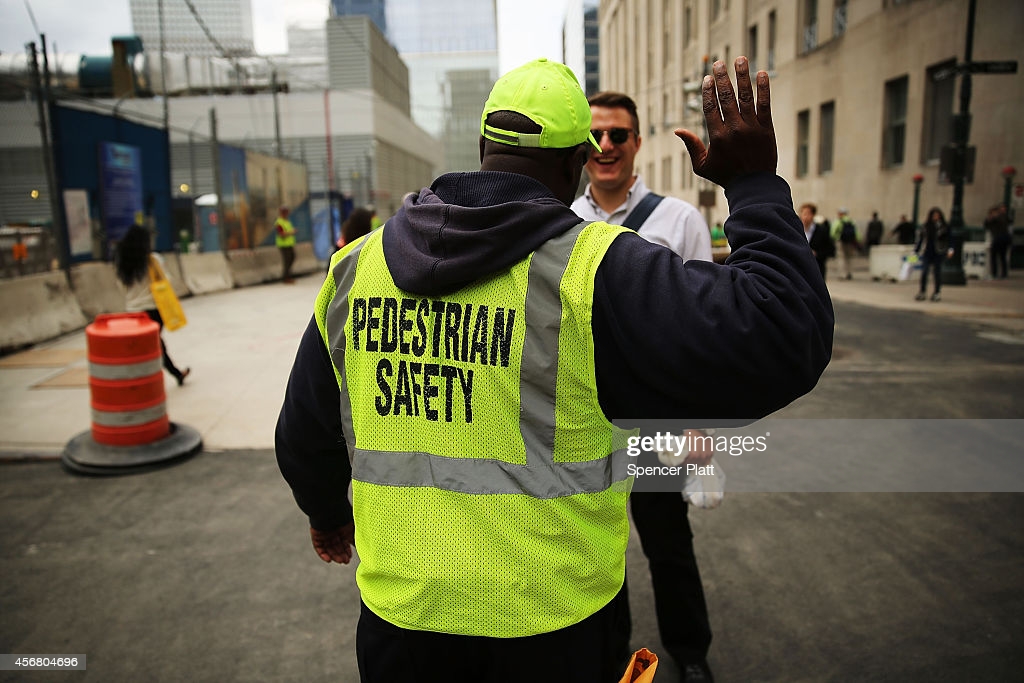
An officer controls traffic under 1 World Trade Center on October 7, 2014 in New York City. (Photo by Spencer Platt/Getty Images)

–An officer went in after a child who had fallen through the ice in a frozen pond. The child survived.

–Two weeks ago, a police officer in Time Square picked up a four-year-old who had been shot, ran to an ambulance that was about half a block away, and took her to the hospital which the child went into surgery. The officer then made sure to find the Mom–herself in the hospital–to tell her that the child was going to be fine. Both mother and child are now home.

–This week a 93-year-old lady heard a loud bang on her doorstep. She found a package for someone at a different address. No return address. No postage. At her age she wasn’t going to take a hike to deliver it. She was uneasy because she remembered when packages like that included a bomb. She called the non-emergency number of the police and asked what she should do. In ten minutes two police officers arrived, took the package and told her that she was quite right to call. Before they found the phone number of the new owner, they would have their K-9 officer make sure it was safe.

As I said, that was just a tiny fraction of what police do every day. Things which most of us never hear about until we’re personally involved. When you need them, they will come. We should say “Thank You” more than we do.

Hindenburg Disaster-May 6, 1937

A couple of days ago I was walking to an appointment. It was a beautiful day and a little bit in the distance I could see a Goodyear Blimp over a huge car dealership. I mentioned that to my mother when I spoke to her the next day, and she was reminiscing about the Hindenburg disaster that she clearly remembers. It happened about 50 miles from where she grew up. Radio broadcasters were present and gave a blow-by-blow commentary of the catastrophe. Newspapers had special editions, and anyone who went to the movies saw the newsreels. I’m not sure how many of you may know about it.

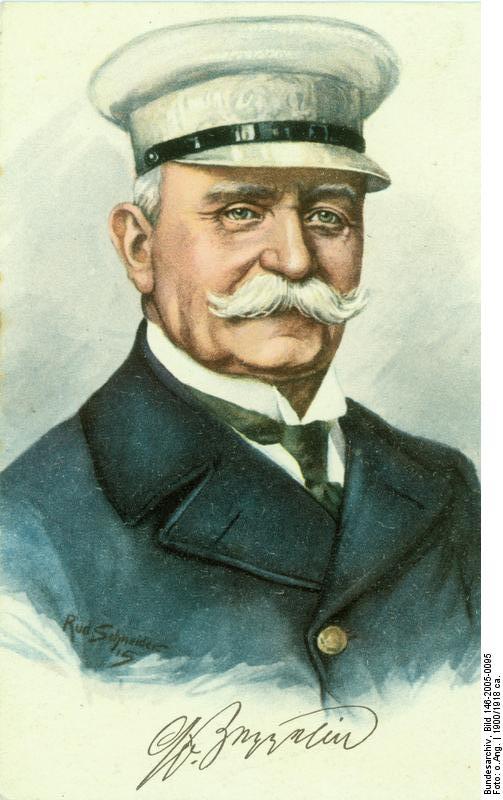
Ferdinand Graf von Zeppelin

The Hindenburg, officially the LZ 129 Hindenburg, was an “airship” generally called a zeppelin. It was named after Ferdinand Graf von Zeppelin (1838-1917) who developed the lighter-than-air rigid dirigible. Born in what is now Germany, he became an Army officer in 1855, and three years later took additional training in engineering at the University of Tubingen. During the American Civil War, Zeppelin was an observed with the Union Army. After the Peninsula Campaign, he toured part of the Midwest and in August, 1863, while in St. Paul, Minnesota, he went up in a balloon for the first time. After the war, he returned to Prussia and fought in the 1866 Austro-Prussian War, and in 1870-71 served in the Franco-Prussian War. He retired from the German military in 1890, and turned his attention to developing a rigid airship.

Basically, Zeppelin intended to build a “ship” built out of aluminum beams and struts covered with extremely stiff fabric. The interior would have the engines and the appropriate number of gas cells (they used hydrogen at that point) that could expand or contract as needed. There would be a gondola containing controls and space for a crew. The inventor received his first patent in 1895. The first flight of an airship, LZ-1, took off near Lake Constance on July 2, 1900. It remained in the air for roughly 20 minutes. Now with a number of donations, Zeppelin continued to improve the ship. It flew for a full 24 hours in 1906, at which point the German government ordered a number of what was now generally called zeppelins. By 1914, 37,250 people had taken 1,600 flights in Europe with no problems. During WWI, the German military used 100 airships. Unfortunately, Zeppelin died in 1917, before seeing his dream of intercontinental flight. The Treaty of Versailles claimed the German military zeppelins as part of their war reparations, but a private company, the Luftschiffbau Zeppelin continued to build zeppelins for commercial use.

A standard Zeppelin c. 1930s

In March, 1937, the LZ 129 Hindenburg had taken a round-trip from Germany to Rio de Janeiro, Brazil, and on May 3d it left Frankfurt for the US, expecting to land at the Naval Air Station at Lakehurst, New Jersey, on the morning of May 6. It had been a uneventful trip until the morning of the 6th when Capt. Max Pruss heard that there was bad weather, including thunderstorms, on the east coast. Instead of going straight to Lakehurst, he decided to take a “scenic” route so that the bad weather would be gone by the time they would arrive at Lakehurst. He took the Hindenburg straight over New York City. People in the city were thrilled, and came out of their buildings to see a zeppelin so close. From there, Pruss moved toward the New Jersey shoreline, and the passengers could see areas like Long Branch, Asbury Park and Point Pleasant. By 6:30 it appeared that the storm had passed. However, since they were almost 12 house late, the Captain decided that the public would not be allowed to go aboard the ship, or even walk around the mooring station.

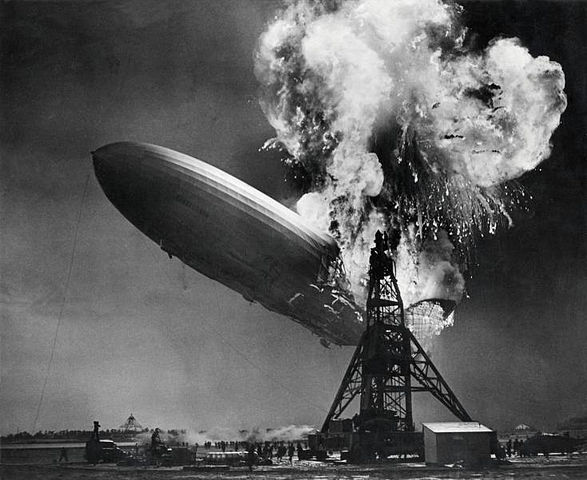
They crew started its final approach at 7pm. They decided that they would do a “flying moor” which mean that they would drop the landing ropes and mooring cables from fairly high above the ground and the ground crew would use winches to gradually pull the ship to its mooring. At 7:21, when they were 295 ft above the mooring they dropped the lines, but one of the line was too tight. A light rain started to fall as the ground crew grabbed the lines. Four minutes later, something happened. Some people thought they saw fabric waving from the upper fin—signs of a gas leak. A few said they saw a blue flame. Others believed that they saw a spark from static electricity. Still others thought they saw flames from the port side. Whatever it was, the ship engulfed in flames. Gas cells started catching fire and the ship broke apart and collapsed in seconds. Thirteen of the 36 passengers and 22 of the 61 crew died. Many who survived were seriously burned. Initially investigators thought it may have been sabotage, or possibly engine failure or a fuel leak. Over the years, most have concluded that it happened either because of static electricity or a lightening strike. The one major change since then is that helium is the gas that’s used because it is inert and infinitely safer than hydrogen.

Hindenburg disaster May 6, 1937

As I said earlier, because this was the first zeppelin of the season, there were numerous news crews waiting for the ship–radio, newspaper and crews from Pathe, Movietone,Hearst and Paramount. Herbert Morrison from WLS radio in Chicago, was an eyewitness and spoke directly to his listeners as the ship went down. If you want to dive deeper into the Hindenburg, you’ll find a great deal of information and lots of videos.

🎬 Lights! Action! Camera! 🎬

Did you watch the Oscars? I confess I didn’t. It used to be fun/interesting. For me, they’ve become rather dull in the past few years. But that doesn’t mean that I didn’t watch anything at all this year. I’ve started working on a new book–a biography of a fascinating Polish Army/Air Force officer during World War II, and while looking for some information on his work, I stumbled across some material on Westerplatte. I’ve known about the battle for many years, but I didn’t know that anyone had made a movie, so I took some time off to watch 1939 Battle of Westerplatte.

Now we all know that I’m a military historian so I often watch that sort of movie, but this was outstanding. It’s a 2013 Polish film written and directed by Pawel Chochlew. Apparently the movie caused some debate, with some people saying it was anti-Polish, while others found it heroic. It particularly focuses on the leader of the battle and his deputy. Personally, that’s the kind of film that makes me want look deeper and find the real facts. In this case, I already knew a lot about the events, but in case you don’t, here’s the short version of the Battle of Westerplatte.

At the end of World War I, the League of Nations not only set up the second Republic of Poland (1918-1939), but provided for the Free City of Danzig, and allowed for the Depot of Polish Munitions in Transit in the Port of Danzig. The Poles built it on the Westerplatte Peninsula of the harbor. In March 1939, Germany took over an area of Lithuania very close to Danzig. That immediately put Westerplatte on alert. Very quietly, the Polish military began to add troops to the Depot and fortify the area. In late August, when it was clear that Germany was just a few days away from attacking Poland, additional troops joined the 88 men at the Depot.

Major Henryk Sucherski, Polish Army

Between 190 and 240 men and six officer, headed by Maj. Henryk Sucherski and his deputy, Capt. Franciszk Debrowski, were working at a fever pitch to prepare for a German attack. In addition to pistols, rifles and grenades, they brought in all the heavy weapons they could, including a 75 mm field gun, two 37 anti-tank guns, four 81 mm mortars, and 22 standard and 18 heavy machine guns. They also set up numerous tenches, barricades, massive amounts of barbed wire, and reinforce concrete in a number of buildings.

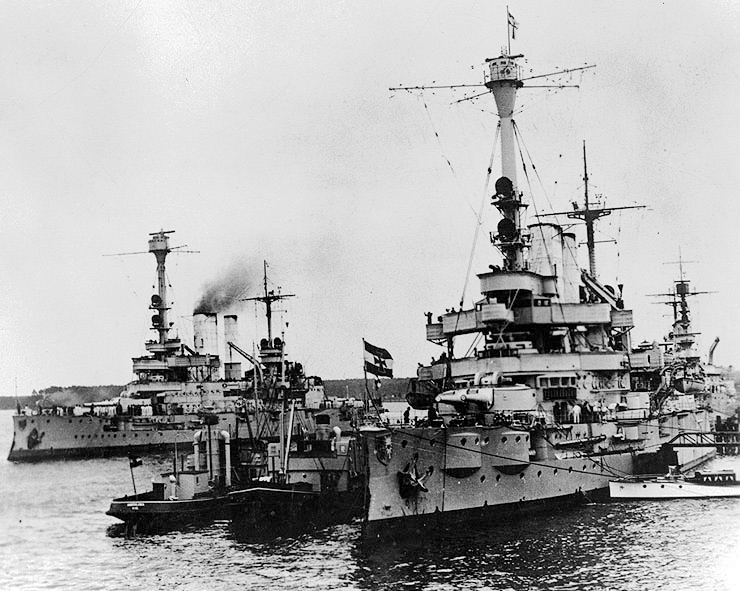
German pre-dreadnought Schleswig-Holstein in the foreground

At the same time, the German pre-dreadnought Schleswig-Holstein arrived at Danzig, allegedly for a “courtesy call,” and anchored just 150 yards away from the Westerplatte Peninsula. The ship carried 225 German Marines. In addition, 1500 Danzig Police (German soldiers) were there to support the Marines. They expected to begin operations on August 26th, but Hitler made a last minute decision to wait until September 1.

Before 5 am on September 1, 1939, the attack on Poland began throughout the German-Polish border, and in the Free City of Danzig. The Schleswig-Holstein let go with a massive broadside pf 12-inch guns against the Depot. The Germans expected it would take a few hours to seize the entire garrison. They were wrong. The Poles repelled 13 assaults, including serious naval bombardment and dive bombers. They held out for seven days.

Of course the film isn’t a documentary. The director uses significant creative license, and focused on the two major characters. Yet it’s thought-provoking as are movies like Greyhound, or Dunkirk, The Longest Day, or the Bridge on the River Kwai. And with that, I’ll go back to find what I was looking for originally.🤔

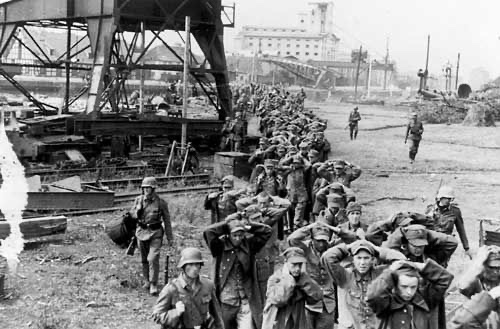
The remnants of the men of Westerplatte in September 1939