Think Carefully

This is not my usual kind of post. In fact, it’s not my own post, but a letter written by Mr. Andrew Gutman which has got viral, and rightfully so. Over the past four or five years, I’ve seen a gradual shift in teaching, from professors to kindergarten teachers. The shift had been from teaching HOW to thing to teaching WHAT to thing–a horrifying thought reminiscent of students in 1935 Germany. 🤯Whats been brewing beneath the surface exploded over the past year. Students, parents and teachers are scared to present a different point of view. When I was in school, and later as a professor, it was the exact opposite. Thinking for your self was applauded. Now you may be fired.

I’ve been trying to put my words on paper for a while, but anything I came up with would have been pale in comparison to what Mr. Gutman has said. And he is not the only parent who feels that way!! I hope you’ll read it carefully, and really think about what he’s saying. It’s not only a problem in an elite school, it’s happening in public schools as well. Martin Luther King seems to have been lost along the way. We need him back!

April 13, 2021 

Dear Fellow Brearley Parents, 

Our family recently made the decision not to reenroll our daughter at Brearley for the 2021-22 school year. She has been at Brearley for seven years, beginning in kindergarten. In short, we no longer believe that Brearley’s administration and Board of Trustees have any of our children’s best interests at heart. Moreover, we no longer have confidence that our daughter will receive the quality of education necessary to further her development into a critically thinking, responsible, enlightened, and civic minded adult. I write to you, as a fellow parent, to share our reasons for leaving the Brearley community but also to urge you to act before the damage to the school, to its community, and to your own child’s education is irreparable. 

It cannot be stated strongly enough that Brearley’s obsession with race must stop. It should be abundantly clear to any thinking parent that Brearley has completely lost its way. The administration and the Board of Trustees have displayed a cowardly and appalling lack of leadership by appeasing an anti-intellectual, illiberal mob, and then allowing the school to be captured by that same mob. What follows are my own personal views on Brearley’s antiracism initiatives, but these are just a handful of the criticisms that I know other parents have expressed. 

I object to the view that I should be judged by the color of my skin. I cannot tolerate a school that not only judges my daughter by the color of her skin, but encourages and instructs her to prejudge others by theirs. By viewing every element of education, every aspect of history, and every facet of society through the lens of skin color and race, we are desecrating the legacy of Dr. Martin Luther King Jr., and utterly violating the movement for which such civil rights leaders believed, fought, and died. 

I object to the charge of systemic racism in this country, and at our school. Systemic racism, properly understood, is segregated schools and separate lunch counters. It is the interning of Japanese and the exterminating of Jews. Systemic racism is unequivocally not a small number of isolated incidences over a period of decades. Ask any girl, of any race, if they have ever experienced insults from friends, have ever felt slighted by teachers or have ever suffered the occasional injustice from a school at which they have spent up to 13 years of their life, and you are bound to hear grievances, some petty, some not. We have not had systemic racism against Blacks in this country since the civil rights reforms of the 1960s, a period of more than 50 years. To state otherwise is a flat-out misrepresentation of our country’s history and adds no understanding to any of today’s societal issues. If anything, longstanding and widespread policies such as affirmative action, point in precisely the opposite direction. 

I object to a definition of systemic racism, apparently supported by Brearley, that any educational, professional, or societal outcome where Blacks are underrepresented is prima facie evidence of the aforementioned systemic racism, or of white supremacy and oppression. Facile and unsupported beliefs such as these are the polar opposite to the intellectual and scientific truth for which Brearley claims to stand. Furthermore, I call bullshit on Brearley’s oft-stated assertion that the school welcomes and encourages the truly difficult and uncomfortable conversations regarding race and the roots of racial discrepancies. 

I object to the idea that Blacks are unable to succeed in this country without aid from government or from whites. Brearley, by adopting critical race theory, is advocating the abhorrent viewpoint that Blacks should forever be regarded as helpless victims, and are incapable of success regardless of their skills, talents, or hard work. What Brearley is teaching our children is precisely the true and correct definition of racism. 

I object to mandatory anti-racism training for parents, especially when presented by the rent-seeking charlatans of Pollyanna. These sessions, in both their content and delivery, are so sophomoric and simplistic, so unsophisticated and inane, that I would be embarrassed if they were taught to Brearley kindergarteners. They are an insult to parents and unbecoming of any educational institution, let alone one of Brearley’s caliber. 

I object to Brearley’s vacuous, inappropriate, and fanatical use of words such as “equity,” “diversity” and “inclusiveness.” If Brearley’s administration was truly concerned about so-called “equity,” it would be discussing the cessation of admissions preferences for legacies, siblings, and those families with especially deep pockets. If the administration was genuinely serious about “diversity,” it would not insist on the indoctrination of its students, and their families, to a single mindset, most reminiscent of the Chinese Cultural Revolution. Instead, the school would foster an environment of intellectual openness and freedom of thought. And if Brearley really cared about “inclusiveness,” the school would return to the concepts encapsulated in the motto “One Brearley,” instead of teaching the extraordinarily divisive idea that there are only, and always, two groups in this country: victims and oppressors. 

l object to Brearley’s advocacy for groups and movements such as Black Lives Matter, a Marxist, anti family, heterophobic, anti-Asian and anti-Semitic organization that neither speaks for the majority of the Black community in this country, nor in any way, shape or form, represents their best interests. 

I object to, as we have been told time and time again over the past year, that the school’s first priority is the safety of our children. For goodness sake, Brearley is a school, not a hospital! The number one priority of a school has always been, and always will be, education. Brearley’s misguided priorities exemplify both the safety culture and “cover-your-ass” culture that together have proved so toxic to our society and have so damaged the mental health and resiliency of two generations of children, and counting. 

I object to the gutting of the history, civics, and classical literature curriculums. I object to the censorship of books that have been taught for generations because they contain dated language potentially offensive to the thin-skinned and hypersensitive (something that has already happened in my daughter’s 4th grade class). I object to the lowering of standards for the admission of students and for the hiring of teachers. I object to the erosion of rigor in classwork and the escalation of grade inflation. Any parent with eyes open can foresee these inevitabilities should antiracism initiatives be allowed to persist. 

We have today in our country, from both political parties, and at all levels of government, the most unwise and unvirtuous leaders in our nation’s history. Schools like Brearley are supposed to be the training grounds for those leaders. Our nation will not survive a generation of leadership even more poorly educated than we have now, nor will we survive a generation of students taught to hate its own country and despise its history. 

Lastly, I object, with as strong a sentiment as possible, that Brearley has begun to teach what to think, instead of how to think. I object that the school is now fostering an environment where our daughters, and our daughters’ teachers, are afraid to speak their minds in class for fear of “consequences.” I object that Brearley is trying to usurp the role of parents in teaching morality, and bullying parents to adopt that false morality at home. I object that Brearley is fostering a divisive community where families of different races, which until recently were part of the same community, are now segregated into twoThese are the reasons why we can no longer send our daughter to Brearley. 

Over the past several months, I have personally spoken to many Brearley parents as well as parents of children at peer institutions. It is abundantly clear that the majority of parents believe that Brearley’s antiracism policies are misguided, divisive, counterproductive and cancerous. Many believe, as I do, that these policies will ultimately destroy what was until recently, a wonderful educational institution. But as I am sure will come as no surprise to you, given the insidious cancel culture that has of late permeated our society, most parents are too fearful to speak up. 

But speak up you must. There is strength in numbers and I assure you, the numbers are there. Contact the administration and the Board of Trustees and demand an end to the destructive and anti-intellectual claptrap known as antiracism. And if changes are not forthcoming then demand new leadership. For the sake of our community, our city, our country and most of all, our children, silence is no longer an option. 

Respectfully, 

Andrew Gutmann

Hong Kong Update 😢

Jimmy Lai, owner of the Apple Daily

You may remember several months ago I spoke about the current crack-down on Hong Kong by the Beijing government. A number of democracy activists had ben thrown into prison for their involvement in an unauthorized protest on August 18, 2019 involving more than 1.7 million people. In April 2020, 72-year-old Jimmu Lai, the owner and publisher of the Apple Daily News, and 82-year-old Martin Lee, the founder of Hong Kong’s democracy movement and one of the people who put together the original Hong Kong constitution, and seven others, were jailed. In May, the Communist Party announced that it would try to pass a new National Security Law. Despite more protests and pushback from the Hong Kong legislature, they “passed” the new laws just before midnight on June 30, 2020.

The trials of the original nine individuals were relatively short, and everyone expected the outcome. On Friday, April 17, District Judge Amanda Woodcock passed the sentences–8 to 18 months. Mr. Lee and three other people got a suspended sentence because of their age, and as long as they didn’t commit any other crimes for the next two years. Mr. Lai, however, received a 12-month sentence. And that’s the least of his problems. While in jail awaiting his sentence, Beijing added new charges of foreign collusion and additional counts. That could end up with a life sentence.

Hunger strikes in Hong Kong late 2019

Recently, Hong Kong’s prosecutors (the phrase Quisling— a person how collaborates with an enemy force that’s occupying that country–comes to mind) have charged 47 additional democratic activists with a variety of offensives, again using the National Security Laws. They tend to be younger individuals and it’s possible that they may receive longer terms. And of course, many of the young people who took to the street during the protests, are still waiting for their day in court. Many Hong Kongers have already left. Others are making their final arrangements ,to leave, but they know that the noose is getting tighter by the week. Still others have decided to stay and do what they can continue the insurrection–though largely underground.

It’s difficult to watch one of the most prosperous, beautiful cities turned into simply another large, grey, Chinese city. Have we done anything to help? Well, we’ve passed resolutions, and President Biden has said that the US seriously disagrees with Beijing’s behavior. Okay. Beijing doesn’t care. They’ve ignored the 1997 treaty with Great Britain. They haven take Tibet. They’ve put Uighurs in in slave-labor or concentration camps. They’ve decided they want Hong Kong and are in the process of absorbing it. And we’ve done nothing. How about we lobby for Mr. Lai? Lobby the Nobel Peace Prize for Mr. Lee? Make it clear that any Hong Konger goes to the head of the line when asking for asylum in the US. There is much we can do short of bullets to help.

Poland, 1938

A logical questions is, what’s next. Well, if we paid attention we’d see that what Beijing really wants is Taiwan. They’ve made that very clear. Taiwan understands that. Two weeks ago, the Foreign Minister, Joseph Wu, announced that the nation will defend itself “to the very last day” if attacked by Beijing. And It’s good to see that the US, UK, and Australia seem to be paying attention. But this reminds we of Poland 82 years ago. The Poles intended to defend Poland to the end. And France and Great Britain signed treaty agreeing to come to their rescue if Germany attacked. What happened? Basically nothing. Are we going to help Taiwan in its time of need?

Taipei, Taiwan

“April is the Cruelest Month”

One of T.S. Eliot’s major works, The Waste Land, starts with the words “April is the Cruelest Month,” and while I can’t say that I like his poem, in some ways I do agree. Terrible floods, tornados, the pandemic continues, many states still locked down causing serious damage to people who want to get back to work and school, and on and on. I was thinking about Eliot yesterday when I got in an Uber to take me home from the train station. He seemed a good driver, and a very nice man, but as soon as I closed the door, I knew–April is the cruelest month. Why? Because even through his two masks, the gentleman was smoking like a chimney!! Everything was permeated with acrid smoke which I’ve hated since I was a child😤

A wood burning stove circe 1920

Neither of my grandparent, nor my parents smoked. In face, in 1924, when my aunt was six and my father was three, my grandmother decided she was NOT going to have her children smoking and gave them an object lesson. In those days they had a wood burning stove which needed to be taken apart once a week and cleaned. She had them watch as she took down the stove pipe and gave it a sharp whack on a sheaf of yesterday’s newspaper. After a few minutes she picked it up, leaving all the black soot and the vaguely acrid smell. She told them that when you smoke, you breath in all the soot that goes into your lungs and stays there–and you could die from that. Now, as adults we know that she was not technically correct, but she made her point and they never smoked. And as kids, having heard that story many times, none of the cousins smoked either. Unfortunately, extended members of the family did smoke–and every one of them died of lung cancer or COBD.

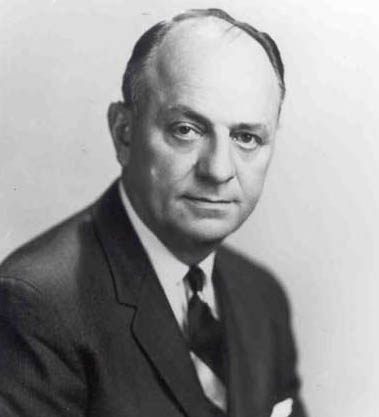
Surgeon General Luther L. Terry

In 1964, Luther L. Terry, the US Surgeon General, released a report from the Surgeon General’s Advisory Committee on Smoking and Health. In stark terms it explained that tobacco caused lung and laryngeal cancer and chronic bronchitis. (My grandmother believed that she’d been vindicated by no less than the Surgeon General😇) And in 1965 Congress passed the Federal Cigarette Labeling and Advertising Act. Four years later they passed the Public Health Cigarette Smoking Act. Both required health warnings on cigarette packs, banned advertising in the media, and required annual reports on the current consequences of smoking. In addition, the Centers for Disease Control and Prevention’s Officer on Smoking and Health continues to provide resources to help end the use of tobacco. They support state, local and voluntary ways to reduce smoking. They also continue research on the problems of tobacco use, and expand the anti-smoking message.

Since 1964, more than one half of all American adults either never started, or have stopped smoking. However, 45 million adults still smoke, and eight million adults have serious health issues due to their use of tobacco. 438,000 people in the US die each year due to tobacco-related illnesses.

I was working late last night and had the radio on in the background. At that hour I often listen to Red Eye Radio, and they happened to be discussing the Trucker’s Fund, which helps many long-distance truckers who are having medical issues. As annoyed as I was with the smoking that afternoon, I really started listening to the two men who were talking about the one of the new program–Rigs without Cigs. All semi-truck drivers, their families and friends can join for up to a year. They can receive a new book that can help you quit cold-turkey. The program also offers nicotine replacement therapy, or they can use the free apps to ultimately “revoke” smoking. There are numerous tips and tools to help, and ways to set up accountability partners. Everyone needs to speak to the volunteers once a week and tell them how you’re doing. And prizes for those who maintain their work can also keep people motivated. So far, a number of truckers have been successful. https://truckersfund.org/

When I finally finished up and went to bed, I kept thinking that there’s no right way to quit smoking. Whatever works for you is the right way. Whether you use a scare tactic to keep your kids from starting, or try to quit as an adult like Rigs without Cigs, or any of the numerous other ways, give it a try–and try and try until you succeed. It’s well worth it and I bet your family will thank you!

Katyn Massacre–Never Forget 🙏

April marks the 81st year since more than 22,000 Polish military officers and other Polish intellectuals were killed in what became known as the Katyn Massacre. Their deaths quickly became an open mystery early on in the war, and remain that way until the 1990s.

Most of us know that Germany attacked Poland from the east on September 1, 1939. Just 16 days later, because of the Molotov-Ribbentrop Pact, the Soviet Union attacked Poland from the west. It’s difficult to know how many Poles were initially captured by the Soviets–estimates go between 250,000 and 455,000 men. In a relatively short time, many escaped and others were allowed to leave after interrogations, but by November 1939, Laeventia Beria, head of the Russian NKVD (precurser of the KGB) held about 40,000 men in prisons around Kozelsk and Karkiv, inside the USSR. On March 5, 1940, Stalin agreed with Beria, and they, with six other members of the Politburo, signed execution orders for over 25,000 “counter-revolutionaries.” During April and May, members of the Polish military, pilots, government officials, police, lawyers, doctors, engineers, professors, writers, journalists, large landowners and priests were killed, and thrown into unmarked graves, most of them in the Katyn Forest. Stalin hoped to get rid of individuals who could oppose the Soviet Union at the end of the war.

The “fog of war” regarding the missing Poles continued until June 1941, when Germany turned on its “friend” with Operation Barbarossa–the attempt to take over the Soviet Union. Despite their recent war with the Soviets, the Polish government-in-exile in London headed by President Wladyslaw Sikorski, signed the Sikorski-Mayski Agreement against Germany. The government-in-exile expected that the Polish POWs held in Russians would be released and fight with the Polish government. Sikorski asked Stalin where they were. The answer was that they had escapes, and the Russians had “lost track” of them, but they were probably in Manchuria. No one believed that, but the Soviets insisted that they simply didn’t know anything else.

General Wladyslaw Sikorski

However, when Germany pushed deep into the USSR around Smolensk in April 1943 they found a mass grave of thousands of men. Josef Goebbels, Hitler’s Minister of Propaganda and closed confident, was thrilled. He could tell the British, French, Poles in exile, and Americans that their ally, Stalin, had killed thousands of Poles. He brought in members of the “Katyn Commission” of the International Red Cross (IRC), with 12 forensic examiners, and even a number of Allied POWs, to examine the site. Now Sikorski demanded an explanation. Stalin replied that the Germans had actually massacred the Poles, and then cut all diplomatic relations with the Polish government-in-exile. Throughout the rest of the war, Stalin maintained that it was Germany which had massacred the Poles, regardless of the IRC’s extensive information.

In 1952, the US conducted a congressional enquiry about Katyn. It, too, found that the massacre had be done by the Soviets, but very little was said or done about it. And after the war, when Poland came under the controlled by the Kremlin, little more was said about it . . . in public. But behind closed doors, and among the Polish diaspora people continued to ask questions about what happened in the Katyn forest.

Over the decades, the questions of the massacre festered under the surface. In the 1970s, the Flying University in Poland, and the Workers Defense Committee started openly asking questions. Despite arrests and beatings, more and more people demanded that the documents be unsealed. In 1981, Solidarity took a significant step when it set up a Katyn memorial. The Polish Communist Party took it down, but every Zaduszki Day (All Souls Day) Poles would set up crosses with the same silent questions. Not until 1989, when real cracks appeared throughout the Warsaw Pact, did the USSR admit that Stalin had authorized the massacre. The following years, Mikhail Gorbachov explained that Stalin had agreed with Beria and had authorized the NKVD to exterminate so many of Poland’s elite. That year, the Kremlin also turned over a number of formerly top-secret documents to the Polish President, Lech Walesa.

Even so, it was another 20 years before Russia finally provided Poland with 81 volumes of material, though they still hold 35 more volumes of classified documents. On the 70th anniversary of the Massacre, the Polish Prime Minister, Donald Tusk, and the Russian Prime Minister Vladimir Putin attended a memorial service near the actual site. Yet, to this day, there are still many, many questions to be answered.

KATYN . . . NEVER FORGET.

Katyn Massacre Statue, Jersey City, NJ

If you’re interesting in getting more in-depth information, take a look at:

Adam Paul, Katyn: Stalin’s Massacre and the Triumph of Truth

https://www.quailridgebooks.com/book/9780875806341

Vicomte de Lesseps–HELP!!!

Ever Given stuck in the Suez Canal (source: Maxar)

The Suez Canal is one of the most important thoroughfares on earth, moving more 10% of the world’s cargo every year. Last year more than 18,500 vessels covered the 120-mile-long canal from the Mediterranean to the Red Sea. Last week, an ultra-large container ship, the Ever Given, on its way to the Netherlands from Malaysia ran aground after turning sideways while struggling with the wind. No ships have been able to move north or south since then, and maritime experts from around the world are trying to find a way to reopen the canal. That’s caused a $10 billion dollar lost in little more than a week.

People have been interested in a canal since the days of ancient Egypt. Several Pharaohs attempted a canal, though only Darius I managed to develop something similar to a canal. Venetians, the Ottomans, even Napoleon attempted to build a canal but for a variety of reasons, particularly cost, engineering, and manpower, none ever managed to built such a canal. There were several goods about attempts to build a canal, and while waiting under quarantine in Egypt, a young assistant consular agent, Ferdinand de Lesseps, spend his time reading Napoleon’s civil engineer, Jacque-Marie Le Pere’s book, The Ancient Suez Canal. De Lesseps was hooked.

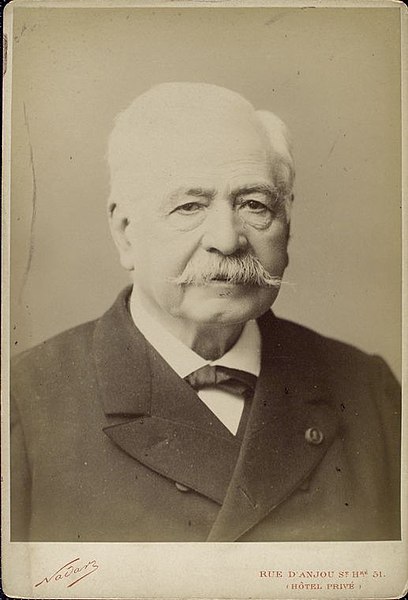
Ferdinand Marie Vicomte de Lesseps (1805-1894) attended the College of Henry IV in Paris, and initially worked in the Commissary Department of the French Army. In the following years he served as the vice-consul in Lisbon, Tunis, and Alexandria. He became consul in Cairo, Rotterdam, Malaga, and Barcelona, and served as the French Minister to Madrid. However, after major elections in 1849, de Lesseps retired from public office.

While he had worked as assistant consul in Alexandria, he had become very friendly with Sa’id Pasha who, in 1854, became Khedive (viceroy) of Egypt. He and de Lesseps were extremely interested in a canal, so de Lesseps returned to Eqypt, and on November 7, 1854, the Khedive signed a bill giving de Lesseps the concession to build a canal. He immediately called in thirteen engineers to develop appropriate plans which were adopted by the International Commission of the piecing of the Isthmus of Suez in 1856, and on December 15, 1858, de Lesseps established the Suez Canal Company.

Work started in April 1859. Roughly 30,000 people from a variety of nations worked on the canal. Many from Egypt worked on the canal as required by the “corvee” —a specific amount of unpaid labor owed to the government in lieu of taxes. Sadly, they’re were thousands of deaths over the year, due largely to cholera. The canal doesn’t require locks and initially there was just a single lane, but it quickly made sense to included passages at the Ballah Bypass and the Great Bitter Lake, to allow limited north-south passages. The north terminal is at Port Said, with Port Tewfik at the southern end.

The Suez Canal opened on November 16, 1869, with a blessing of the waters of the canal by both Muslim and Christian clerics. It was followed a lavish banquet including the Khedive, the Austro-Hungarian Emperor Franz Joseph, the French Empress Eugenia and the Crown Prince of Prussia, along with other dignitaries who watched lavish fireworks. The following morning, ships set sail for the half-way point at Lake Timsah. However, the French ship Peruse anchored too close to the entrance, accidentally swung around and ran aground, blocking the way into the lake. The rest of the ships anchored in the canal itself, and managed to drag Peruse clear the next morning.(Portent of things to come??) They sailed on to Port Tewfik on the 19th. The following day, the S.S. Dido was the first ship to pass through the canal from south to north. Once the Suez Canal was in full swing, it cut 5,500 miles off the trip from Europe to the Far East.

One of the most important political issues regarding the Canal came in 1888 with the Convention of Constantinople, in which all of the European powers signed a treaty agreeing that the Suez Canal would be a neutral zone, even during times of war. However, during both World Wars, it was closed, as well as during the 1956 Suez Crisis. That ended with the first United Nations Peacekeeping Force which assumed control of the Canal and maintained open access for all until both Egypt and Israel withdrew.

Comte Ferdinand de Lesseps

Thanks to the tides, tug boats, a number of engineers and salvage teams and dredgers, the skyscraper/cargo ship is righted, and will move into the Bitter Lake, the widest area of the canal so that it can be thoroughly inspected while the hundreds of waiting ships can start moving again.

What Do Robespierre, Pastor Niemoller and Cancel Culture Have to do With Each Other? 🤔

Just go with me–I promise it will make sense.

Maximilien Robespierre

Maximilian Francois Marie Isodore de Robespierre (1758-1794) was a lawyer and extremely influential member of the French Revolution. He was a member of the Constitutional Assembly and the Jacobin Club, and initially wanted France to allow universal manhood suffrage, and end celibacy of the clergy. By 1791 he wanted all male citizens to join the equivalent of the National Guard, hold public office and have the right to carry weapons for self-defense. The he demanded that King Louis XVI and his family be stripped to their titles and end up in jail–and ultimately guillotined. He also called for a National Convention. In fact, in September 1792 he was elected as one of the Deputies of the French Convention.

By April 1793, Robespierre tried to set up a “sans culotte army” that would enforce all “revolutionary laws” and deal with counter-revolutionaries (all who disagreed with his group) often with jail or execution. He was deeply involved in the law of 22 Preiral that basically got rid of what was left of the rule of law. In July he became a member of the Committee of Public Safety and later the Revolutionary Tribunal. He and a small group suppressed the Girondins (the right), the Hebertists (the left) and the Dantonists (center). You were with him or against him. In just a few months, he signed 542 arrest warrants, part of the Reign of Terror, in which thousands were executed, often by guillotine.

Gradually, even members of the Committee of Public Safety understood that he was going too far, developing what we now call a Cult of Personality. If you were not in lock step with his group, you were in trouble. On July 26, 1794, he was arrested. He didn’t go quietly, being dragged off to jail with a wound to his jaw. Within a few days, he and about 90 members of his inner circle were executed. That started to wind down the Reign of Terror, but ultimately it wasn’t until 1815, and the end of Napoleon’s reign, that France returned to an even keel.

Pastor Martin Niemoller

Martin Niemoller (1892-1984) began his career as a German Imperial Naval Officer. During World War I he had assignments throughout the Mediterranean, from Gibraltar to Port Said, during which he received the Iron Cross First Class. After the war he resigned his commission and attended the School of Theology in Westphalia Wilhelm University in Munster where he was ordained as a Lutheran pastor in June 1924.

Like millions of Germans, he initially thought that Hitler would do well for the country. However, Niemoller was horrified by his attitude toward the Jews. In 1933 he founded the Pfarrernotbund (Emergency Covenant of Pastors) in opposition to a Reign Church that would be based on Nazi ideology. The following year, he was one of the founders of the Confessing Church, set up to oppose the pro-Nazi German Evangelical Church. Ultimately Niemoller spent years in Sachsenhausen and Dachau.

Beginning in 1946, Niemoller often spoke about the ways in which Germans, and he included himself, had turned a blind eye to the persecutions of so many people on the run up to the war–the ill, infirm, communists, socialists, trade unionists, Jews, gypsies, priests, nuns, professors, and so many other innocents. He believed that it was easy to ignore others.

Pastor Niemoller’s poem goes right to the essence of the issue.

First they came for . . .

First they came for the Communists
And I did not speak out
Because I was not a Communist

Then they came for the Socialists
And I did not speak out
Because I was not a Socialist

Then they came for the trade unionists
And I did not speak out
Because I was not a trade unionist

Then they came for the Jews
And I did not speak out
Because I was not a Jew

Then they came for me
And there was no one left
To speak out for me

And that brings me to Cancel Culture. Apparently these days it’s fine to destroy the lives of people with whom we disagree. (Of course WE never did anything wrong or stupid!!) I bet Robespierre felt the same way. He was “cancelling” people left and right–until he became such an extremist that he had to be cancelled for the good of the country. Pastor Niemoller was plagued for the rest of his life over the way people in Germany were “cancelled.” Yes, Robespierre and the Nazis were extreme versions of their cancel culture, but it doesn’t take too long to go from “cancelling” someone for what they said on Facebook as a teenager, and adult loosing a job, or more. Think long and hard before you take part in cancelling anyone. You don’t have to like them. You don’t have to spend time with them. You don’t need to agree with them. Just remember, none of us are perfect, and the day may come when people decide to cancel you.

🌓 Rise and Shine!! 🥱

Even I, a definite morning person, thoroughly dislike Daylight Savings Time (DST).😒And I don’t know anyone who enjoys is. Why do it–to only change it back in a few months? I did a little digging to find out when this started, and who had this bright idea, and found some interesting information.

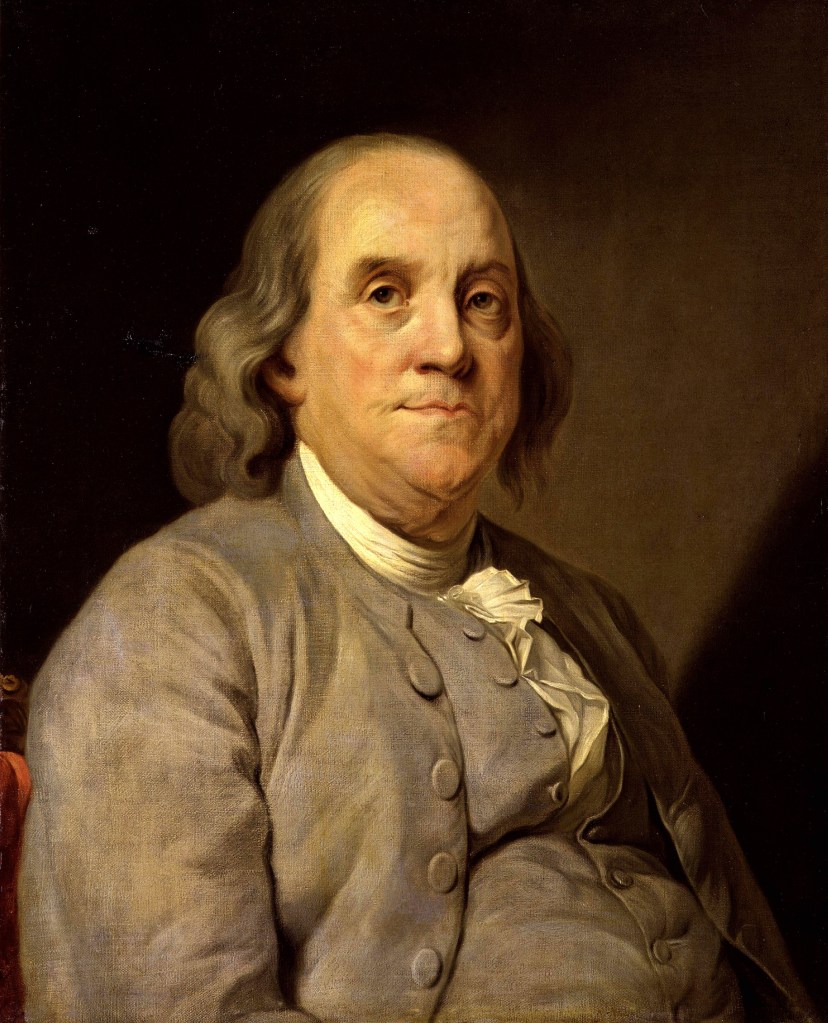
Benjamin Franklin

Some say that it began with Benjamin Frankin and his proverb in Poor Richard’s Almanac, “Early to bed and early to rise makes a man healthy, wealthy, and wise.” Pragmatically, he thought that shifting daylight an hour would save candles. It never took hold. Fast forward to 1895. George Hudson, a New Zealand entomologist wrote a paper for the Wellington Philosophical Society suggesting a two-hour shift would be very helpful for scientific study. He wrote a similar paper on 1898, but that, too, never took hold. Ten years later, William Willett, a businessman/builder in the UK, and more importantly to him, an avid golfer, suggested that an additional hour of daylight would allow golfers to play after work. He actually convinces Robert Pearce, a member of the Liberal Party in Parliament, to try to pass a bill allowing the change, but it failed.

What really caused the shift was World War I. In an effort to save coal, Germany and Austria-Hungary, the Central Powers, turned the clocks ahead one hour on April 30, 1916. Great Britain followed in May, as did France. Russia made their change in 1917, and in 1918, after joining the Allies, the US changed as well. Most nations changed back after the war. In the US, Congress tried to pass a bill to repeal it, but President Woodrow Wilson vetoed it. Congress passed it again, Wilson vetoed it again, but Congress overrode it the second time. It stayed that way until World War II. Again, European nations changed to DST in 1939, while the US changed in early 1942 and it stayed that way until 1945. Since then, we’re changed to DST at different time through the years.

Yes, as kids it’s nice to be able to play outside longer when school’s out–but who wanted to go to bed at regular time during school? And Mr. Willett is probably smiling down from heaven when people can play golf after work. But particularly since the 1970s there has been growing evidence that DST is not a good idea. Some serious research started during the energy crisis. The theory was that more sun in the evening would save electricity. At best it’s a wash and there’s some indication that it may actually be wasteful. Face it, the earth moves on its axis and there’s going to be just so much daylight and so much darkness every day, year in and year out. Does it matter If you turn on the lights so you can get ready for work, or turn it on earlier in the evening? You still need to turn on the lights (or Franklin’s candles) sometime during those 24 hours.

Chronobiologists have done significant work and have come to the conclusion that even small shifts in time can have inadvertent effects on the human body and brain. An eight-year study at the prestigious Mayo Clinic has found that the time shift has caused problems for medical personal’s sleep deprivation (they work long hours to begin with and that doesn’t help) Journals such as Open Heart and the Journal of Clinical Medicine have found a noticeable increase in Acute Myocardial Infarctions–aka heart attacks😱. There are also studies from the American Economic Journal Applied Economics showing an increase of at least 30 traffic deaths in the days immediately after “springing forward.” (interesting, no similar problems happen when “falling back”) as well as general accidents that cost roughly $275 million dollars. And if that’s not enough, apparently the shift in clocks cause a one-day loss of $31 billion in the US stock market.

Both Hawaii and Arizona don’t follow Daylight Savings Time, and momentum has been growing to end it once and for all. Fifteen additional states have passed their own laws ending it–Arkansas, California, Delaware, Florida, Georgia, Idaho, Louisiana, Maine, Ohio, Oregon, South Carolina, Tennessee, Washington State, Wyoming and Utah. However, that needs the OK from the Department of Transportation, which in turn requires an act of Congress. And recently Senator Marco Rubio developed a BIPARTISAN bill to do just that. The “Sunrise Protection Act” includes Democratic Senators Whitehouse, Wyden and Markey, and Republican Senators Rubio, Blunt, Rick Scott and Hyde-Smith. I’m keeping all fingers crossed that they pass it. 🤞🤞🤞

Happy Women’s History Month! 🧐

As a woman and an historian, I wish you all a wonderful Women’s History Month. Really, every woman can find some piece of history that’s intriguing. From 5000 BCE Egypt to 2019 Indonesia. From oral to pre-columbian, social to economic, local to diplomatic, and on an on, there’s a little bit of history for all of us.

So in honor of Women’s History Month, and the fact that today is the first warm day in months, let’s take a look at women and baseball. The first information we have about girls playing baseball was at Vassar College in 1866. Called the “Bloomer Girls,” they were barnstorming around the east coast. We also know that there was a girls baseball teem in Colorage in 1910.

But the first serious league we know of is the All-American Girls Professional Baseball League that played between 1943 and 1954. At the beginning of World War II, many members of different teams were drafted, or volunteered. Men like Hank Greenberg, Yogi Berra, Jackie Robinson, Bob Feller, Willie Mays, Stan Musial, Warren Spahn, Joe DiMaggio, and Ted Williams to list just a few. During the war, a huge number of Americans were involved in war work, but now and then people needed to take a break, and what would be better to take your mind off work than a baseball game?

Philip Wrigley, owner of the chewing gum empire as well as the Chicago Cubs, discussed the possibility of a girls league with Branch Ricky and Paul Harper. They agreed, and some owners also got involved. Initially 200 women, many of whom had played softball in school, tried out at Wrigley Stadium. They were looking for women who could play well while also being “wholesome” girls. Sixty women initially joined the league. During spring training, they would practice during the day, but in the evening they had to attend Helena Rubinstein’s charm school where they took classes in etiquette and manners. They also learned the league’s dress code –no short hair, no smoking or drinking in public, and wearing lipstick at all times. Clearly that was much stricter than that required of the men!

Over 600 women played baseball during the nine years the league was in business. Initially they received $45-$85 a week–noticeably less than men received, though by the last season they received $125 a week. The league traveled throughout the Midwest, and particularly during the war years, the teams received a lot of publicity, both in local newspapers and in national publications like Time, Life, and Newsweek.

One of the fun ways to lear about AAGPBL is in the movie–A League of Their Own (1992). Quite historically accurate, it was directed by Penny Marshall with actors including Geena Davis, Tom Hanks and Madonna. A great film that’s preserved in the National Film Registry. Enjoy!

⚾️⚾️⚾️⚾️⚾️⚾️

STOP‼️

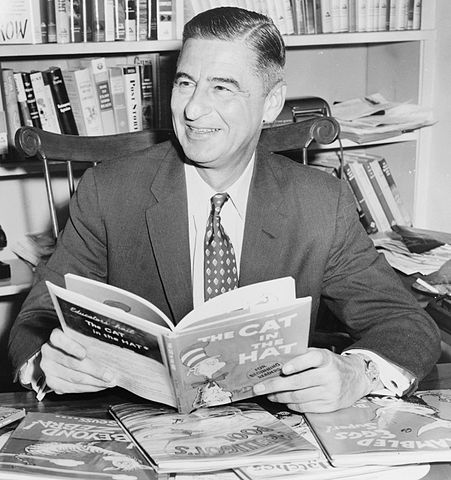
We’re arrived at a bridge too far. I’m not talking about the movie. It’s a great film, but we can talk about it another day. I’m talking about the huge brouhaha over Dr. Seuss. I can understand people trying to cancel things, but cancelling Dr. Seuss is a bridge too far. Apparently we can’t buy a copy of McElligot’s Pool, but can buy as many copies of Hitler’s Mein Kampf, of Mao’s Little Red Book as we want. Yes, early in his career some of Theodor Geisel’s work contained several ethnic or racial stereotypes that were offensive. But over the years he change his attitude. Read his entire body of work. Even better, listen to his own words. He was vehemently anti-fascist and anti-communist and opposed discrimination. Let’s take a look at some of his other books.

The Butter Battle Book–A metaphors for nuclear disarmament.

The Lorax–Encourages personal responsibility for a clean environment.

The Sneetches–Satirical book attacking discrimination between races.

Yertle the Turtle–Opposition to Hitler, and all types of authoritarianism.

Oh the Places You’ll Go–Uplifting book for ALL ages.

Green Eggs and Ham–Personal favorite. Best way to get kids to at least try vegetables.

And those are just a few. What’s particularly ironic is that fact the Geisel understood that kids understand the moral of a story faster than some of their parents!

So I ask again, why ban six Dr. Suess books that he himself came to see contained pages which could be upsetting to readers, yet works by Hitler, Stalin and Mao can be purchased almost anywhere? That says more about the “cancellers” than it does about Geisel. And while I at it, which adults actually read the anti-Semitic screed The Protocols of the Elders of Zion, or Stalin’s The Foundation of Leninism? I’m willing to bet that many of the people who ban Dr. Suess haven’t even read those books which remain available. Books that are truly deplorable, written by truly deplorable people who NEVER changed their minds. Theodor Geisel DID change his.

How about this–no more book banning–more book reading. And then discuss them. Calmly. With a variety of people, not just those who agree with you. No drowning out other people. THINK about what the other guy is saying. Is there anything you like in the book? What parts do you disagree with? How would you improve or change what’s in it? Are there any points where you may both agree? If not, then I seriously suggest that you learn to calmly agree to disagree and move on. Unless, of course, you think that going to war with neighbors, friends, relatives and the general public every time you see anything that doesn’t many you warm and fuzzy is a great idea.

Theodor Seuss Geisel

BATTLEGROUND–Review

Right before I started reading H.R. McMaster’s new book, Battleground, I got a phone call that left me speechless with my hair on fire🤯 . . . and I don’t have any hair to spare!!! Someone I’ve known since high school told me that the Board of Ed has decided to drop history from the core curriculum–it will only be an elective. I’ve paid attention to that school over the years, and it’s been one of the three best schools in the state. Have they lost their minds? I took a quick survey of other school districts, and was . . . let’s just say not a happy camper . . . to see that it’s happened is some other schools.😱 Now, I’m a great proponent of STEM (science, technology, engineering and math). Most of my family is involved in those areas–I’m the outlier. But even they are grudgingly glad that they learned some history. As a cousin (another science-type) recently said to me, if we don’t know where we came from–the good, bad and ugly–we won’t know where to go from here. So, to calm myself down a bit, I picked up McMaster’s book, and as I turned the pages, I found an interesting sub-text about history, in addition to his commentary.

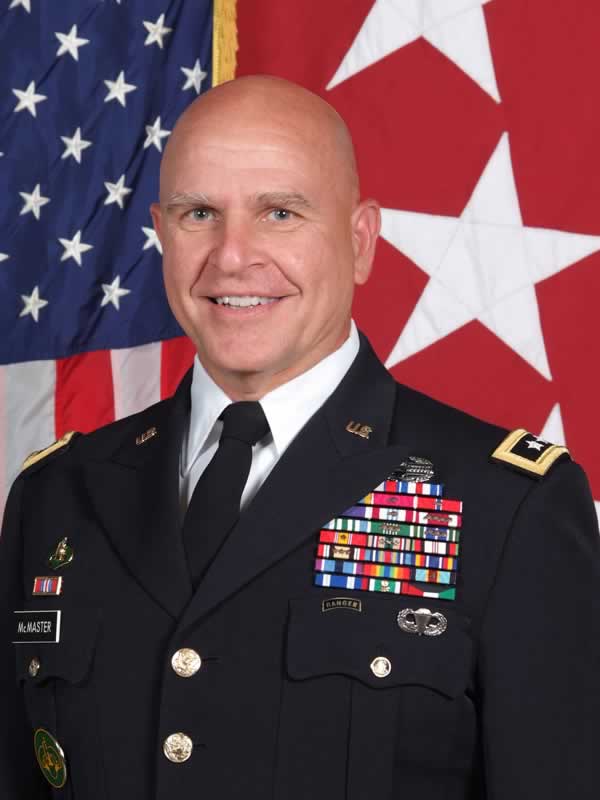
So who is Herbert Raymond McMaster, and why did he write this book? McMaster was born in Philadelphia in 1962, and graduated from the US Military Academy at West Point in 1984. He later earned a Ph.D. in American History from the University of North Carolina at Chapel Hill where he wrote his dissertation on the Vietnam War. He later turned it into an important book, Dereliction of Duty. During the 1991 Gulf War he was a captain commanding Eagle Troop of the 2d Cavalry Regiment at the Battle of 73 Easting. He later taught Military History at West Point, and held a number of positions in US Central Command. In 2004 McMaster served as commander of the 3d Cavalry Regiment and fought the Iraqi insurrection at Tal Afar. By 2012 he was Deputy Commanding General of Army Training and Doctrine Command. He was surprised when, in February 2017, he was offered the job as National Security Adviser to the President, which he held until April 2018.

MajGen. H.R. McMaster

Many people looked forward to McMaster’s book, hoping to read about his relations with President Trump. They were disappointed. After his time as National Security Adviser, McMaster preferred to write about current geopolitical issues. He has an interesting perspective–actually an historical perspective. (And there’s the sub-text. He believes that an understanding of history is key to how we can, and should, deal with other nations.) He’s not an isolationist. Nor does he believe that the US must atone for all the sins ever done throughout the world. He is much more of a realist who uses diplomatic and military history, current geopolitical events, personal discussions and intel to put together solid options for an administration.

He frequently suggests that American “strategic narcissism” is a serious issue and has been for many years. Hans Morgenthau originally came up with that term explaining that it is a way of “viewing the world only in relations to the US.” McMaster suggests that both Democratic and Republican administrations have the same problem, and perhaps we need to make a subtle, but difficult shift to “strategic empathy.” Using his personal experiences, and his serious understanding of history, he discusses significant issues with China, Russia, North Korea, Afghanistan and Iraq. He clearly and concisely explains what we did wrong, and then makes some suggestions of ways to move forward, including, in some cases, working in conjunction with our allies.

This was an outstanding book on many levels, and I had some solid discussions about it with several colleagues. Not only did we talk about McMaster’s perspectives, but it was so obvious to us that there is a very sensible reason to keep teaching history. It’s actually useful. It can show you what didn’t work, and what did work. Nice not to make the same mistakes over and over isn’t it? You don’t need to believe me or my colleagues, we’re historians. We’re biased. Ask someone like McMasters.

Link for more information on this book. https://www.harpercollins.com/products/battlegrounds-h-r-mcmaster