Time for an Update

It’s been a while since I discussed current events in Hong Kong, the Uighur’s and other Turkic peoples in Xinjiang province, as well as Tibet, so like I said, it’s time for an update. What’s been going on? Sad to say, very little good news.
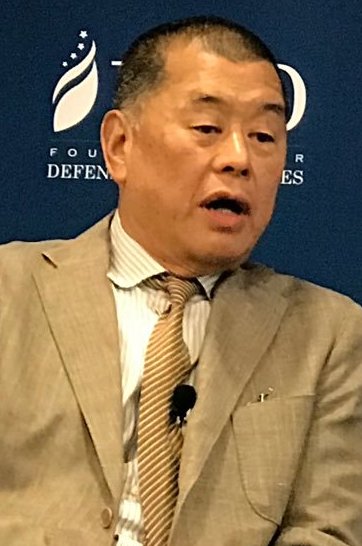
Jimmy Lai at a meeting of the Foundation for Defense of Democracy

Remember Jimmy Lai–the billionaire entrepreneur from Hong Kong who owns the Apple Daily News, and who is a pillar of democracy? Well he was jailed by the Chinese Communist Party (CCP) in December 2020 because he had been involved in Hong Kong’s pro-democracy protests in 2019 and 2020. He was originally given bail–more like house arrest, but at least not in jail. A few weeks ago, he was re-arrested and the Hong Kong Court of Final Appeal denied his bail because they believe he had committed crimes against the state, and colluded with foreign forces. They also said that he has the means to flee which, in fact he does, but he’s made it very clear to everyone that he will never leave Hong Kong. He could have left at any time in the past 30 years, but stayed to fight for freedom.

Ultimately, the CCP is trying to use Lai to intimidate the Hong Kongers, making an example of what can happen to people who defy the government. But this very well might backfire for Beijing because Jimmy Lai may be willing to become a martyr for liberty. He grew up on the mainland and knows how the Party works. As things stand now, he’s stuck in prison until his first court appearance in April. Want to bet that it turns into a show trial? Many Hong Kongers support Lai and democracy, but the CCP tends to take a difference view. They hope that keeping Lai in prison will suppress the Hong Kongers. After all, if someone like Lai can be jailed, what would happen to them?
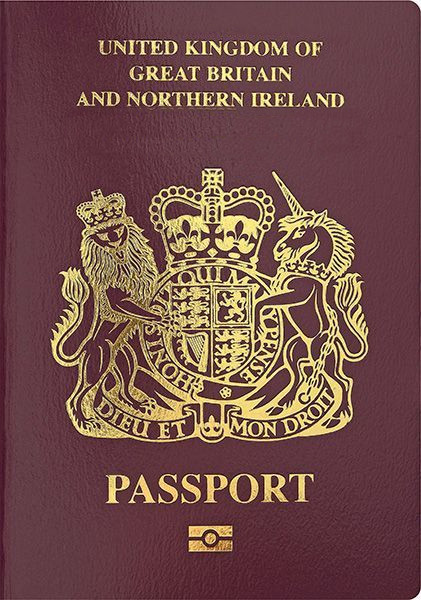
Many families are having serious discussions about whether to stay or leave Hong Kong. Many have already left, and as the noose tightens, more are trying to move ASAP. Here too, the CCP is trying to set up road-blocks. For years, Hong Kongers have held British National (Overseas) Passports, the BN(O), issued since 1987. On January 29th, Zhan Lijian, the Chinese Foreign Minister announced that China wouldn’t recognize the BN(O) for people boarding flights out of Hong Kong as of January 31st. They would require the Hong Kong Identity Card (HKID). Great Britain has already changed its policies to make it easier for Hong Kongers become citizens of the UK, but when media broke the news about the newest restriction, the US, Australia, Germany, France, Spain, Japan and Taiwan, in addition to the UK, announced that they would recognize the BN(O), in an effort to help Hong Kongers.

Remember, though, that Hong Kong is just the latest attempt of the CCP to suppress a people. We’ve talked about Tibet, where the Dalai Lama had to flee, temples have been destroyed, and the people basically enslaved. We hear more about the Uighur’s these days, because it’s clear that they have been forced into concentration camps, are raped, starved, beaten, and forced into “re-education” camps, while many others end up slave laborers making everything from sneakers to soda.

Former Secretary of State Mike Pompeo

One of the very few rays of sum light in all this misery is that both former US Secretary of State Mike Pompeo and current Secretary of State Anthony Blinken are harsh critics of China’s horrifying human rights policies. It’s early days for the new administration–here’s hoping that they take their current comments seriously. I, too, understand real politik pretty well, but there’s something more important. Commodore Matthew Fontaine Maury’s belief that “When principle is involved, be deaf to expediency.” Think about that before you buy a pair of sneakers.

Secretary of State Anthony Blinkin

What did John do?

I live in a big city and it’s interesting what you hear when people walk around town speaking on their phones. A few days ago on my way to the gym (best trainer EVER!) a lawyer was telling his partner that they really should take a case, even though it was going to make a lot of people very angry, and might even lose a few clients. “. . . Look, is it more important that we do what’s right, or virtue signal? Hell, everyone’s entitled to a solid defense even if he’s an @%*# !” I don’t know who they were talking about, but the first thing that popped into my head was”I know what John would do.” That is, John Adams, who even before the American Revolution, believed that in a democratic society even the most despised people were entitled to a vigorous defense.

In 1768, British troops landed in Boston and the surrounding area to deal with the Townshend Acts, passed by Parliament to try to pay for the French and Indian War (1755-1763). The colonists felt that it was up to Great Britain to pay for it, and as the months when on, tensions between the soldiers and colonists were on a hair trigger. Around 9 pm on a very snowy night of March 5, 1770, a sentry was standing near the Boston Customs House, when a boy came over and started harassing him. We have no idea what was said, but the boy ran home to his father who, with at least 50 colonists returned and attacked the sentry with snow and ice balls, sticks, clubs and stones.

At that point the Redcoat called for help, and Captain Thomas Preston and a squad of eight soldiers arrived double quick with muskets and bayonets. More colonists arrived when a church bell started ringing. In short order several hundred colonists, many of them members of the Sons of Liberty, surrounding the soldiers. The scene was turning into a melee. It’s still unknown which of the soldiers fired. In the end, five men, including Crispus Attuck, were dead, and six were wounded.

Portrait by Paul Revere of the Boston Massacre

British law took over, and the colonists were fine with that because they still considered themselves members of the British Empire. Three weeks later, a Grand Jury indicted Captain Preston and all eight soldiers for murder. The Sons of Liberty provided broadsheets and pamphlets, and spoke to everyone they could to put the colonial “spin” on the trial. It didn’t seem that anyone wanted to take the mens’ case, and while the British were good soldiers but they were not JAGs (Judge Advocate General in the military). Who would take their case?

At that time, John Adams was a 34-year-old lawyer who happened to be working near the Customs House. He was already very involved in the patriot cause, but had been following the case closely. Whoever took the case could have become extremely unpopular, could have lost his livelihood, and possibly put his family , including his pregnant wive, Abigail, in danger. The problem was that he fervently believed that anyone living in a free country should have a solid defense. He also hoped that defending the men would show the British that the colonies were equal to those in the Mother Country, not a bunch of country bumpkins from the backwater. Besides, as he really looked at the evidence, he wasn’t convinced that it was as clear as the colonists thought it was.

Joh Adams, c. 1766. From the Massachusetts Historical Society. Not to be reproduced without permission.

Preston’s trial took place on October 24th and 30th. He had been accused of telling his men “Fire.” However, while there was a number of witnesses, everyone had a different understanding of what happened. There was no way to know if he had, in fact, told his men to fire. Adams was not a wonderful public speaker, be he was a brilliant jurist. This was the first time a lawyer had discussed the term “reasonable doubt,” but the jury believed him, and acquitted Captain Preston.

The soldiers’ trial took place in late November, ending on December 3. Adams maintained that they shot in self defense. Again, there were numerous different accounts of what happened. The one which was the most compelling came from Dr. John Jeffries who had cared for one of the victims. Before the man died, he told the doctor that the soldiers had shot in self-defense. The fact that the man gave that as his “dying utterance” gave significant gravity to what was said. Ultimately, six of the soldiers were acquitted, and the last two were convicted of manslaughter, not murder. For that, they were branded on their thumps.

It’s very interesting that, despite the rage of so many colonists, they accepted both of the verdicts. They didn’t harass Adams’s family, or Adams himself, who had defended the soldiers. There were some angry editorials in the Boston Gazette, and he did loose some of his practice, but even the Sons of Liberty moved on with a degree of calm which is so difference from what frequently happens when people disagree with some verdicts today.

Long after the Boston Massacre, the American Revolution and his presidency, Adams commented that he believed his defense of the British soldiers “was one of the most gallant, generous, manly and disinteresting action of my whole life, and one of the best pieces of service I ever rendered my country.” Following the law, and making sure that everyone in a free society receives a vigorous defense ultimately made him one of the most respected men in Massachusetts—ultimately in the US. Something to think about—I hope the men I heard during my walk came to the same conclusion.

If you’re interesting in finding more about Adams or the Boston Massacre see two great books. David McCullough, John Adams, and Dan Abrams, John Adams Under Fire.

A Few Question 🧐

I’m really lucky because for the past 40 years I’ve been able to work at any time, day or night. It can be the standard 9am to 5pm or anything else. There were many years when it was 9am to 1:30pm and then 8pm to midnight every day. All that matters is that it’s done on time and in truth, I usually get everything done early. It’s been great because I can go to a child’s–now grandchild’s–game or play, get to doctor’s appointments fairly easily, and occasionally have lunch with a friend (at least until the pandemic–now it’s FaceTiming) I’ve also been able to take the time to watch key House or Senate hearings, State of the Union addresses, and even impeachment. And thank heavens for C-SPAN where I didn’t have to hear the pundits blathering on. C-SPAN carries the actual people involved so I can come to my own conclusions. This past week, I worked in the morning and evening, but all afternoon I got out my knitting and watched the impeachment. But I know that I was one of the very few who did that.

So that brings me to my questions.

A) Why did relatively few people listen to, or watch, the events? Or for that matter things like the State of the Union speeches, Inaugural speeches, or prime-time presidential speeches. Is it because everyone is busy and don’t have time to watch or listen? That certainly makes sense. Are those thing boring? Sometimes even I think they are😒 but if you don’t listen, you won’t know what’s going on. Do people just really dislike the person who’s talking and would rather not hear him/her? Maybe. There are plenty of speakers who I don’t like, but I’ve found that it’s better to hear the ones I disagree with so that I can develop a solid, sensible disagreement rather than just saying that the person is an idiot.

B) If people are really just too busy, when they do have time, do they get information online or on TV or radio–or even (gasp) a newspaper? I hope so. And I hope that they take a look at a variety of news articles. Why? See question A.

C) Are people simply so DONE with the constant bickering of both sides that they don’t want to listen to any of it? Do people simply want Congress to get to work on what they were actually send there to do? Makes perfect sense. And I can understand why people just aren’t interesting in listening to hearings or speeches. They pontificate, not actually LISTEN to each other. All I can say is that if you want Congress to be held accountable for what has been done, and what hasn’t been done, you need to take a deep breath and find a little time to see what they’ve been up to.

We Are Not Amused🤨

Teaching as long as I have, I’ve made friends throughout the country, and a number in Canada too. Texas, Nebraska, South Dakota, Virginia, New Jersey, Alberta, British Columbia, you name it. Phones, FaceTime and now Zoom keeps us connected. And in the past three weeks, almost everyone I’ve spoken to is annoyed. Over the stopping of the Keystone XL Pipeline.😠 I mean, really annoyed.😡 And, in truth, so am I.😤

Apparently, the new administration believes that banning the pipeline will be a boost for climate change. Really?! If that’s the case, why are other countries, which have signed on to the Paris Climate Accords, working aggressively to build pipelines which can provide them with oil and natural gas? Nations like Germany, Azerbaijan, southern Europe and Canada.

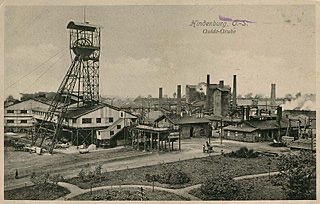
Picture of a German coal mine in the early 1900s

Germany currently gets 40% of its electricity from coal. Now, they’ve moved from black coal to brown coal, but at the end of the day, coal is coal, and it certainly releases a great deal more CO2 than gas. Chancellor Angela Merkel is moving forward with the NordStream 2 pipeline with Russia which will bring natural gas from Russia through the Baltic Sea to Germany.

Then there’s the Caspian National Gas pipeline. Completed on time (December 31, 2020) and under budget, it’s one of the first of a number of pipelines. The Southern Caucasus Pipeline, is underway, and countries including Turkey and Italy hope that the Trans-Anatolian Pipeline and Trans-Adriatic Pipeline, will provide gas to Southern Europe. Turkmenistan and Azerbaijan forged a deal just a few week ago. Why? Because at this point, renewable energy provides only a tiny fraction of the electricity and fuel that these growing nations need. Gas is infinitely cleaner than the current alternatives and can provide what is necessary.

Engineers, pipe fitters and assorted trades put together a portion of a pipeline

And what about Canada, our friend and ally for 150 years? When President Biden stopped the Keystone XL Pipeline, Prime Minister Justin Trudeau was openly upset. And so was Alberta’s Premier Jason Kenny, who called it a “gut punch,” and believes that it will definitely hurt our mutual working relationship. American and Canadian workers–10,000 workers–lost their jobs. But actually it’s more like a minimum of 60,000 direct and indirect jobs that will be lost in short order. Union representatives, starting with Richard Trumka, President if the AFL-CIO, many Governors and state officials, US Representatives and Senators all know that stopping the pipeline will be very painful for a very long time. Most importantly, everyday people who work for a living, are saddened, scared, and distressed.

We all understand that climate change is an extremely serious issue, but let’s think about this. Using gas rather than coal has brought down greenhouse gas emissions in the US to 1992 levels–leading the world in carbon emission reductions. But stopping the pipeline means that the oil or gas will have to go by trucks or trains, and that will seriously increase emissions. That is a wrong-headed idea on every level. Members of the EU and the Paris Accords are ready and willing to use pipelines rather than trucks because they understand the benefits. Our government, on the other hand, prefers to increase emissions and throw people out of work on the vague promise that they will find other jobs sometime in the future–possibly jobs making solar panels, most of which are made in . . . China, which is one of the worst climate offenders in the world.😳

The Canadians are assessing what they will do now, while still speaking to the Biden administration. Some union leaders say they are having discussions with high level government officials. Hmmm. State and local officials keep pressing the White House to keep the Keystone Pipeline alive. Right now things seem bleak. But as one of my former grad students told me—“we’re writing our Congressman, and we’ll keep writing till they fix it or we’ll vote for someone who will!“

Black History Month–we remember Ralph J. Bunche

Ralph Johnson Bunche, 1904-1971

I was very surprised to learn that some student’s didn’t know who Ralph Bunche was, so Black History Month is the perfect time to learn about an extremely influential American—and international—leader.

Ralph Johnson Bunche was born in Detroit on August 7, 1904. His father, Fred, was not an involved parent, so when Ralph’s mother, Olive, developed serious medical issues in 1915, she moved to Albuquerque, NM, with her children, Ralph and Grace, was born in 1909, along with her mother Lucy Johnson, and the children’s uncle. However, Olive Bunche died in 1917 and three months later, her brother committed suicide. Looking for a better life for all of them, Ralph and Grace’s grandmother took both children to Los Angeles in 1918. There, Ralph was an excellent athlete, and an outstanding student, graduating as the valedictorian from Jefferson High School in 1923. He then attended UCLA, where he graduated summa cum laude, Phi Beta Kappa and valedictorian in 1927.

Bunche received a scholarship to Harvard University where he earned a Master’s degree in 1928 and Ph.D. in political science in 1934. In 1936 he published his first book, A World View of Race. He went on to do post-graduate work at the London School of Economics and the University of Cape Town, South Africa. While working on his dissertation at Harvard, he began teaching at Howard University in Washington, D.C. where he revamped the Political Science department. In addition, in 1940 he worked as the lead investigative research and writer for An American Dilemma with Swedish sociologist Gunner Myrdal. Also while working a Howard, Bunche became one of the new generation of Black American intellectuals who believed that integration was necessary and overdue in the US. He worked with men such as A. Philip Randolph, and Martin Luther King, Jr., and served on the board of the NAACP.

When World War II arrived at America’s shores, Bunche moved from Howard University to the Office of Strategic Services (OSS) where he served as the senior social analyst. He then moved over to the State Department where he was an adviser for the US delegation at the Dumbarton Oaks Conference. He also provided much preliminary work for the United Nations conference in San Francisco, particularly Chapter XI and XII of the UN Charter, and working closely with former First Lady Eleanor Roosevelt.

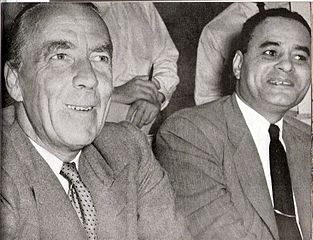
Count Folke Bernadotte and Ralph Bunche

In 1947, the first Secretary General of the UN, Trygve Lie asked Bunche to act as Director of the Trusteeship Committee. He accepted, and in 1948 joined the UN’s Special Committee on Palestine. On September 17, 1948, Count Folke Bernadotte of Sweden, the chief UN mediator of the Arab-Israeli conflict, was assassinated in Jerusalem. The Secretary General requested that Bunche take up Bernadotte’s work, and in 1949 he got both sides to agree to the Armistice Agreement between Israel and Egypt, Jordon, Lebanon and Syria. In 1950, Bunche became the first African American to received the Nobel Peace Prize. He was one of the most important, and famous, men in the US at that point. President Truman asked that he become Assistant Secretary of State, and later, President Kennedy asked Bunche to serve as Secretary of State. He preferred to continue his work in the United Nations.

Over the years, Bunche became the Director of Peacekeeping in the Suez Crisis in 1956, the Congo in 1960, and Cyprus in 1964. By the late 1960’s he was the Undersecretary-General for Special Political Affairs. He had received 69 honorary doctorates, and numerous awards, most importantly, the Presidential Medal of Freedom. It’s very possible that he could have gone on to be the Secretary General of the UN. Unfortunately, Bunche had diabetes, and other medical issues, and decided to retired in 1971. He died on December 9, 1971 and is buried at the Woodlawn Cemetery in New York City.

Hopefully, you’ll look a little deeper into a quiet man who did so much to make both the United States and the world a better place. If you’re looking for a good book about him, take a look at Brian Urquart’s Ralph Bunche: An American Odyssey.

Happy Groundhog’s Day! 🦔

It’s cold, the days are still short, and it’s snowed for the past several days, so I think we need to take a few minutes and look as something that we can all laugh at–Groundhog’s Day🦔

It actually started as a tradition lost in the mists of time. Pagan Celts had a festival half way between the winter solstice and the spring equinox, called Imbolc to honor the beginning of spring. Around the same time people in Germany came to believe that at about the same time, if a badger or other small woodland creature came out of his den on a sunny day and saw his shadow, there would be another 40 days of cold and snow. If it was cloudy, and he didn’t see his shadow, spring would come early. As Christianity arrived in Europe, the festival morphed into Candlemas, in honor of the day when Christ was presented at the Temple in Jerusalem. Yet the idea of looking to see if the badgers saw their shadows continued.

During the 18th and 19th centuries, tens of thousands of Germans immigrated to Pennsylvania, and took many of their customs with them. However, there were/are many more groundhogs (also called woodchucks) than badgers in much of the Mid-Atlantic, so it quickly became Groundhogs Day rather than Badger Day. Groundhogs are about 17-25″ long, weigh roughly six pounds, and live for 10 or so years. They build their burrows about 6 feet deep and as much as 20 feet wide, with numerous exits. And of course, they hibernate through the winter.

Groundhog/Woodchuck

The first “groundhog day” is mentioned in a diary of James L. Morris of Morgantown, PA. We next hear about it in the Punxsutawney Spirit newspaper which mentioned that “Phil” hadn’t seen his shadow by the time the paper went to press in early February 1886. The following year, Clymer Freas, the editor of the Spirit, and a group of local businessmen, joined the Punxsutawney Groundhog Club and walked up to an area called Gobbler’s Knob to see if they could find a groundhog, and whether or not he would see his shadow. It became a regular event over the years. Currently, several thousand people come to Punxsutawney, PA, a town of about 6,000 people, to witness Phil’s annual appearance. Local officials known as the “Inner Circle” join in the fun by wearing top hats, and 19th century suits and coats, and frequently speak to the onlookers in the Pennsylvania Dutch dialect.

While it’s an interesting tale, and it’s fun to see the videos of Phil every year, I’m afraid that according to trained meteorologists, Phil has been correct only 40% of the time. But then, how accurate are our human weatherpeople? They get February 2 right about 60%. So let’s just enjoy Punxsutawney Phil for a while and remember the old ditty–“Whether it’s cold or whether it’s hot, we’ll have weather, whether or not.”

Happy Groundhogs Day!

Little Women–Book, Movie or Both?

My granddaughter loves to read so I recently gave her a copy of Little Women by Louisa May Alcott. I read it a number of times as a kid. So did my mother. So did my daughter. We all loved it! My granddaughter is in the middle of it and said that it’s a great book. Why do I mention it? Because it’s December, and the movie Little Women was premiered in December 1933. My mother actually saw it with her cousins–for five cents each in those days. I saw it on TV, and it was on every year around Christmas time for years. (It’s still on Turner Classic) The film is extremely faithful to the book, which doesn’t happen that often.

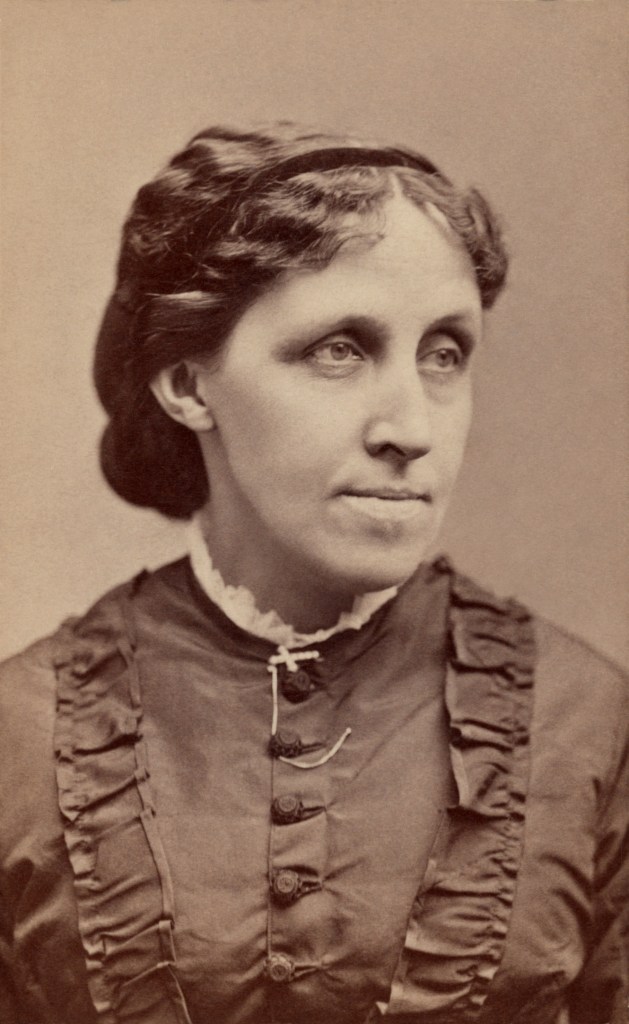
Louisa May Alcott

Louisa May Alcott was born in 1832. Her father was a headmaster of a school, and she was taught at home. However, her father had financial difficulties, and she needed to help provide for the family. At the same time, she wanted to be more than a wife and mother, and became a writer. Her first book, Flower Fables, was published in 1852. During the Civil War Alcott, an abolitionist, became a volunteer nurse in the Georgetown, D.C. Hospital. In 1863 she published Hospital Sketches, based on her time in the hospital, and from which she gained serious critical approval. Her “big break” came in 1868, when her published, Thomas Niles, asked her to write a book about girls. Alcott was not thrilled with the suggestion, but agreed to give it a try.

It took just a few months for her to write a semi-autobiographical novel based on the lives of her sisters and herself, known as Little Women. It immediately became both a critical and mass-market success. She quickly finished part two in 1869. She followed that with Little Men in 1871, about her life at the school which she founded with her husband. What Alcott had thought would be a simple book for girls just entering maturity became so much more. It has been read by millions of people in more than 20 countries, and not just by teenagers but people from 7 to 70. Rather than a simple romance, she spoke about the serious issues the March girls–Meg, Jo, Beth and Amy–dealt with. She discusses genteel poverty, war, the death of a sister, rivalry between sisters, and the ability and desire of women to work outside the home. What Alcott and her publisher thought might be a flash in the pan turned out to be a much-loved book for the past 150 years.

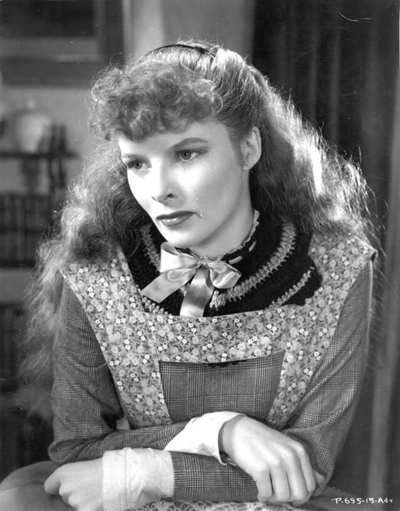
Katherine Hepburn playing Jo March in Little Women, 1933

Little Women was adapted for Broadway in 1912 and in London in 1919, with a number of revivals in 2011, 2014 and 2019. Silent films showed the story in both 1917 and 1918. Then came the Talkies. The first one, and in my opinion the best one, premiered in 1933, where a young Katherine Hepburn played Jo, the main character. They were followed by other movie versions of Little Women in 1944, 1949, 1994 and 2019, as well as TV series in 1950, 1958, 1970, 1978 and 2017.

It’s been a bad year for all of us. In some ways it’s been very similar to that which the March girls went through. It’s rare that there’s a story which is both escapist and extremely relevant at the same time–this is one of them. If you’re not into reading, take a look at the movie. Or maybe do both.🤓

Christmas Truce, 1914 🎄

We often hear that this is the “Most Wonderful Time of the Year.” Right now, I’m thinking that this may be the strangest times of the 2020. But when you think about it, there have been other Christmas seasons that have been harder than this one. MUCH harder. Running through a list of them, the one I keep going back to is the Christmas Truce of 1914.

By September 1914, Europe was at war in both the Eastern and Western Fronts. In the West, Germany had attacked France through Belgium and headed toward Paris. The French managed to hold the line at the First Battle of the Marne. Then it became a “Race to the Sea” between German and French troops. The British Expeditionary Force (BEF) joined the French, and by December, the BEF held a 30-mile strip from the English Channel to the French line. As the armies became static, they began to build long trenches and dugouts to provide some safety for the men. Massive strands of concertina (large strings of jagged razor wire) covered each side of No Man’s Land between the warring armies. By December the men in the trenches were cold, stuck outside in rain, even snow, walking through thick layers of mud that was everywhere.

Pope Benedict XV

One person who was trying to deescalate the war was Pope Benedict XV. On December 7, 1914, he requested that all leaders involved in the hostilities abide by a truce. He’s remembered for his hope that “The guns may fall silent at least upon the night the Angels sang.” He was hoping that a truce would lead to negotiations, possibly a permanent cease-fire. Unfortunately, none of the participants agreed. Kaiser Wilhelm II did sent numerous Christmas trees to the front lines in the hope of keeping up morale, and some Germans set up candles in the trenches as well. Many French and British troops received presents, especially food, from home, and chaplains did what they could to brighten the men’s spirits.

However, thousands of men made their own truces at different times during the holiday, especially during Christmas Eve and Christmas Day. In some areas, the artillery stopped. At the very least, many units used a truce to retrieve the wounded and the dead from No Man’s Land. In some areas, one side began singing carols and shouting out Merry Christmas to the other side, which led to carols from both sides. In other areas men left their weapons and cautiously moved into No Lan’s Land, yelling Merry Christmas. The other side, seeing that it was safe, joined them. Many exchanged cigarettes and cigars, alcohol, food sent from home, and souvenirs like hats and buttons. Some men who wrote home said that it was very strange to be shaking hands with a man you’d been shooting at yesterday.

Most interestingly, there seems to have been some football (we call it soccer) matches during the truce. Over the years there’ve been lots of discussions about whether or not it truly happened. We do know that there were games played by soldiers of the same country. But in recent years, researchers have found letters and some newspaper clippings describing a few “international” pick-up games, particularly between German and British soldiers. There were at least three games–between the Royal Saxon Regiment and Scottish troops, Argyll and Sunderland Highlanders and German troops, and members of the Royal Artillery and a group of Prussian and Hanoverian men.

While most of the truces were between the Germans and British, there were also several brief cease-fires between the Germans and French, particularly in the area of the Vosges. There was one official truce between the Germans and Belgians to allow the Belgians to send personal letters home that required cross German occupied areas. There were also a few Austro-Hungarian commanders who did suggest a truce to nearby Russians who did agree, and they too met in No Man’s Land.

From the Illustrated London News

Most of the leaders in these nations were not happy to hear what their men had done. They expected that censorship would keep things quiet. However, the US was neutral in 1914, and members of their press had much more latitude. They did describe the Christmas truces in the New York Times on December 31, 1914. Once it came out, a few papers from the warring nations, particularly the British press, did mention it during the first week of January. However, the general staffs of all countries made it clear that it would not happen again. Any truces in the future could only come through proper channels–but after the unimaginable disasters of 1915, no-one thought about another Christmas truce during the remainder of the war.

You Have To Give The Devil His Due 😈

They started to inoculate the first group of people with the Pfizer covid-19 vaccine on December 14th, and the Moderna vaccine is on its way. We really are standing right at the end of the tunnel–and it’s taken all of TEN MONTHS to do it! I’m old enough to remember the Polio epidemic of the 1950s and the breakthrough vaccine. How very different it is today, both in the development of the vaccine and its distribution.

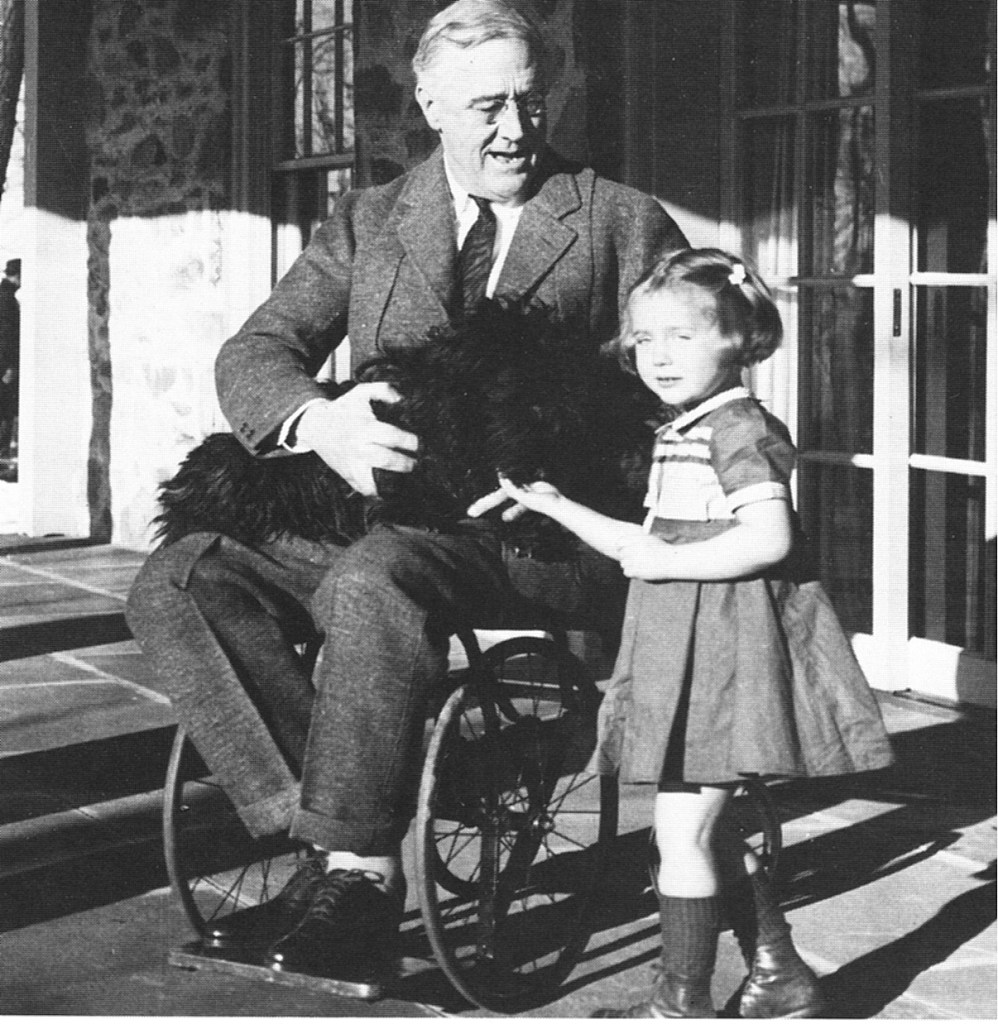
People have known about polio for years, but it became increasingly rampant in the beginning of the 20th century. Everyone was shocked when Franklin Roosevelt was diagnosed with polio in 1921. You’ll rarely see pictures of him standing–most of the time he’s sitting at a desk or in a car. On those rare photos where he is standing, he’s actually wearing very heavy metal braces and holding someone’s arm.

Franklin Roosevelt holding his dog Fala, with a young girl handing him a dime

In 1938 Roosevelt established the National Foundation for Infantile Paralysis to raise money for research and assistance for children with polio. It was the entertainer, Eddie Cantor, who came up with the name The March of Dimes. Cantor suggested that people send dimes to the President for his birthday on January 30. FDR liked the idea, but was extremely surprised that $85,000 in dimes (nickels and quarters too) arrived at the White House for his birthday. Between 1938 and 1955, when Dr. Jonas Salk announced that his vaccine worked, the March of Dimes received $233 million dollars to find a cure.

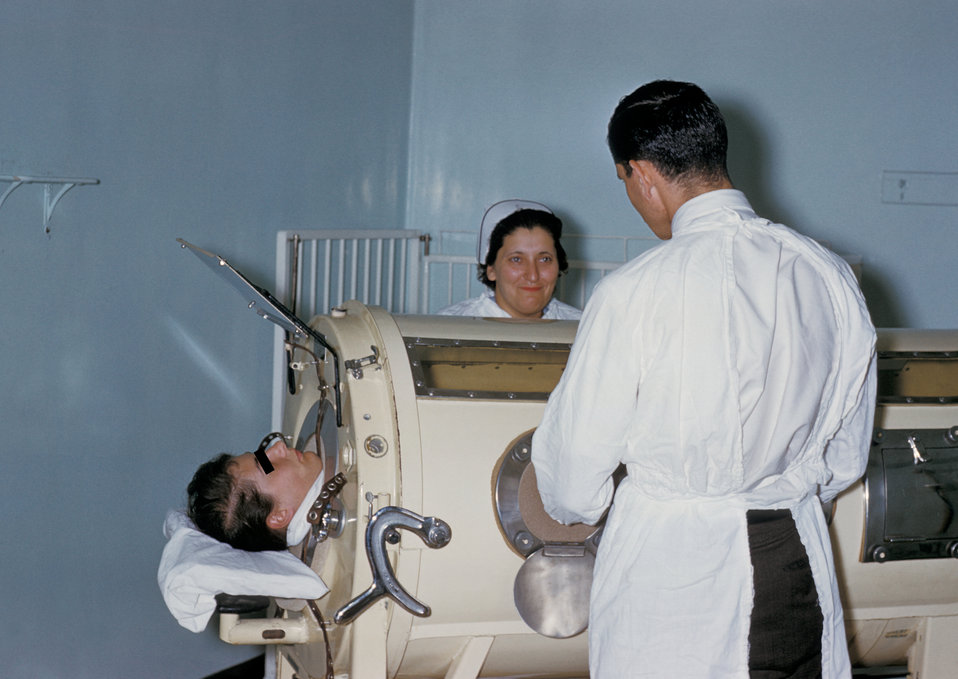
The number of polio cases grew rapidly in the 20th century, and it almost always affected children. In 1952, 57,000 children were infected, 21,000 were paralyzed, and 3,145 died from it. It was always worse in the spring and summer, and jittery parents refused to allow their kids to play in pools, or going to theaters. They were terrified that their children might spend the rest of the lives in “iron lungs” which were the only way some of them could breath. I lived about a mile away from a hospital called the Children’s Country Home (now the Children’s Specialized Hospital) in Mountainside, where children received important physical therapy. There were also too many children who needed the assistance of an iron lung.

Patient using an iron lung

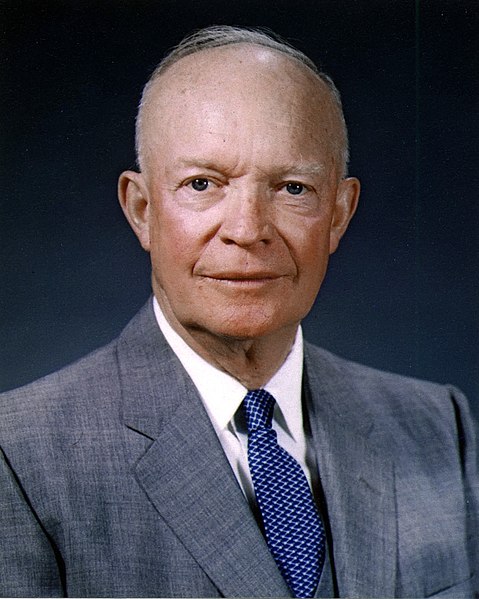
One of the best day for millions of parents was April 12, 1955, when President Dwight Eisenhower and Jonas Salk stood in the White House Rose Garden and announced the vaccine. A father and grandfather himself, Ike told Salk, “I have no words to thank you. I am very, very happy.” High praise from the General who had commanded the European Theater during World War II.

Dr Jones Edward Salk

Speaking to Edward R. Murrow, Salk told him that the doctors and researchers had done their jobs. Now the government had to figure out how to get it to those who needed it. Many people thought that the government had been quietly stockpiling a huge number of doses of the vaccine to immediately give to all children. Not so. On April 13, Oveta Culp Hobby, the Secretary of Health, Education and Welfare (now Health and Human Services) told Congress that states and individuals should be in charge, not the federal government. The President was not happy. Having spent his life in the Army, he understood the importance of logistics. He told her to put together a sensible plan ASAP, because summer was coming and polio was always worse in the summer. When she didn’t move fast enough, he called a Cabinet meeting and again told her to get it done. She finally developed a plan to assist impoverished children, but insisted that the government should not be involved. By July 1955, 4 million children had been vaccinated, and Hoppy had resigned.

President Dwight D. Eisenhower

Eisenhower was not satisfied. He was getting information that parents were so concerned that black markets for the polio vaccine had been popping up in some areas. In 1955, the shot cost $2.00 on the open market, yet they were going for up to $20.00 in the black market. (Remember, the median income in 1955 was $3,400.) The President signed the Polio Vaccine Assistant Act of 1955 under which $30 million dollars would fund the vaccine. By the following summer, 30 million children (including myself) had been vaccinated.

Fast forward 65 years. The world is dealing with a pandemic not seen for 100 years. How to develop a vaccine? Once you have a vaccine, how do you distribute it? Should it be done the was it was during the Polio epidemic? Under that scenario it would have taken four to five years to develop a vaccine, and only then would anyone think about how it should be distributed. Yet today, the first of at least four vaccines has rolled out in barely 10 months. People have complained that we had a slow start. Well, we also had a slow start at the beginning of World War II. Yet once they got things up and running they were finishing roughly three Liberty ships every two days, and built 300,000 planes between 1941 and 1945. How did they do it? A public-private partnership and American logistics. Sound familiar?? For one minute, just one, let’s act like adults and agree that Operation Warp Speed did the job–and did it faster and better than anyone expected. Whether you like or hate the current President, be honest and give the devil his due. He got something done that no one believed would be possible. It wouldn’t hurt to say thank you for that.

Army-Navy Game 2020

I love to see my family any time. Except in the afternoon of the second Saturday in December. The Army-Navy Game. I watch one, and only one sports event every year, and that’s the one. My father was a member of the class of 1944 (which graduated in June 1943) of the Naval Academy. I’ve watched the game since I was four, and have been able to attend it several times. Until I went to school, I thought the last words of our national anthem were “Beat Army!” As a military historian I’ve spent a lot of time with members of both services. (One of my closest friends graduated from West Point–I don’t hold that against him.) The game is so much more that a football game. It’s a brotherhood of very young people who have kept this country safe through some of the best and the darkest of times.

The Army-Navy game started in 1890 when Army Cadet Dennis Mahan Michie accepted a challenge from members of the Naval Academy. They played the first game on The Plain at West Point on November 29th that year. (The stadium at West Point is known as Michie Stadium). They alternated the game at Annapolis and West Point until 1893. That year, the Navy doctor told Midshipman Reeve that if he took another hit to his head it would cause brain damage, and quite possibly death. Reeve wasn’t about to stop playing, so he found a local shoemaker and had him put together a leather helmet–the first American football helmet. (Reeves survived and eventually became Admiral Joseph M. Reeves.)

A few days after the 1893 game, an Admiral and General met at the Army-Navy Club in Washington, D.C. Their discussion of the game turned into an argument, the argument turned to punches, and the punches only stopped when friends pried the two men apart after hearing the two of them loudly demanding a duel. A few days later this was brought up in a cabinet meeting and President Grover Cleveland told the Secretary of the Navy Hilary A. Herbert and Secretary of War Daniel S. Lamont to stop the games. That lasted until 1897 when Assistant Secretary of the Navy Teddy Roosevelt wrote to both President William McKinley and Secretary of War Russell Alger suggesting that within proper parameters it would be good for the young man to resume the game. McKinley and Alger agreed.

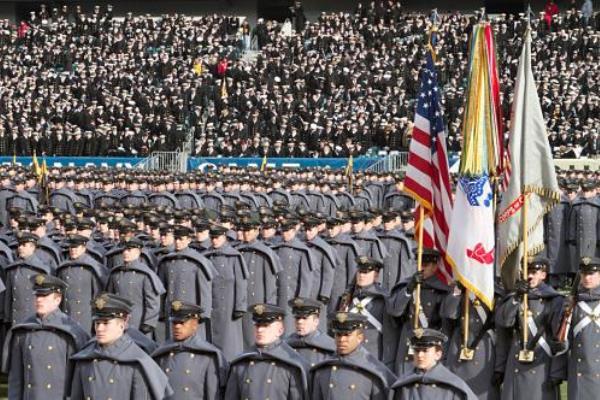
Cadets in the stands, Midshipmen March On, c. 1924

The game returned in 1899, but now was played in Philadelphia, which is roughly equidistant from both Annapolis and West Point. In 1901, now President Theodore Roosevelt attended the game, being sure to cross the field at half-time. Over the years many other presidents have attended the game, and all have crossed at half-time, but only one actually played in it. In 1912, then Cadet Dwight D. Eisenhower, played in the Army-Navy Game. (Ike graduated in 1915.) The game was not played in 1917 or 1918 because of World War I, but started up again in 1919. In 1926 they played at Soldier’s Field in Chicago which was dedicated to the men who had fought in World War I. More than 100,000 people attended and it ended in a 21-21 tie.

Midshipmen in the stands, Corps of Cadets March On

Since 1930 the game has been broadcast on the radio. Rather than stopping the game during World War II, it was played at Navy’s old Thompson Field in 1942 and at Army’s Michie Stadium in 1943. Only the players, coaches, trainers and staff members attended. However, when the Army team walked onto the field in November 1942, they found that their side had been fill with Midshipman. They had learned all of the Cadets’ cheers and fight songs, and some of the men who were there have told me that the roars for the Cadets were noticeably louder than for their own classmates. The same thing happened in reverse the following year when the Midshipmen went to West Point. They might have been Cadets or Midshipmen, but more than that they were, and are, brothers-in-arms.

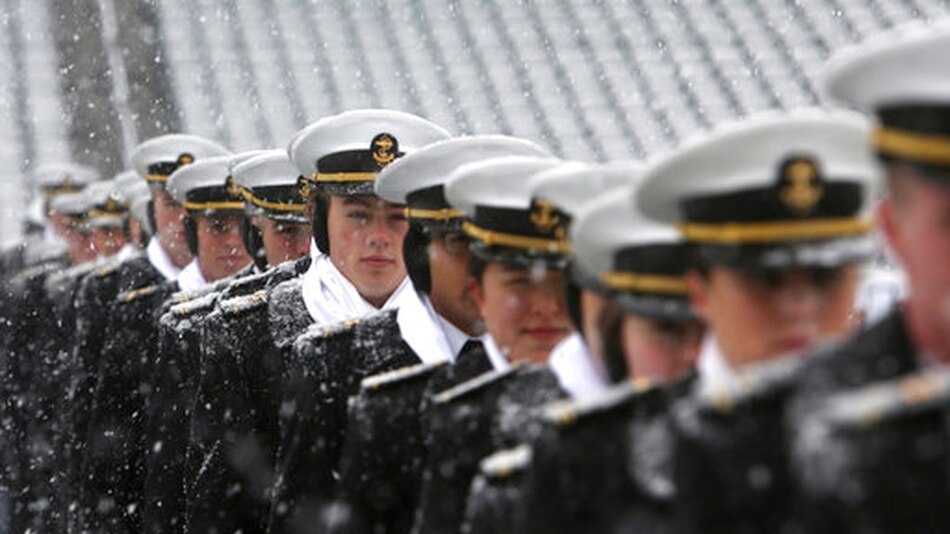
Navy March On in the snow

At the end of the war, not only were they back playing the Army-Navy Game in Philly, but 1945 was the first time the game was seen on TV. And 1963 was the first time there was an instant replay. Unfortunately it was also just weeks after the assassination of President John F. Kennedy. There were serious discussions that it should be suspended, but Mrs. Kennedy specifically asked that the game go one. Her husband had attended in 1961 and 1962, and had intended to be there. It was played in his memory.

So here we are in the middle of a pandemic. Back in late August some friends asked me if I thought they would play. Well, they’ve played in terrible weather, during a World War, at the tail end of the Spanish Flu epidemic . . . I thought they’d figure out a way to do it, and they have. Fingers crossed everyone will be well on Saturday, and even if it’s only the players and coaches, the 120th game will be played. It’s more than a game.

To my friends from West Point, I wish you good luck. For myself I can only say, BEAT ARMY!