What Have I Been Up To? Where Do I Go From Here?

It’s been more than a year since I started this blog. Have I been up to anything particularly interesting?

1 Old dogs can learn new tricks.đŸ¶ I was happy using my iPad for blogging–and most everything else. My iPad is small. It’s light. I can take it everywhere. Sooo much better than the clunky desktop PC I used for years. But for the past six months or so, I’ve been thinking about getting a new Mac. My iPad is great, but there are some times when a computer is just easier. But a Mac seemed to be very different from a PC! Then my kids began nudging me. “Now that you’ve moved…” “If you like your iPad you’ll love a Mac…” “It’ll be easier on your eyes…” “It only weighs 2.5 pounds…” Two months ago I took the plunge, and it is GREAT!! It took about 10 days to get comfortable, but I am a very happy camper! đŸ€Ł

2 In the same vein of old dogs learning new tricks, I learn how to use Instagram. Instagram started in 2010, and for a long time, if there was something interesting, my kids would email it to me. But there are some things I’d like to see in real time. So it was time to figure it out. Research is a wonderful thing. I’ve learned the difference between “likes” and “following,” and figured out how to add pictures 🏞 and emojis đŸ€—. It’s very nice to be able to follow some interesting people (and adorable greyhounds, labs, and vizslas) on my own.

3 As university professors it’s expected that we publish. Over the years I’ve written books, chapters of books, and articles. Blogging is a very different animal, and history for non-historians is a challenge! I hope people find some of the posts at least mildly interesting now and then.đŸ€ž I want to be sure that the information is correct but not too long and, even more important, not boring!đŸ˜© I keep working to make the posts interesting. Keep reminding myself to talk to you the way I talk to a friend. This is NOT a seminar, woman–stick to the five-minute version!!!

4 Face it–things these days have been strained, upsetting, unsettled, scary, annoyed, irate…pick a word, they all fit. I confess, I’m one of those people whose anxiety and/or irritation can go from zero to a hundred in a nano-second. Rather than have my head exploding with monotonous regularity, I’ve started meditating.🧘 Remember I reviewed the book 10% Happier? Great book! Great app, too. No, meditating hasn’t turned me into a Type B personality, but I’ve found that my hair isn’t on fire as much as it was a few months ago, so I think I’m headed in the right direction.

5 When talking to friends and family about quarantine it seems that there are two “camps.” Some headed to the kitchen to find their favorite comfort food, baked up a storm, binged watched and, when Zooming, looked totally professional from the waist up, but lounged in sweats or boxers below. Others took it as a challenge. Some are working on a new skill or got a new job. Others have been cleaning out attics and doing all those “honey do” lists. Two have actually set up new companies, and others have done a beautiful job of landscaping. One is not better than another. Do whatever works for you. I’ve told you what I’ve been up to. But in addition, when my gym pivoted to working out on line, I found a few dumbbells and a kettle bell, and have been working out five days a week. It’s definitely been a stress reliever–and I’m very happy to report that I now actually have some decent guns.đŸ’ȘđŸ»

So here’s my question–where do I go from here❓❓ I’ve posted some book reviews, some fluffy pieces, some serious pieces and a couple of my personal rants. Would you like to see more of some? Less of others? More current issues? Discussions about a specific era or part of the world? Let me know if you have any preferences. If I don’t know about it, I’m happy to dig in and learn something new!
Who Are Our Heroes?

I had an interesting conversation with some teenagers the other day. Actually they talked a mile a minute and I listened–and learned a lot. School was Horrible this year and they want to go back. Working on-line “sucked.” Dogs are the BEST! Someone dyed her hair purple–not a good look. One guy got tired of waiting to get a haircut and shaved his head. So cool! At one point one of them said that Billie Eilish is her hero. Silly me, I piped up and asked who their other heroes are. Several other singers, a couple of models, a rapper, and two actors I’d never heard of. One kid said that his coach is his hero. Then they were off on a new tangent.

As they talked I started thinking–what actually is a hero? According to Webster’s, a hero is a) a mythical figure who has great strength b) an industrious warrior c) a person admired for achievement and noble qualities and d) someone who shows great courage. By any of those definition, I don’t think anyone on the kids’ list are heroes. People they really like, sure, but not heroes. Heroes are people you remember throughout your life.

Dame Joan Sutherland and Luciano Pavarotti

Despite what they think, I do remember being a teenager and yes, most of us adored Omar Sharif (Dr. Zhivago) and Peter O’Toole (Lawrence of Arabia). But they weren’t our heroes. I did a little informal survey with some people who are in their thirties and asked them if they had any heroes when they were teenager. One woman told me about Amy Chow, a two-time Olympic gymnast who was also a pianist, and became a pediatrician and surgeon. One gentleman said that one of his math teachers was about as close to a hero as he had. Two young mens’ grandfathers are their heroes–both served their respective countries with great honor, but after the war quietly went on with their lives, raising good families and good citizens. Luciano Pavarotti is the hero to someone else–she happens to be a singer herself.

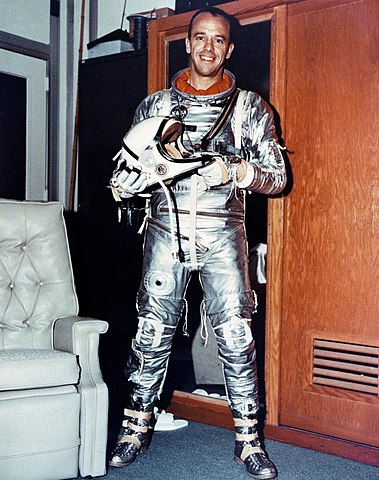
Alan Sherard

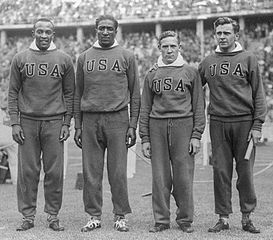
When I asked some others friends, they immediately told me Allen Shepard and John Glenn. Another man said Roger Staubach and Henry Flick. Yet another gentleman said it was Joe Louis and Jesse Owen. A slightly older lady told me about Amelia Earhart and Charles Lindbergh. Her husband said that he still thinks of one of his uncle who couldn’t read, was the finest, most decent gentleman he every knew. Still another person’s hero was a priest who founded the St. John’s Soup Kitchen in Newark, which went from sandwiches at lunch outside the church to 700 hot meal a day along with a medical clinic.

Amelia Earhart

Clearly there’s a disconnect between these groups. Maybe the problem is that the teenagers I spoke to, and probably a number of other people, don’t know the actual meaning of the word “hero.” I hope so. That’s an easy fix. It may also be that social media is another part of the problem. Computers, iPads and cell phones can show us massive amounts of data in an instant. And we can, in a flash, move on to the next image, YouTube, tweet, Facebook and so on. How much time do we spend really delving deep into something–or even take more than a quick look before we’re on to the next interesting thing? Not as much as we could, which is a shame, because many of us currently have too much time on our hands. “I’m bored” is a recurring mantra. So here’s a thought. The next time someone complains “I’m bored” suggest that they go online and find out what “hero” actually means, and then take some time to look around and see if they can find a real hero. It doesn’t have to be a Knight or a President or a great speaker, but someone who lead a meaningful life. That’s a hero.

From left to right, Jesse Owens, Ralph Metcalfe, Foy Draper ad Frank Wyckoff

Where are the grown-ups?đŸ‘¶

In the past two week Congress has been trying to develop a bill for sensible police reform. In fact, Senator Tim Scott has been working on that for several years and came up with a package of reforms. Senator Schumer refused to even discuss it. In the House, Congressman Pelosi pushed a bill through without any discussion at all. So there we are. No bill at all.đŸ€š Now, granted, a few people—by-partisan people—agreed with about 70 percent of both bills. But the caucuses would not even try to work out a compromise. There would be no discussion. The phrase “my way of the highway” comes to mind. So, I ask—WHERE ARE THE GROWN-UPS?

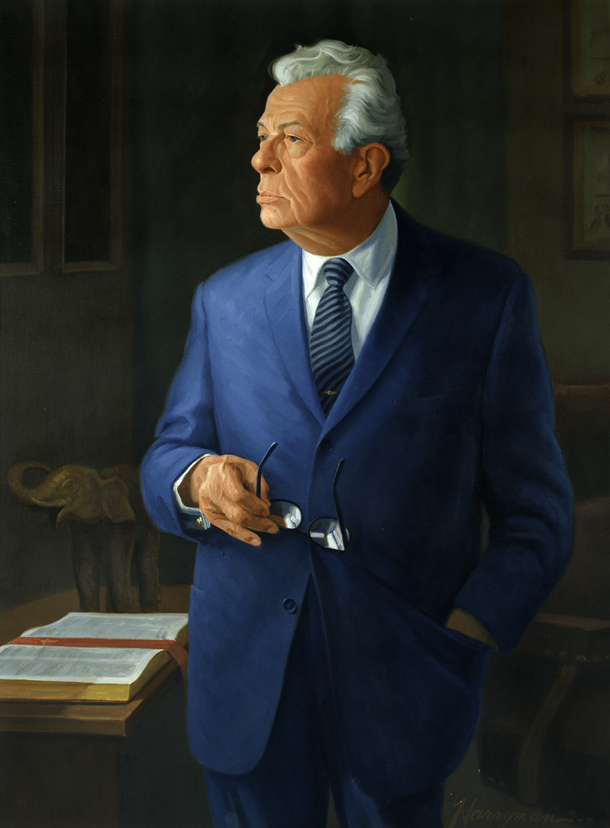
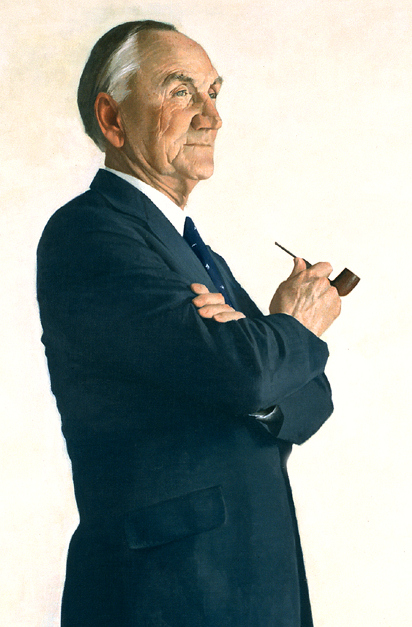
We used to have grown-up. People who would work together. Remember Tip O’Neil (D) and Ronald Reagan (R)? Mike Mansfield (D) and Everett Dirksen (R)? Mansfield and Dirksen got the 1964 Civil Rights Act passed. One of the most important bills of the 20th century. Don’t remember? Let me remind you.

President John Kennedy wanted to pass a Civil Rights bill, and by June 1963 he had proposed serious legislation, but before it could pass, he was assassinated. President Johnson took up the fight to get the bill passed. The Southern Democrat members of the House of Representatives had all kinds of arguments against the bill. They opposed it every inch of the way. It took bi-partisan work to pass the bill 290-130.

Senator Everett Dirksen

When it got to the Senate, Majority Leader Mike Mansfield (D) moved the bill from the Judiciary Committee where it would have been buried, and put it in with bills pending in the Senate. Southern Democrats and members from the border states started to filibuster the bill. The only way to place a time limit on a filibuster is by a cloture vote. But in those days, you needed a 2/3 majority, or 67 votes. Mansfield could only get 42 votes because of the Southern Democrats. Most of the country knew that the bill was long overdue. But to get cloture, Mansfield needed to get the Republicans, with their 33 votes, on board. And to add to that, this was an election year!! Would Dirksen, the Minority Leader, help? Mansfield went to him, and, after agreeing to a few changes, they introduced a revised version. Dirksen understood that it was more important to pass the bill than to gain some political points.The filibuster continued.

Senator Mike Mansfield

At 7:38 pm on June 9, West Virginia Senator Robert Byrd (once a member of the KKK) began speaking. He yielded the floor at 10:00 am the next morning. At that point, members of the entire chamber walked in. The gallery was full to overflowing, and reporters and people who couldn’t get in to the gallery waited outside. After short but powerful comments from Mansfield and Dirksen, the secretary called the roll. Cloture passed 71-29. (44 Democrats and 27 Republicans) At that point, every Senator was allowed one hour to speak. On June 19, 1964, the Senate voted, passing the Civil Rights Act 73-27.

Now for my rant…

Do you thing that would happen today❓ Where are the Dirksen’s and Mansfield’s? Yes, there are a few people who are truly willing to work together. However, I have a very uncomfortable feeling that more people in Congress today are interested in getting reelected, getting plum committee assignments, and/or becoming media darlings, than to do what’s right for the vast majority of the country and pass an honest, thoughtful bill. We have a Congress full of petulant children. WHERE ARE THE GROWNUPS? (And now I’m going to write to my Congressman and two Senators and tell them the same thing.)😖

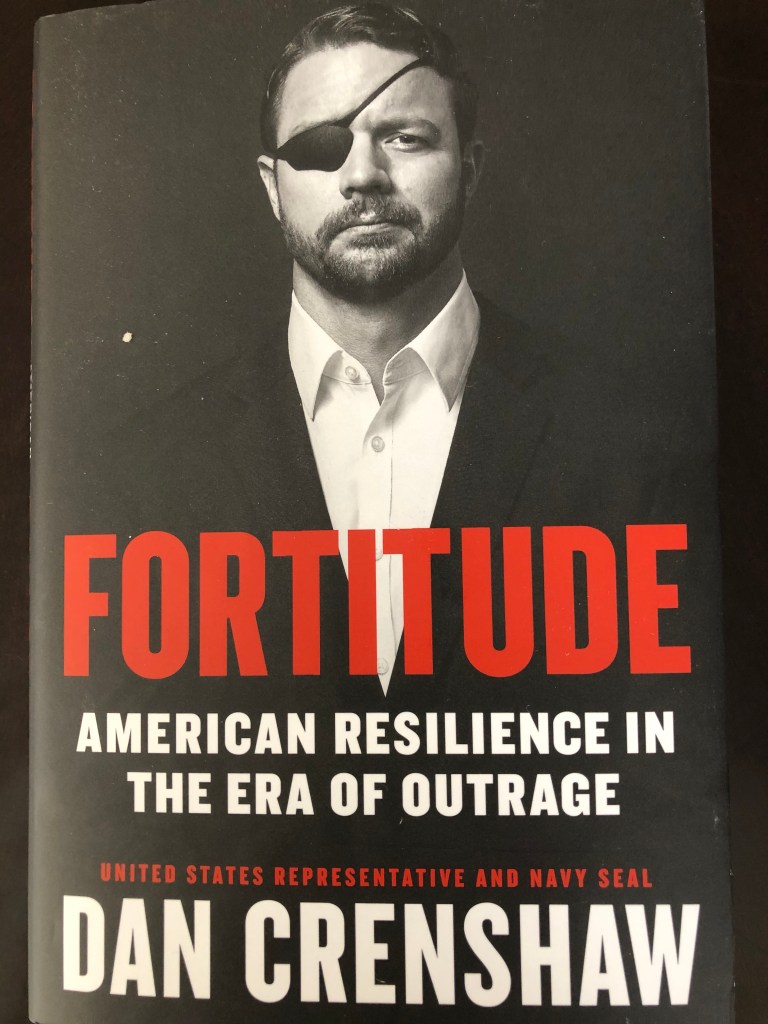
Review— FORTITUDE: American Resilience in the Era of Outrage

The year 2020 has been an Annus Horribilis (horrible year for those of us who didn’t take Latin.) Things were almost too good to be true in January and February. They were! By April, everything was wrong—and then it got worse. There’s a lot I could discuss both as an historian and as a human being, but I’ve learned that there are times when the best thing to do is take a little while to really think and get some perspective. I’ve particularly been thinking about the ‘60s and early ‘70s.

In the spring of 1970, I was talking to Dr. Richard Welch, the best professor I ever had, who surprised me when he said that it was fine to be involved, but possibly more important than looking at the big picture was to do a little introspection. He went on. “Each of us needs to think about what we can do in our own little corner of the world. It would be a better place if each of us did what we know is right, and lived with fortitude.” He gave me a high five and walked back toward his office. I’ve been thinking about fortitude on and off since then.

Fast forward 50 years. I was watching a C-SPAN Homeland Security Committee hearing that included Congressman Daniel Crenshaw. I did a quick search (not Google). Among other information, I found his book, Fortitude: American Resilience in the Era of Outrage. In deference to Dr. Welch, I put aside what I was reading and started Fortitude as soon as it arrived. I thought it would be interesting. I’ve reread it twice in the past two weeks because it isn’t interesting, it’s necessary.

Before he was Congressman Crenshaw he was Lt.Cmdr. Crenshaw, a Navy SEAL. On his third tour in Afghanistan he was blinded by an IED. After what his doctors consider miraculous work, he regained partial sight in his left eye, and went on to two more tours before being medically discharged from the Navy. It’s a fantastic story in its own right, but he only uses it as a foil. He suggests that we all have our own problems—not as extreme as a roadside bomb, but problems nonetheless. It’s what we do with them that matters. We can wallow in self-pity or overcome our issues. He provides us with some very concrete ways to go about it.

Crenshaw is a problem-solver and he uses parts of his own story to discuss life-lessons useful for all of us. In chapters like Perseverance, Be Still, Sweat the Small Stuff, Do Something Hard, he proposes ways to master our own unique issues. He’s not suggesting that we should try to become SEALs. He DOES suggest how we can, we should, be more resilient than we are. He’s showing us ways to engage in thoughtful debate rather than finding comfort in victimhood. How to take a joke rather than be outraged. (And his discussion of the current “outrage culture” is painfully honest.) How to toughen up a bit. He used psychology, history and his own life to show us that we really are in charge of our own lives. Are his suggestions easy? Not really. But face it, LIFE isn’t easy. However, living with fortitude makes a significant difference in the quality of our lives. There are many extremely interesting books which I have read and reviewed over the years. This is different. Read it and really think about what he’s saying. Even some small changes will make a big difference.

Why should we remember June 6?

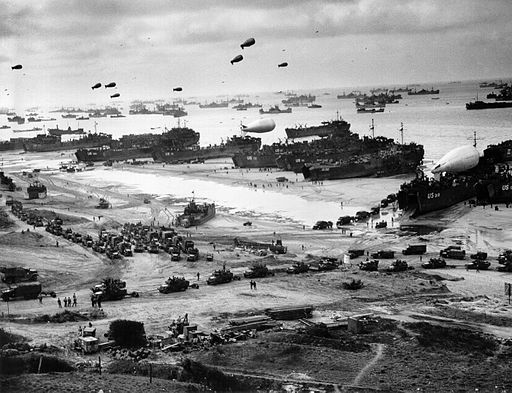
Amidst all the stress, anxiety and anger in the past several months and days, we need to pause for a moment. Seventy-six years ago people were also dealing with stress, anxiety, anger, and for many, true fear because June 6, 1944–76 years ago—was D-Day. LSTs carrying 160,000 Allied troops landed on Omaha, Utah, Gold, Sword and Juno beaches, starting the invasion of the Normandy coast which ultimately ended the European theater of World War II. One of those first ashore were elements of the 320th Barrage Balloon Battalion, which was also the only all African-American unit that landed that day.

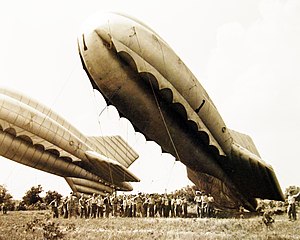
So what is a Barrage Balloon?

That’s a Barrage Balloon. (An early ancestor of the Goodyear Blimp)

Barrage balloons were used in World War I—they hovered over London to help defend Britain in 1917 and 1918 against the German Gotha bombers, while the French tended to use balloons to protect trains. The US didn’t get involved with barrage balloons until the early 1920s. They developed 35-foot-long balloons filled with 3000 cubic yards of hydrogen (extremely combustibleđŸ€Ż) and would tether them between 50 to 2000 feet. Initially they used them along the Panama Canal.

As war clouds darkened, the US Army became more interested in the possibilities of balloons. In early 1941 the Army placed Barrage Balloons under the Coastal Artillery and set up permanent training at Camp Tyson near Paris, Tennessee. Immediately after Pearl Harbor the Army placed balloons over the major Boeing aircraft plant in Seattle and in the skies around the Bremerton Navy Yard at Bremerton, Washington.

In early 1942, four all African-American battalions, the 318th, 319th, 320th and 321st, began their Barrage Balloon training. Each battalion had 1,100 men and 50 balloons. After basic training they spent six weeks of balloon training, learning how to fill a balloon while avoiding sparks or static electricity near the hydrogen, how to use the cables safely, how to camouflage balloons, and how to attach small explosive charges to the cables so that, if the wing of a plane came too close, the charge would cause an explosion, destroying said plane. Interestingly, the men also spent 12 weeks studying meteorology. It was difficult to use the cables of the balloons properly on a nice, calm day. Learning how to forecast high winds or bad weather was extremely important.

The 320th Barrage Balloons Battalion was part of the thousands of men in the first wave of D-Day. Five batteries and a Headquarters battery—600 men in all—landed on Omaha and Utah beaches at 9 am on June 6th. Even before they got to the beaches, the men realized they had a problem. The winches they used for the balloons weighed about 1000 pounds. Something that heavy might very well sink when they pulled it out of the LST. With a little ingenuity they found that they could use a field cable from the Signal Corps that weighted 35 pounds. Put in on the back of a Jeep and you could move it wherever you needed it.

Before they could deal with the balloons, they were fighting for their lives. Many men never made it to the beaches. Some drowned. Others were killed even before leaving the LST. If they did get ashore, the Germans hit them with massive artillery and machine-gun fire. Late in the afternoon, most of the remaining men had salvaged enough of their materiel that they could start putting up the balloons. The first one was up by 11:15 pm with another 12 up by dawn.

If you look to the top of the photograph you can see the barrage balloons

But no sooner were the barrage balloons up, than the men had to deal with some other unit commanders who demanded that they cut the balloons—they thought that the silver barrage balloons were drawing attention of the Germans Luftwaffe. It took a while to convince the infantry that the balloons were helpful, especially at night. German flyers would try to “pop” the balloons rather than strafe the area. If one did fall, the 320th would put another up. In fact, the 320th received credit for shooting down a German Junker Ju88 when the plane got caught in one of the balloon’s cables, causing the wing to sheer off and the plane crashed into the Channel.

After the initial landing, the “ballooners” would lower some of the barrage balloons during the day, allowing Allied planes to go where needed, or just to patrol the beaches. The ballooners would use that time to do whatever repairs were needed, or to help unload more supplies. In the evening they would send the balloons back above. Gradually they moved the barrage balloons along the coast headed toward Cherbourg, but as early autumn approached, the weather got more problematic. After 150 days, the 320th headed back to the US. They spent time in Camp Steward, Georgia, to refit and then headed to the West Coast, expecting to join the Pacific campaign. They only got as far as Hawaii when the war was over. So, remember D-Day, and the Barrage Ballooners today—like so many men, the 320th was one of the unsung heroic units.

For a fascinating discussion of the 320th Barrage Balloon Battalion take a look at:

Hervieux, Linda. Forgotten: The Untold Story of D-Day’s Black Heroes, At Home and at War. New York: HarperCollins, 2015.

🇭🇰 SAVE HONG KONG đŸ‡­đŸ‡°

We haven’t heard much about Hong Kong recently. Things tend to slow down in the winter—it’s colder, and people want to spend time with family and friends during the holidays, though small protests continued. Sadly, since the middle of January, the Covid-19 virus has overwhelmed much of the world. It turns out that Hong Kong wasn’t as badly hit as some other nations. A combination of lessons learned from SARS, a five-day strike by nurses demanding that Hong Kong close its borders, the immediate and universal use of masks (commonly used anyway for any illness), the extra care for the elderly, and isolation and quarantines, means that there have been only 1,066 confirmed cases and four deaths.

But that doesn’t mean that everything has gone swimmingly. Things have been bubbling just below the surface, because the basic issue remains. Beijing wants to take over Hong Kong, and the Hong Kongers want to remain one country TWO systems. Several weeks ago, 15 of the democracy leaders, including Jimmy Lai, a refugee from the mainland who became a multi-million dollar owner of the Apple Daily newspaper and champion of freedom, were rounded up, thrown into prison and are awaiting trial for sedition. The protests grew.

Then came a brawl—yes, a for-real brawl—in the Hong Kong legislature. A group tried to pass a law that would make it a crime to say anything disrespectful about the Chinese national anthem. The Hong Kongers responded with significant protests at China’s Liaison Office in Hong Kong.

Right now, the National People’s Congress (NPC), all 3,000 of them, is having its annual meetings in Beijing. On May 22, they began to discuss national security laws which, if passed, will make it a crime for Hong Kong to try to break away from Beijing, to subvert the PRC (People’s Republic of China), and to conduct terrorist actions against China. The drafts currently remain in committee. No one in Hong Kong has seen even pieces of them. That only makes everyone even more concerned. Hong Kongers fully expect Beijing will try to grab more power. They know that Beijing wants to end the treaty of 1997 and now have “one country, ONE system” ASAP.

Over the weekend of May 22, protesters using numerous message apps and social media, even graffiti at a subway station, began to organize. Thousands of protestors showed up at Causeway Bay Mall, despite the fact that they had not received any permits. Many of them feel that they have nothing to lose—if the laws go through they will be under Beijing’s rule.They marched, bellowing “Liberate Hong Kong,” and “Hong Kong Independence, the only way out!” Within an hour, police arrive with water cannon and tear gas. 120 were arrested but the protest went on for hours. Hong Kongers are expecting more to come and are planning additional protests toward the end of May—this is quickly turning into an insurgence.

China has played the long game for centuries. It has wanted to take Hong Kong since 1948 and the birth of the People’s Republic of China. It took fifty years to sign the 1997 treaty with Great Britain, and then began gradually turning the screw to bring Hong Kong closer and closer to Beijing. But Beijing is still seething from the riots last year. With so much of the world focusing on the pandemic, now may be the perfect time for the PRC to make a serious power grab—but the Hong Kongers won’t give up with out a fight.

Taiwan???

A friend called me yesterday and among other things we were talking about, she asked me, “so where is Taiwan and why is my husband so annoyed!?”

Deep breath.😔

Here’s the five minute version of what I told her.

Taiwan is an island on the South China Sea about 110 miles from southeastern China.

People are talking about Taiwan because their health authorities told the WHO (World Health Organization) on December 31, 2019, a month before the rest of the world heard about it, that there were human-to-human contacts in a pneumonia-type virus in Wuhan, China. Unfortunately, the WHO dismissed the information for another month. What a different world we’d be in if they had paid attention to Taiwan!! So why does the WHO, the UN, China, and all but 15 nations, ignore Taiwan?

Well, it goes back to the end of World War II. The war morphed into a Civil War between Mao Zedong’s communists and Chiang Kai-shek’s Kuomintang (Nationalists) which had been fighting on and off since the 1920s. Toward the end of 1947, as Mao’s army seized large swaths of the country, the Nationalists gradually began to fall back toward the island nation, sometimes called Formosa. By 1949, what was left of the Nationalists fled across the South China Sea to Taiwan.

Interestingly, Taiwan, whose official name is the Republic of China, was one of the initial founders of the United Nations. It was ejected from that body in 1971 and replaced by the People’s Republic of China (PRC) because it had become a super-power. The PRC is still trying to take over Taiwan. Only 15 nations, including the United States, recognized Taiwan. The US, in particular, continues to try to include Taiwan in agencies of the UN, particularly the WHO. China, believing that Taiwan is simply one of their provinces, refused to allow it to participate at all. However, there was a bit of a thaw in 2009 when Taiwan got Observer Status as long as they allowed the WHO to call Taiwan either the ‘Taiwanese Province of China” or “Chinese Taipei.” That lasted until Taiwan’s 2016 elections, when President Thai Ing-wen took office and categorically refuses to discuss the same “one country, two systems” like that in Hong Kong.

When, on December 31, 2019, Taipei (capital of Taiwan) sent information to the WHO that they understood that the virus in China was a human-to-human issue, the WHO never even returned Taiwan’s call. However, Taiwan remembered the 2003 SARS epidemic and decided not to wait. By that evening they were already screening, testing and contract tracing anyone coming in to Taiwan from Wuhan, China. Yet it wasn’t until January 21 that China finally told the WHO that there was human-to-human contact—though they insisted that they had things under control. Ten days later, the US imposed the first bans of travel from China.

So it boils down to the fact that your husband is “annoyed” because the WHO followed China’s lead, rather than even looking into Taiwan’s informationđŸ€ŻDespite that, Taiwan has consistently provided all its information to the WHO and other countries, and has shared what it learned from SARS, and any current data, with the other 184 nations struggling with the Covid-19 virus.

Where’s Kim?

In the past few weeks, a number of people have been asking “where is Kim Jong Un.” But we shouldn’t be surprised that he’s not always out and about. Remember, there’s a reason that Korea was called the Hermit Kingdom. For centuries the Joseon Dynasty dealt only with China—occasionally with Japan. Toward the end of the 18th and early 19th centuries when Westerners began to trade with China, Korea kept its borders tightly closed, hence the name Hermit Kingdom. However, Japan forced a series of trade agreements on Korea and in 1910, Tokyo simply annexed it, and held it until the end of World War II.

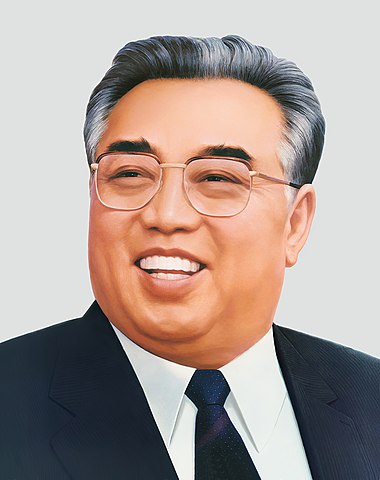
Thousands of Koreans fled the Japanese, including the family of Kim Song Ju. Born on April 15, 1912, he and his family moved to Manchuria in the early 1920s. After high school, he joined a communist youth group and ended up in jail. Released in 1930 he joined a resistance group that was fighting the Japanese in Korea and took the name of one of his hero’s, Kim Il Sung. He caught the eyes of the Soviets who sent him to the USSR for proper military and political instruction. At that point he joined the Communist Party. During World War II, Kim, then a major with the Korean contingent in the Soviet Army, attacked the Japanese who were still holding parts of Korea in August 1945. After the war, with Soviet backing, Kim became the Premier of the People’s Republic of Korea in 1948, and Chairman of the Korean Worker’s Party in 1949.

Kim Il Sung

Only a year later, in an effort to unify North and South Korea, Kim, also known as the Great Leader, sent his army barreling into South Korea. It stunned both South Korea, the United States, and United Nations! From June 1950 until the armistice at Panmunjom in June 1953 North Korea, with massive assistance from China, fought the US and members of the UN to a stalemate. At the same time, Kim began setting up a command economy with collective agriculture even more totalitarian than Stalin’s!! He also started the first of numerous massive purges and develop his own cult of personality. There was virtually no contact with the West or Asian nation—sounded eerily like a new Hermit Kingdom.

In 1980, in a startling break from the actions of other socialist countries, Kim announced that his son, Kim Jong Il would succeed him. By 1991 his son was in charge of the National Defence Committee and Supreme Commander of the Korean People’s Army (1993). North Korea’s Great Leader died from a heart attack on July 8, 1994. After a 10-day mourning period and a massive funeral in Pyongyang on the 17th, Kim Il Sung was placed for viewing at the Kumsusan Palace of the Sun, similar to Lenin’s tomb at the Kremlin.

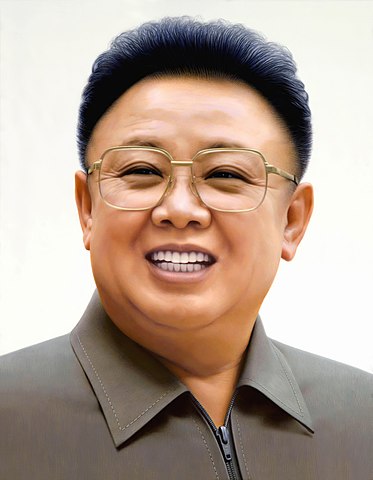
Kim Jong Il

Born on February 6, 1941, Kim Jong Il graduated from Kim Il Song University in 1963. He held a number of high level jobs—one of the first of them was helping his father during the 1967 purge. In the early 1990s he joined the Central Committee and developed the new Propaganda and Agitation Committee. He, too, developed his own cult of personality, being called, another things, the Fearless Leader. With the fall of the Soviet Union in 1991, North Korea lost its one real trading partner. Then came the floods of 1995 and 1996, and the terrible drought of 1997, all leading to massive famine. In order to maintain control, Kim developed the Military First campaign—all food went to the military. The little that was left could go to the rest of the country. Starvation was rampant, but the military remained loyal to their Dear Leader.

By the time that Kim Jong Il came to power, it was clear that North Korea needed assistance desperately—particularly food and electrical power. For years they had relied on “Juehe,” self-reliance—an updated version of the Hermit Kingdom. Yet rather than try to develop more normal relations with nations that might help, Kim preferred threats, particularly nuclear weapons. Since 1994 North Korea would brandishes it’s current nuclear testing and/or weapons. The West would start a new round of discussions, and both parties would come to a agreement. That would last until the North needed something else, and it was back to the drawing board.

After his stroke in 2008, Kim Jong Il announced that his second son, Kim Jong Un, would succeed him. Three years later, Dear Leader died of a heart attack aboard a train on December 17, 2011. Even less is known about Kim Jong Un than was known of his father. His friend Dennis Rodman says his birthday is January 8, 1983, and that seems to be the case. He went to school in Switzerland, and returned to North Korea to graduate from Kim Il Sung University.

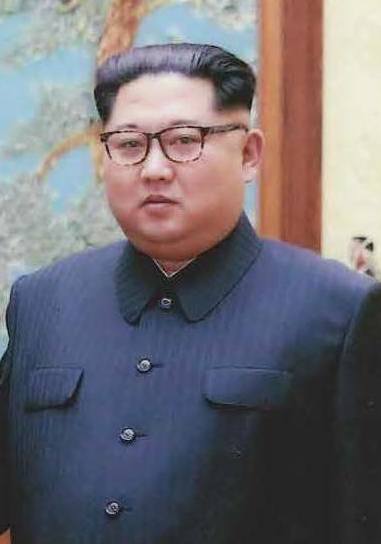
Kim Jong Un

He quickly became Commander of the Korean People’s Army, head of the Workers Party and maintains the family’s cult of personality. Purges continued, now with more horrifying methods like flamethrowers. Hundreds of thousands of people are in penal colonies where torture, rape, and starvation are the norm. The situation became so egregious that in 2014 the United Nations began discussions on North Korean crimes against humanity. Two years later the US placed personal sanctions against Kim for human rights violations, though they were equally concerned with continued nuclear testing. That continued with significant underground testing in 2013, 2016 and 2017, and developing the Hwasong-15 missile.

It was interesting that in early 2018 North Korea opened discussions with the South and actually joined with South Korea for the Winter Olympics in Seoul. Later that year, Kim visited China for the first time (by train—the family seems to hate planes😖) and during the Singapore Summit in June 2018 he was the first North Korean leader to met a sitting US President. The two men signed a declaration, but the devil was in the details and little came of it. Since then, the two have met again and President Trump actually crossed the DMZ. Yet North Korea continues both its massive human rights violations and its nuclear weapons systems and launches, causing grave concern.

A few weeks ago, people who pay attention to North Korea realized that they hadn’t seen Kim recently. Everyone was talking. Was he dead? Had he had an operation that went wrong? Was he at his resort in Wonson avoiding the Covid-19 virus? Well, he’s just appeared at the launch of a fertilizer factors…đŸ€·â€â™€ïž Stay tuned for the continued saga of the Kim Family.

History of the Internet

So many of us use the Internet today that it’s become second nature. We’re using it even more these days as we work from home, FaceTime with family, Zoom with colleagues and friends, and go to the gym or even church virtually. It really is a new world compared to the Spanish Influenza of 1918 when a telephone was a luxury.

As wonderful as this is, the truth is that some of us are dragging ourselves, sometimes kicking and screaming, into the 21st century. The first time I saw a computer was my senior year in college. It was enormous, covering the entire third floor of the building and you could hear a background hum as a huge number of punch cards zipped along. Fast forward and today I’m typing on an IPad. When I’m done, I can tap a button and send it to you all. Computers and the internet have become a part of our daily lives. Why and how did that happen?

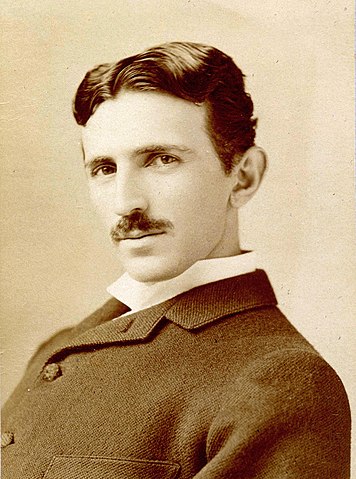
Nikola Tesla

Nikola Tesla, an important inventor and electrical and mechanical engineer, spoke about a World Wireless System in the early 1900s but nothing really came of it until the 1960s. Paul Baron first invented packet switching which is a way of grouping data that is transmitted digitally between several networks. The second important breakthrough came in 1969 when UCLA and Stanford connected the first node, and UCLA sent the word “Login” to Stanford. The first attempt crashed when it got to “G” but the second attempt was flawless. Just a year later groups from Harvard and MIT also set up a node and connected some of their computers.

In short order Roy Tomlinson developed Email and “@“ that separated the username and the computer name. At the same time, Michael Hart founded Project Gutenberg by developing a way to list not just the authors and titles of books in the public domain, but storing and retrieving the complete books. Ultimately schools and universities began using EBooks (so much easier that carrying massive textbooks!!) Today, in addition to school books, we can read books on computers, Kindles, Nooks, and even audio-books.

This was all well and good, but how could regular people do things like use email or read a book? In 1977, Dennis Hayes and Dale Heatherington fixed that when they developed a PC modem so that rather than having to be hard wired, people could use computers both at work and at home. The following year, Gary Tuerk developed “unsolicited commercial email” aka SPAM. 😖 Happily, emoticons/emojis were developed in 1982.đŸ€“

By then things were moving like wild fire. In 1984 there were so many “addresses” that the Domain Name Services (DNS) were developed, making it so much easier to use than the enormous numerical list used for a single IP address. Four years later, we were able to chat in real time, but one of the banner developments came 20 years after the packet switch, when AOL launched, making it simple for the general public to go “on-line.” Just a year later, Tim Berner-Lee finished the code for what we now call the World Wide Web.

An early Webcam

In 1991 I saw my first web page—and it actually explained how it would work! For the first time, a page would have content in addition to files. Then came the first MP3s, which grew into MP3 players, a great way to hear music. Webcams arrived about the same time—incredibly useful for so many things! The first one was actually developed by a group in one of the labs at Cambridge University—but not for a lofty reason. They wanted to be able to check their coffee maker without stopping what they were doing to walk around the corner. Web browsers came next. The first simple one was Mosaic, developed in 1993.

Two years later, the Internet made an enormous leap forward, from research, universities and hobbies to commercial use. The SSL (Secure Socket Layer) could now encrypt information which opened it up to financial institutions. (How many people still write checks or actually go in to a bank?) Then came the first webmail—remained Hotmail? And by 1997 the word “weblog” was everywhere—now it just “blog.”

Most everyone was fascinated by the year 2000. It was the end of the decade. The end of the century. The end of the millennium. It was Y2K!! And it was the launch of Google❗In 1996 two Stanford grad students, Larry Page and Sergei Brin, started trying to link together all of the information in the world. A tall order, but two years later, Andy Bechtolsheim from Silicon Valley invested $100,000. They founded Google and, as they say, the rest is history.

THANK YOU!!!

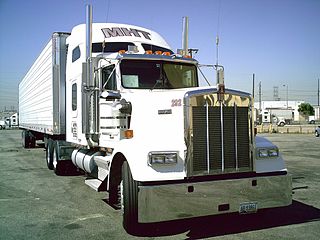
In the middle of this horrid pandemic, we can only give a heartfelt “thank you” to the NPs, nurses, doctors, respiratory therapists, hospital workers, first responders, and delivery and grocery workers. But there is one more group without whom we’d be in a world of hurt, yet they seem to be forgotten—the truck drivers. Thank you for selflessly moving all of those supplies wherever they’ve needed.

Until the early 20th century, most cargo was moved by train and/or wagon. Yet, by 1910 there were 500,000 automobiles in the US, and 100,000 trucks by 1914. Originally, tires were made of solid rubber. That made it difficult to drive more than 10-15 miles an hour over rutted, rural road, so they generally stuck to paved urban areas. During WWI, trains were so swamped with both men and materiel that truckers, who by then used pneumatic tires that allowed them to drive much faster, began moving long-distance cargo. The AEF also used trucks and ambulances in France during the war.

Trucks in World War I

During the 1920s and 30s, states began to standardize the sizes of most trucks. In 1933, truckers joined the American Trucking Association and in 1935, Congress passed the Interstate Motor Carrier Act, regulated by the Interstate Commerce Commission (ICC). Trucks were crucial during World War II both for the US and Britain. And one of the few nice things that the Soviets said about the Americans during the war was that the 2.5-ton Studebaker truck was key to Russian victory on the Eastern front.

When Dwight D. Eisenhower became president in 1952, one of his objectives was to build the Interstate Highway System. Having seen what was done in the German Autobahn, he understood the economic and military important of a network of highways throughout the US. Passed in 1956, the Federal Aid Highway Act started building a series of interconnected roads and bridges across the United States. At the same time, cargo ships began using containers (intermodal shipping) that made it much easier to move supplies from ships to trucks to cities and states. By 1970, 18 million trucks criss-crossed the new interstate highways.

Containers waiting to more onto trucks and fan out across the country

In a way, those were the hay days of US trucking. The Citizen Band (CB) became extremely useful for truckers and great fun for the public. CB’s slang was used every day. For instance, a Black Eye was a vehicle with a headlight out. Deadhead is pulling an empty trailer. A dragon wagon was a tow truck. The song “Convoy” was a hit in 1976 and was turned into a movie in 1978. Yet there were still serious issues, particularly trucker’s strikes in both 1973 and 1979 over the energy crisis. By the 90’s they were also moving supply chains from overseas, increasingly from China. By 2006, 26 million trucks carried about 70% of the total value of freight in the US.

Today truck drivers are one of the few industries that are thriving in the face of real adversity. They are the people who bring the food and all manner of supplies—don’t forget the toilet paper!—from Washington State to Washington, D.C. What would we do without them? Yet truckers have serious issues too. The Owner Operator Independent Association has asked the government for proper testing, especially for those who drive through the “hot zones.” And it’s outrageous that many states have closed rest stops and service plaza that the truckers use to get something to eat, take a shower, use the restroom, and sleep. In this case, trying to contain the virus had the unintended consequence of making it much harder for the people who are helping us!!! Thankfully some states have again allowed truckers to sleep at the rest stops, though most everything else—including restrooms and places to get take-out—remains closed.

Thankfully the American people are stepping up to help. Some are bringing hot meals to the rest stops. Others are setting up alerts along the highway giving directions to find a hot shower and something to eat. Some fast food places are putting up signs showing where to park your truck and walk over to get food and a bathroom (you can’t drive an 18-wheeler through a drive-through.) Overdrive Magazine (on-line and print) is also updating what is available for truckers on a daily basis. You might pass along the Facebook page Truckers’ Local Resources.

So, from all of us, a huge THANK YOU to all our truckers. Stay save and drive carefully.😇