Congratulation to all the men and women in law enforcement! Despite the problems with what really is an infinitesimal fraction of police who are bad actors, most of them go to work every day hoping to help their community. They do much more than catching major criminals. Over the years we’ve lived in a number of states from Pennsylvania to Washington State, and have seen police prevent suicides, help people get their cars off bridges, return stolen property–from purses to dentures–everything imaginable. A high-speed chase across three counties to return a baby to its parents. Getting into a sewer to retrieve a much- loved pet. That’s what they do every day.

Police, often called constables, have been part of the fabric of the US since before the American Revolution. Officers first used uniforms in 1828 in both Boston and Chicago, and gradually expanded to most communities. Marie Owen became the first woman to serve as a detective in 1891 (in Chicago.) Police first started using automobiles in 1914 (in Berkley, CA), and it wasn’t until September 1968 that two women became “beat cops” in Indianapolis.

President John Kennedy signed a proclamation in 1962 calling for Peace Officer’s Memorial Day every May 15, with the entire week being known as Police Week. In 1982 President Ronald Reagan attended the first National Peace Officer’s Memorial Service with a candlelight vigil. This year the vigil took place on May 13. At that time they list the officers that year who have fallen in the line of duty. This year, 394 were killed, including 182 who were killed because of Covid-19.
In addition to honoring the fallen, we should also thank those how have quietly helped the community in so many ways which are rarely recognized. So here’s just a snippet of some of the good news done by law enforcement this past year–and it really is a snippet. Thousands of those men and women have done fantastic work. I’d love to include their names and pictures, but in this current volatile times, I’m sure you’ll understand why I’ve left them off.
–Three officers carried on a coordinated search for a missing woman. It turned out that she had had a diabetic emergency and had driven her car off the road, through dense brush. The car flipped over and caught fire. The men had to break into the car that was engulfed in flame and pull her out. She was hospitalized and made a full recovery. The police also needed treatment for their burns.
–An autistic child wandered away from his family, who frantically called 911. Police combed the area. One officer had a hunch and went to a pier where he found the child on sailboat at a dock. He scaled the fence and got to the little one before he ended up in the water.
–A police officer saw a man in a wheelchair frantically trying to cross a train track. She got out of her car and tried to help him, but the wheelchair was stuck and a train was approaching. A small woman, she managed to pull the man out of the wheelchair and drag him to safety just as the train flew by, crushing the wheelchair.
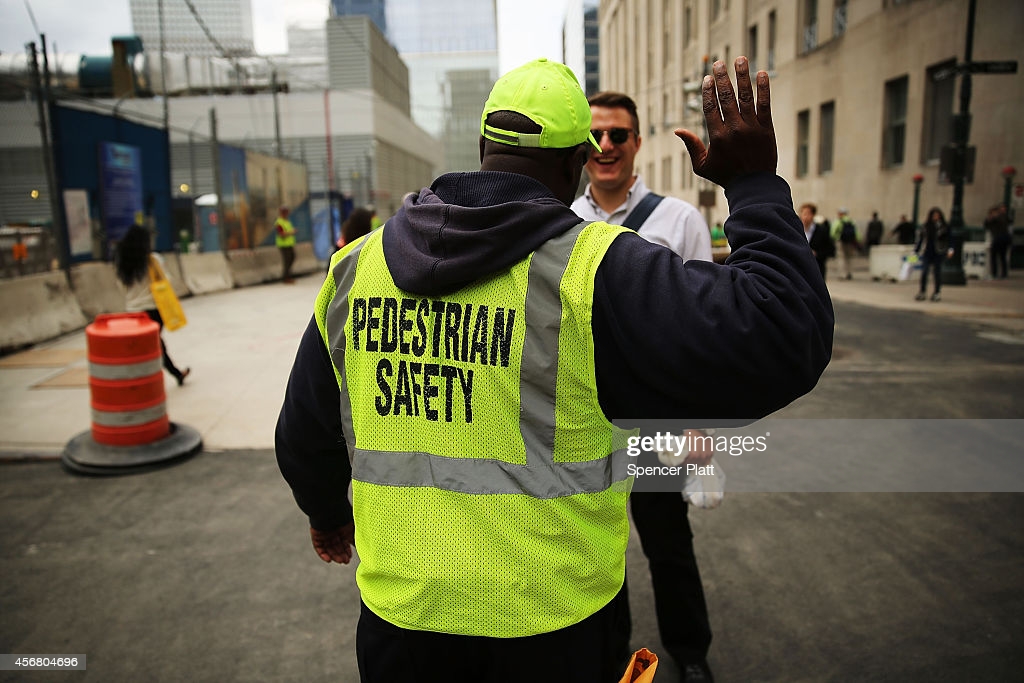
–An officer went in after a child who had fallen through the ice in a frozen pond. The child survived.
–Two weeks ago, a police officer in Time Square picked up a four-year-old who had been shot, ran to an ambulance that was about half a block away, and took her to the hospital which the child went into surgery. The officer then made sure to find the Mom–herself in the hospital–to tell her that the child was going to be fine. Both mother and child are now home.
–This week a 93-year-old lady heard a loud bang on her doorstep. She found a package for someone at a different address. No return address. No postage. At her age she wasn’t going to take a hike to deliver it. She was uneasy because she remembered when packages like that included a bomb. She called the non-emergency number of the police and asked what she should do. In ten minutes two police officers arrived, took the package and told her that she was quite right to call. Before they found the phone number of the new owner, they would have their K-9 officer make sure it was safe.
As I said, that was just a tiny fraction of what police do every day. Things which most of us never hear about until we’re personally involved. When you need them, they will come. We should say “Thank You” more than we do.

 Historical Lense