It’s Fleet Week!

The first “Fleet Week” took place in 1899, when a large number of US Navy vessels sailed in to New York Harbor in celebration of Commodore George Dewey’s success at the Battle of Manila Bay and the end of the Spanish-American War. There were similar events over the years, though the first Fleet Week celebration took place in June,1935. One hundred and fourteen ships and 400 military planes arrived in San Diego as part of the California Pacific International Exposition. A total of 3,000 officers and 55,000 enlisted men spent a week allowing visitors to tour parts of some of the vessels and for many of the men to visit the city and enjoy some shore leave.
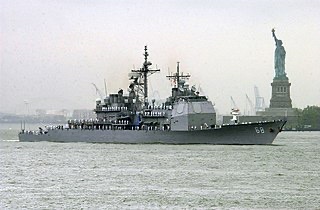
USS Forrestal passes the Statue of Liberty during Fleet Week, 1989

Over the years both the Atlantic and Pacific Fleets have participated in specific celebrations, such as the US Bicentenary in 1976, and the Centenary for the Statue of Liberty in 1986. However, the first official Fleet Week took place over Memorial Weekend in 1982. The aircraft carriers USS Coral Sea with cruisers, destroyers and other vessels sailed under the Golden Gate Bridge, with Navy and Marine helicopters watching from above. In New York, ships passed under the Verrazano Narrows Bridge and sailed by the Statue of Liberty to dock at the New York Passenger Ship Terminal on the Hudson River. In 1988, the Navy allowed people to take tours of certain areas of specific ships.

Aircraft carrier USS Anzio with cruisers during Fleet Week, 2004

Since 1982, ships have also spent Memorial Day/Fleet Week in a number of cities including Los Angeles, San Diego, Portland, Seattle, New London, Norfolk, Boston, Baltimore, Port Everglade and Ft. Lauderdale. The ships include naval vessels and aircraft, Marine aircraft and occasionally landing craft, and Coast Guard ships and aircraft. In addition to tours, all three branches of the services provide a variety of demonstrations, from ways various gear is used to methods of hand to hand combat.

Special US Marine provides demonstrations during Fleet Week 2010

One of the things my adult children still talk about is when I took my four-year-old son to tour a cruiser that was moored in Seattle one Fleet Week. He had a great time dashing up and down the ladders (stairs to landlubbers) and actually learned a lot. Several years later, my father, a Marine officer, took both children to see an aircraft carrier moored in New York City for Fleet Week. My daughter was amazed at the side of the ship. And being able to see how the planes are moved onto the deck was the highlight of their Memorial Day!

In 2020, Fleet Week was suspended, like most everything else, because of Covid-19. Last year there was a virtual version, and while it was very well done, it wasn’t the same. Thankfully this year there will be a real Fleet Week. I hope you can visit one of them, because it’s a wonderful way to celebrate Memorial Day.
Doc, what happened in the old days?

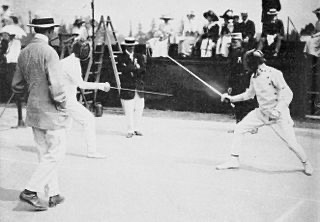
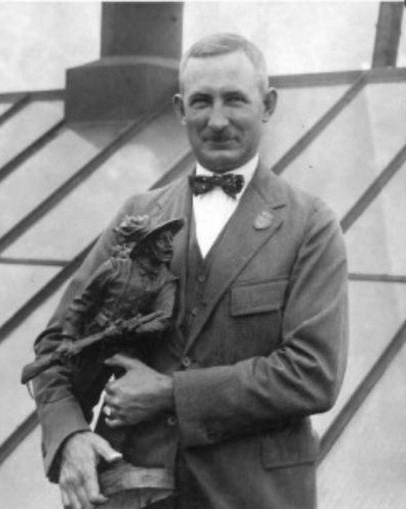
With the Olympics up and running, some of my students wanted to spend a little time discussing it. None of them are happy about where it’s being held, calling it the “genocide games.” (Personally I agree with them wholeheartedly.) Then one student asked me what I remember of the Olympics in the “old days.” Really? Define “old!” With that, it was time to get back to our discussion of Jackie Fisher and Dreadnoughts. But since this is a military history class, I did find some photos of men who were in the US military and competed in the Olympics–before even I was born. The students enjoyed, them, and I thought you might like them too.

George Patton, USA, pentathlon, 1912 Olympics, Stockholm
Carl Osburn, USN, shooter, 1912 Olympics, Stockholm
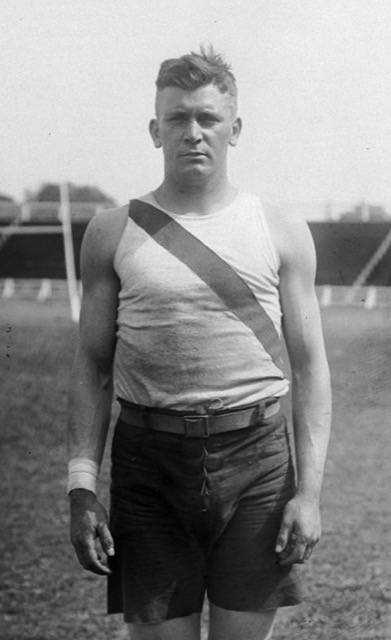
Harry Liversedge, USMC, shot put, 1920 Olympics, Belgium
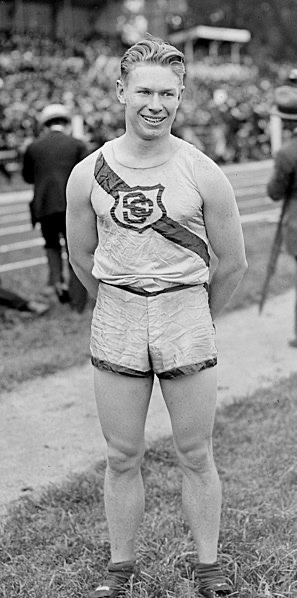
Charlie Paddock, USMC, 100m sprint, 1920 Olympics, Belgium

Champerlin, Thomson and Tuttle, USA, equestrian, 1932 Olympics, Los Angeles

🚃 Send in the Marines ðŸšƒ

I was catching up with a friend who lives in LA a few days ago. Talked about our kids and grandchildren, our work, new books, etc. Then she told me that she’s seriously thinking of selling her part of her business to her partner and moving back to Iowa where she grew up and where most of her family still lives. Why??? She said that she’d reached her limit about two weeks ago when she saw Union Pacific trains stopped on their way to the LA rail yards. They were being plundered by coordinated groups of gangs. And not just a few cars. Ninety rail cars a day. Apparently members of the gangs use bolt cutters to open the cars, grab all the packages and take whatever they want–everything from medicine and high-end electronics to books and toys–leaving masses of garbage everywhere. The Union Pacific has begged for help from the city with no results. At this point, the Union Pacific is seriously considering moving their trains out of LA. This isn’t the first time there has been troubles on the trains, but when that happened they found a swift way to fix it. They called in the Marines!

Marines guarding the US mail in the 1920s

The “Roaring Twenties” were more than Flappers, Speak Easies and rumble seats. It was a time of Al Capone, the St. Valentine’s Day Massacre, and bank robberies. In those days, money was moved by truck and train via the Post Office. Between April 1920 and April 1921, $6.3 million dollars were stolen from the USPS. The Post Office tried to arm members of the USPS, with minimal success. Between April and October 1921, another $300,000 were stolen, with several post office workers killed. Postmaster General William Hays asked President Warren Harding for help from the Marines. Harding approved the request and Secretary of the Navy Edwin Denby immediately authorizes a contingent of Marines to guard main Post Offices, transfer stations, truck and trains.

Initially, 53 officers and 2,200 enlisted personnel were divided between the eastern and western zones in the US. Armed with standard M1911 pistols, the famous M1903 Springfield rifles, Thompson submachine guns and a few trench guns, their orders were basically to do whatever they needed to do so that the mail would get through. It took just four months for the Marines to have things in hand. (No one who had learned about the Marines on the Western Front during the Great War wanted to take on the Devil Dogs.) Marines returned to their normal duty in the spring of 1922.

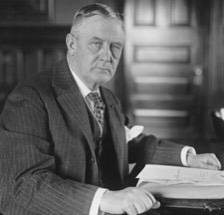
Postmaster General Harry New

Unfortunately, not everyone got the memo. 0n October 15, 1926, thugs attacked and killed a mail truck driver, wounded his helper and carried away $160,000 in broad daylight in Elizabeth, NJ. The current Postmaster General, Harry New, asked President Calvin Coolidge for help. Coolidge had Secretary of the Navy Curtis Wilbur call on the Marines to guard Post Office cars, trucks carrying registered mail and all major railroad and postal facilities until the Post Office itself could organize its own proper Postal Police force.

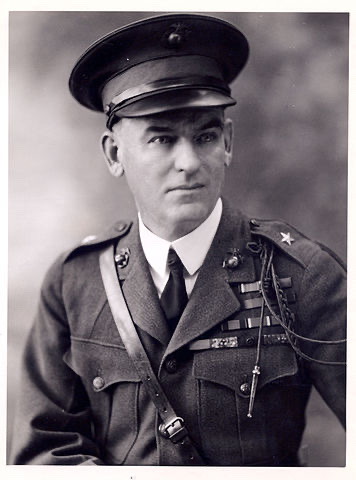
BGen. Logan Feland, USMC

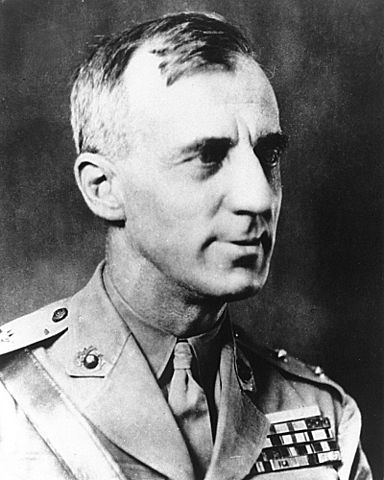
The Marines took up their duties on October 21. BGen. Logan Feland, USMC, commander of the Marine Barracks at Quantico, directed the Eastern Region. BGen. Smedley Butler, based in California, commanded the Western Region which reached as far East as North Dakota, Colorado and El Paso, TX. It included 40,000 miles of railroad track and twenty-eight major post offices. The Marines carried .45 automatics, 12-gauge shotguns and Thompson submachine guns, and were expected to “shot first and ask questions afterward.” That ended the problem. By the end of February 1927, the last of the Marines had returned to their bases. They had seen no action, but it had bought the Post Office some time to set up proper security.

BGen. Smedley Butler, USMC

Right now, the Union Pacific has a very small number of security to deal with the current situation. I wonder what would happen if the Marines took over the mess in Los Angeles for a few months.🤔