With Associate Justice Ruth Bader Ginsburg’s passing, all eyes are on the Supreme Court. Only 114 people have sat on the Court since 1789. We know little about some of them, but others like John Marshall, Thurgood Marshall, and Sandra Day O’Conner, have been outstanding both as jurists and as individuals. One titan of the Court who we tend to overlook in the 21st century was Oliver Wendell Holmes. We briefly studied him in high school, and I remember that there actually was a movie about him, so I checked it out. Made in 1950, The Magnificent Yankee actually is a film about the man and only tangentially about the body of his work.
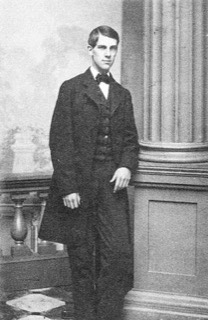
Since the film begins with Holmes arriving in Washington D.C. to take his seat on the bench, we should have a bit of the back-story. He grew up in Boston in an Abolitionist family, and in the spring of 1861, just a few months before his graduation from Harvard University, he received a commission as a Lieutenant in the 20th Regiment of the Massachusetts Volunteer Cavalry. He served in the Peninsula Campaign, Battle of Fredericksburg, the Wilderness Campaign, Antietam, Balls Bluff and Chancellorsville. He was wounded twice and nearly died from dysentery. He returned to Boston as a Brevet Colonel when the the Regiment disbanded in 1864.

After passing the bar in 1866, he went into private practice, and married Fanny Bowditch Dixwell in 1872. During those years, he was the editor of the American Law Review, and wrote The Common Law, first printed in 1881, and still in use. In August 1899 Holmes became the Chief Justice of the Massachusetts Supreme Judicial Court. Barely three years later, Teddy Roosevelt nominated him to the US Supreme Court, and the Senate confirmed him on December 4, 1902.
On the Court, he worked on the Insular Cases, Northern Security Co. v. US, Otis v. Park, Schenk v. US, and numerous other high profile cases. In the years he served on the bench, he wrote many of the 853 majority opinions, but was known as the “Great Dissenter” with his 72 dissenting opinions–most of which he wrote. His fellow jurists believed that Holmes was a fantastic writer in both dissent and majority opinions. He retired at the age of 90, having spent 29 years on the Supreme Court. Being too elderly to attend the inauguration in 1933, Franklin Roosevelt and his wife, Eleanor, visited him immediately after the ceremony. Holmes died of pneumonia on March 6, 1935, just two days short of his 94th birthday.
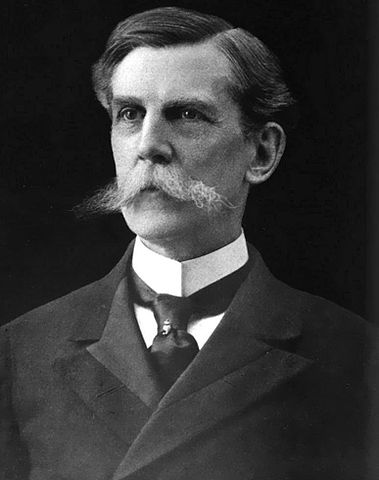
The film focuses on the man more than the Supreme Court, though the viewers get a good idea of Holmes’ approach to the law and to many of his friends and colleagues. His butting heads with Teddy Roosevelt, his polite but frustrating conversations with Charles Francis Adams, Jr., his clerks who were “his sons,” and his, and Fanny’s, long-time close friendship with Louis Brandeis provide us with a good understanding of Holmes the man, and an insight to one segment of Washington D.C. at the turn of the 20th century. One of the most important scenes comes at the end of the movie, when Franklin Roosevelt went to see him. Holmes tells his secretary that while he’s a Republican and Roosevelt is a Democrat, he is also the President, so he will show the President the deference he deserves. Rather different from the way people tend to behave in the 21st century. Maybe we should thing about that.
If you’re interested in a solid book about Oliver Wendell Homes, take a look at: Catherine Drinker Bowen, Yankee from Olympus.
 Historical Lense