Sometimes I put history on hold and discuss something more current. Today rather than talking about the Black Death (1346-1352), Smallpox (1870-1874), or the Spanish Influenza (1918), I want to discuss—possibly rant a bit—on current supply chain difficulties and what must be done from here on in.
First, what is a supply chain? According to Investopedia, supply chains are “networks between a company and suppliers to produce and distribute a specific product to the final buyers.” Basically, rather than having a company build a complete product in-house, a firm hires several companies to build different components, puts them together at one of those factories and sends the finished product to the buyer. They are generally done overseas. There are a lot of different ways of doing this, but that’s the general idea. Supply chains are done because they are generally faster and cheaper.
General theory of a supply chain
American companies have used supply chains for years, but they really ramped up after World War II. In the ‘60s and ‘70s, with the development of multi-national corporations, we began to see more parts built overseas, increasingly in China, because of lower wages. By the early ‘90’s supply chains from China had grown significantly. There certainly were some hiccups. Raw material shortages, recalls, and tougher regulations all caused issues, but sooner or later they were worked out.
However, some parts of a supply chain are extremely serious. Ninety-two percent (92%) of pharmaceuticals and biologics, many of which are Active Pharmaceutical Ingredients (APIs), and forty percent (40%) of over-the-counter drugs and supplements—even something as simple as Vitamin C—are only made in China. In addition, sixty-six percent (66%) of the rare earth elements (REE), many of which are required in high tech parts, and by the Defense Department—things like guidance systems, lasers, satellite communication equipment and jet engines—come from China
Now for my rant. China is a communist country. Xi Jinping may wear an elegant suit and tie but he’s simply an updated version of Mao Tsedung. As the President of the People’s Republic of China he made himself president for life, as well as Chairman of the Central Military Commission. Censorship blankets China. Mass surveillance is standard operating procedure, including complete internet censorship. One million Uighurs have been put into concentration camps, and Tibet is being destroyed. And that’s just the tip of the iceberg. Mao’s Cultural Revolution—Xi’s decision to hide the coronavirus for months. To me, that’s a distinction without a difference. Why on earth should we place our most important products in the hands of China???
In the past 3-5 years, some companies in the US have been in discussions to move their supply chains from China to Taiwan, Cambodia, Vietnam, Indonesia, Malaysia, Mexico, even the United States. Some have actually pulled the trigger and moved. That is a good, but a small first step. Global supply chains are perfectly fine if we’re interested in furniture or eye glass frames. But in my opinion, it’s extremely dangerous to allow a nation which is so obviously opposed to the United States to control our vital resources. We have the authority under the International Emergency Economic Powers Act of 1977 (IEEPA) to require US companies to move the most important pharma, biologic, REEs and what every else is vital to our nation.
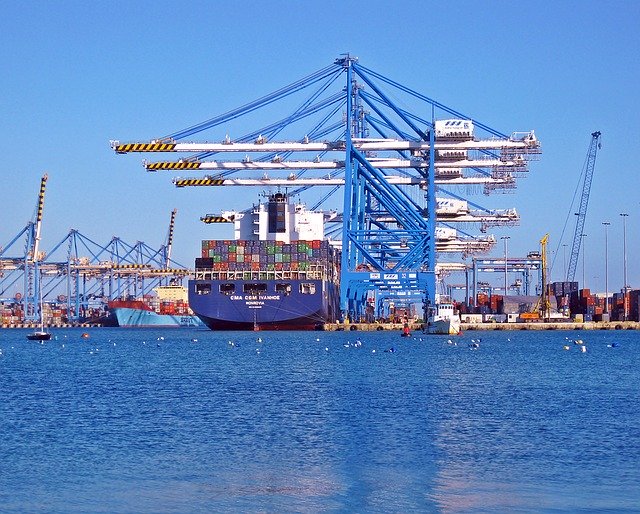
One of hundreds of ship containers move thousands of supply chain products each year

 Historical Lense