A few weeks ago I was reading the OP-ED section of the WSJ when I came across the piece “Communism and Religion Can’t Coexist.” Obviously—everyone knows that, right? Well…I certainly thought so! But then why do I hear people frequently discussing the merits of socialism? In case you’ve forgotten, let’s take a quick refresher on communism and religion. But first we need to take a slight detour to a dictionary. (I’m ancient and like the 1940 Webster edition, but use any one you like—there are some great ones online.) Anyway, take a look at “communism” and “socialism.” You’ll see that they are basically the same thing—a distinction without a difference.
Communism popped up in Europe in the late 1800s and moved to areas in Asia and South America over the following 100 or so years. But by 1991 communism was literally falling apart. On the other hand, religion has existed since the mists of time. The first monotheistic religion, Judaism, developed around 3500 years ago, Christianity, 2100 years ago, and Islam 1400 years ago. Polytheistic religions such as Hinduism first took hold 3700 years ago, Buddhism, 2700 years ago, and Confucianism about 1600 years ago. There are countless smaller religions. Over the centuries, to a greater or lesser degree, all religions have been persecuted, tortured, even executed, but they continue to survive, even thrive. The contrast between communism/socialism and religion is stark.
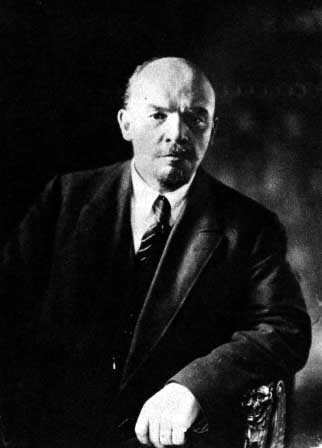
Now lets take a look at some of the countries where communism and religion butted heads. The overwhelming majority of Russians belonged to the Russian Orthodox Church since 988 A.D. though there were numerous other Christian denominations as well as Jews and Muslims. That all changed with the October 1917 Russian Revolution, led by Vladimir Lenin. He believed that the ultimate aim of the Revolution was to destroy the Church completely and replace it with the Socialist State. He was good to his word. By the end of the Civil War in 1922, the State had banned all religious education, destroyed churches, synagogues and mosques, executed thousands of priests and nuns, and imprisoned hundreds of thousands of clergy and laity. Virtually all the Church wealth went into State coffers. Over the next 15 years all religions remained utterly defenseless until, of all people, Joseph Stalin rescued them—sort of.
On June 21, 1941, Stalin had an honest-to-God melt-down when Germany attacked the USSR. Once he pulled himself together he began to speak in a way reminiscent of earlier days, evoking Mother Russia, and the Orthodox Church. He had to defeat Hitler, and if that meant saying something nice about the Church, so be it. He also gave a few perks to most of the dominations in the Soviet Union. Interestingly, it did make a subtle difference to many who quietly believed in religion. After WWII, the Communists continued to hold a tight grip to religion. It wasn’t until the dismantling of the Soviet state in 1991 that religion had a serious resurgence in Russia.
At the end of the War, the USSR controlled Central Europe from the Baltic to the Balkan’s regardless of what the nations, themselves, wanted. Let’s look at just two of these countries, though the same thing happened throughout what came to be called the Iron Curtain. Poland had been a Catholic nation since 966 A.D., about the same time that Jews also arrived. In 1948, when the Communists took control of Poland, they tried to eliminate religion the same way they had in Russia. However, many Poles defied the State and continues to attend Mass. The Church also pushed back by setting up underground universities. In retaliation, the State confiscated Church lands, put hundreds of nuns and priests in prison and tightened its grip on the entire population.

Rebellion was in the air throughout Central Europe in 1956. Workers and students first took to the streets in Poznań, western Poland, that June, demanding everything from bread to greater freedom—including freedom of religion. In an effort to maintain government control, the State agreed to a few limited changes and released some priests from prison. Nonetheless the State continued to keep religion on an extremely short leash. One of the priests who lived quietly but passionately during the post-rebellion years was Father Karol Wojtyla, who became Cardinal of Krakow in 1964. His election as Pope in 1978 causes a sea-change throughout the socialist world. During his visit to Poland in June 1979, 13 million people defied the government and came out to greet him. He responded by telling them that they need not be forced to live under communism. The following year a trade union, Solidarity, appeared, and though the State tried to repress it, by 1989 Poland had its first real elections and a revitalized Church.
Poland, however, was not the only Central European nation to suffer under Communism. Think East Germany, Romania, Bulgaria, Czechoslovakia, Yugoslavia, Albania and Hungary. All of those nations had centuries of religion—Orthodox and Roman Catholics, numerous Protestant denominations, Judaism and Islam, and all were repressed, went underground, went into exiled, or to prison…or worse…when the Communists took over.
One of the most independent people involved in the fight for religious freedom was Jozsef Cardinal Mindszenty of Hungary. In early 1919, during the chaotic end of World War I, communists under Bela Kun jailed Mindszenty for his anti-socialist sympathies. The six-month Civil War threw out the Communists, and Mindszenty returned to his priestly duties. In 1946, at the same time as the Communists took over Hungary, Mindszenty became Cardinal. As usual the State took over all Church property, closed schools, jailed priests and so on. When Mindszenty spoke out against the socialist State, they arrested him, but not before he sent a letter stating that if it appeared that he had signed anything, it was done under duress. And he was right. He was tortured until he “confessed,” and after a five-day show trial was sentenced to life in prison.

Mindszenty remained in prison until the beginning of the Hungarian Revolt in October 1956. Three days after he, and hundreds of men and women who were prisoners of conscience were freed, the Cardinal gave an impassioned radio broadcast supporting the revolt. It was ten days of freedom. The West was astonished. The Eastern Bloc was irate. Then the Soviet tanks rolled back in. Mindszenty spent the next 15 years in the US Embassy in Budapest until he was allowed to leave in September 1971. He lived in exile in Vienna until his death at age 83, in 1975. In truth he was only one of thousands of clergy, and everyday people, imprisoned and hounded until the fall of communism in 1991.
Did the tension between communism and religion only play out in Europe? NO! Confucianism, Taoism and Buddhism—the “Three Teachings”— were the major religions in China for a thousand years. Christianity arrived in China with the Jesuits in the 1500s. From the early 1800s missionaries from all over the world gradually made inroads into China, but remained a minuscule number of converts compared to the Three Teachings. The years 1900-1949 saw significant growth in various Christian denominations, despite the horrendous second Sino-Japanese war that lasted from 1937 to 1945 (part of World War II). Sadly, when the War ended, the fighting in China simply shifted to an equally appalling Civil War. In October 1949, Mao Zedong, established the People’s Republic of China. Again, once communism took hold, one of its first piece of business was to ban religion. It seized churches, temples and land, and imprisoned, tortured and frequently executed thousands for their faith. Interestingly, the government did sanction a State-regulated and controlled Protestant church which remains absolutely loyal to the Chinese government. Again, the devout went underground. (Draconian measures during the Cultural Revolution of 1966-1976, made the earlier issues between Church and State look like a walk in the park!) With the thaw at the end of the Cultural Revolution, a uneasy truce between religion and the State exists.
However, we shouldn’t forget the Falun Gong, still undergoing human rights abuses while hundreds of thousands are jailed, send to labor camps and are psychologically abused. The Uighurs, Muslims who have lived in Xinjiang since the 7th century, are on the brink of genocide, with millions in “re-education” or “vocational” camps. And then there’s Tibet, literally at the top of the world. Technically an autonomous region of China until the end of the Qing dynasty in 1912, the 13th Dalai Lama announced that Tibet was a small, INDEPENDENT, religious state. It remained so until October 1950 when the Chinese Army (PLA) invaded Tibet and the 14th Dalai Lama fled into exile. Since then thousands of Tibetans have been jailed, the majority of the 6,000 monasteries destroyed and human rights violations are constantly growing.
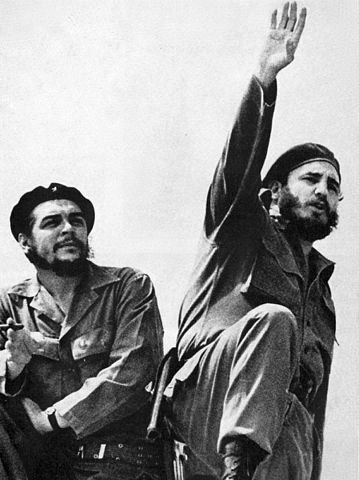
Socialism didn’t only move to Asia, it has also tried takeovers in South America. The Catholic Church has had its presence in Cuba since the late 1400s and remained a bulwark of the country until the rise of the socialist state under Fidel Castro in 1959. In 1962 the State shuttered 400 religious schools because they allegedly spread subversive beliefs. It also set up the Office of Religious Affairs to regulated all aspects of religion including seizing Church property, regulating Church services, deciding when priests can make visits, and tightening control of seminaries. Even “House Churches”—private chapels within a family’s home— must register with the Religious Affairs Office. Surprisingly, the Cuban government allowed John Paul II to visit in November 1996. Just as he had in Poland, the Pope called for the release of political prisoners and told the faithful to take charge of their own lives. Little changed—the faithful remain stuck in grinding poverty. (Though in 1997 the State made a MAJOR announced…Christmas was now a national holiday🙄) The Church continues to be at the mercy of the State, keeping a very low profile, while trying to provide religious education and help the poor in spite of the relentless restrictions of the State. (I think I’d better stop before I really get on a roll.)
Having refreshed my memory on socialism/communism, and religion, what is my take-alway? THEY DON’T COEXIST! Religion is concerned with morals and ethics, and strives to improve humanity, both personally and in the world view. Socialism/communism talks a good fight but is the exact opposite. The State holds ALL power—power, money, work, education, the arts, music, and certainly religion—all do the bidding of the State. Something to think about…maybe even talk about… when people start talking about the merits of socialism.
 Historical Lense