Should We Have Sputnik 2.0 đŸš€đŸš€đŸš€

About ten days ago I turned on the radio and opened the door to get my newspapers, and both my eyes and ears left me surprised. Seriously surprised–and seriously annoyed. 😤Apparently back in August the Chinese military launched a hypersonic low glide missile. What was so irksome was the fact that it appears that US intelligence hadn’t known about it until just days before it was announced in both the radio and newspaper (and TV news later). If that’s the case, and I really hope it’s not, then I can only ask what the %(#^ has our Intel been doing???

What is a hypersonic vehicle? It’s one which moves at 5+ times the speed of light. In this case, the vehicle was in low-earth orbit, went around the earth, and missed its target by 20 miles–and easy tweet to get it right the next time. That is extremely concerning because at this point in time, it’s virtually impossible to stop such a vehicle. Both the US and Russia have been working on hypersonic vehicles, but they are both far behind the PRC. It should definitely be a wake-up call, similar to what happened with Sputnik in 1957. I have a feeling that we need a Sputnik 2.0 right now!

So what was Sputnik? In April 1957, the US and USSR agreed to the International Geophysical Year (April 1957-December 1958). Eventually 67 nations took part. That summer, President Eisenhower received a briefing in which he heard that the Soviets were working on the first artificial satellite. After serious internal discussions the US quietly began Project Vanguard. The Russians, however, were farther along, and actually scaled back their work in order to launch Sputnik (which means Satellite) first.
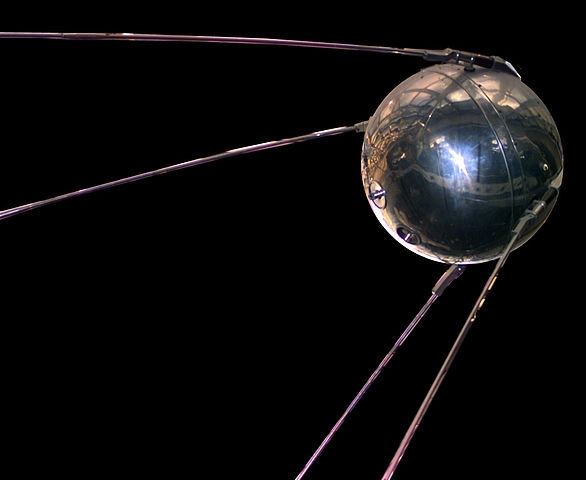
Sputnik October 4, 1957

On October 4, 1957, the vehicle launched from Site 1/5 in Kazakh SSR (now known as Baikonur Cosmodrome). It was a spherical metal structure with four radio antenna attached to the exterior. Stations across the USSR would track radar, optical instruments and communications to gain a great deal of information. It would orbit the earth every 98 minutes, and would do so for 21 days, until the batteries died on October 26. At that point, Sputnik would continue to orbit in silence until January 4, 1958, when it burned up during reentry.

Very shortly before the launch, the Soviets enlisted amateur radio operators around the globe to listen for Sputnik as it flew across their area. They were told to listen for a constant “Beep. . .Beep. . .Beep.” Many people joined in, including the American Radio League, and the ham radio station at Columbia University. The Soviets also told certain groups that they might be able to see Sputnik as it passed certain areas in the early evening. Canada’s Newbrook Observatory was the first to photograph Sputnik in North America, and the USAF Cambridge Research Center, Westinghouse Broadcast and the Smithsonian Astrophysical Observatory go videos of Sputnik as it crossed Baltimore.

Sputnik was massive wake-up call in the US, and the Space Race was on. The US cranked up their work with the new Vanguard rockets–the first one failed in December 1957, the second one failed in February 1958. The third Vanguard finally got into orbit in March 1958. That was only the beginning. In short order NASA was up and running, and by July 1969 the US had landed on the moon.

Beyond that, most Americans–everyday Americans–wanted to know why we were so far behind, and what to do about it? Besides things like NASA, schools immediately began changing their curriculum from standard reading, writing and arithmetic to a LOT more math and science for everyone–whether you enjoyed it or not. And that happened rapidly. Where I lived, things changed over the summer of my kindergarten and first grade.

Not as many girls were involved in math and science during the Space Race, though I do have girlfriends who went on to get degrees in biology, math, chemistry and physics. Today there’s a real push to provide STEM (science, technology, engineering and math) for our students, much the same way we shifted to the sciences 60+ years ago. after Sputnik Given the current use of technology and the internet, STEM is incredibly important today. But I think finding out about the Chinese hypersonic low glide missile is an ever more important wake-up call to the US. First, we should immediately improve our intelligence and second, either immediately go full-bore on our work on hypersonic vehicles–or start learning Mandarin.
THANK YOU!!!

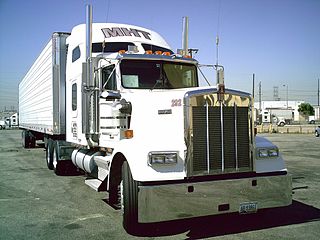
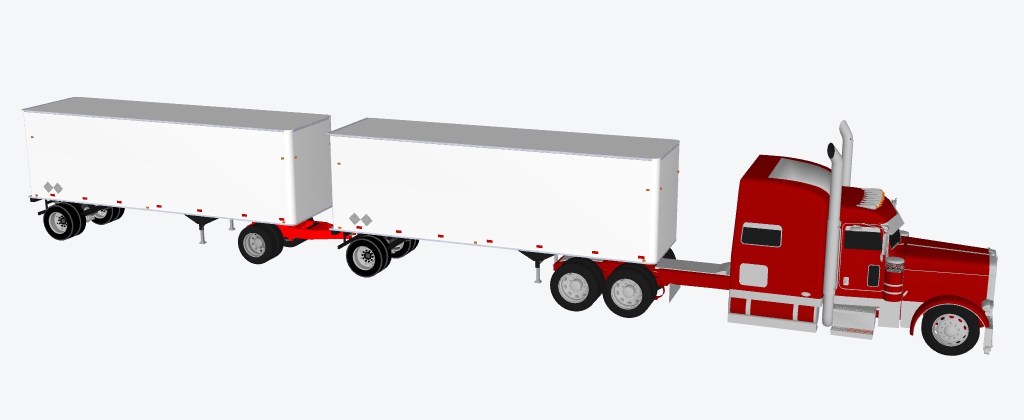
In the middle of this horrid pandemic, we can only give a heartfelt “thank you” to the NPs, nurses, doctors, respiratory therapists, hospital workers, first responders, and delivery and grocery workers. But there is one more group without whom we’d be in a world of hurt, yet they seem to be forgotten—the truck drivers. Thank you for selflessly moving all of those supplies wherever they’ve needed.

Until the early 20th century, most cargo was moved by train and/or wagon. Yet, by 1910 there were 500,000 automobiles in the US, and 100,000 trucks by 1914. Originally, tires were made of solid rubber. That made it difficult to drive more than 10-15 miles an hour over rutted, rural road, so they generally stuck to paved urban areas. During WWI, trains were so swamped with both men and materiel that truckers, who by then used pneumatic tires that allowed them to drive much faster, began moving long-distance cargo. The AEF also used trucks and ambulances in France during the war.

Trucks in World War I

During the 1920s and 30s, states began to standardize the sizes of most trucks. In 1933, truckers joined the American Trucking Association and in 1935, Congress passed the Interstate Motor Carrier Act, regulated by the Interstate Commerce Commission (ICC). Trucks were crucial during World War II both for the US and Britain. And one of the few nice things that the Soviets said about the Americans during the war was that the 2.5-ton Studebaker truck was key to Russian victory on the Eastern front.

When Dwight D. Eisenhower became president in 1952, one of his objectives was to build the Interstate Highway System. Having seen what was done in the German Autobahn, he understood the economic and military important of a network of highways throughout the US. Passed in 1956, the Federal Aid Highway Act started building a series of interconnected roads and bridges across the United States. At the same time, cargo ships began using containers (intermodal shipping) that made it much easier to move supplies from ships to trucks to cities and states. By 1970, 18 million trucks criss-crossed the new interstate highways.

Containers waiting to more onto trucks and fan out across the country

In a way, those were the hay days of US trucking. The Citizen Band (CB) became extremely useful for truckers and great fun for the public. CB’s slang was used every day. For instance, a Black Eye was a vehicle with a headlight out. Deadhead is pulling an empty trailer. A dragon wagon was a tow truck. The song “Convoy” was a hit in 1976 and was turned into a movie in 1978. Yet there were still serious issues, particularly trucker’s strikes in both 1973 and 1979 over the energy crisis. By the 90’s they were also moving supply chains from overseas, increasingly from China. By 2006, 26 million trucks carried about 70% of the total value of freight in the US.

Today truck drivers are one of the few industries that are thriving in the face of real adversity. They are the people who bring the food and all manner of supplies—don’t forget the toilet paper!—from Washington State to Washington, D.C. What would we do without them? Yet truckers have serious issues too. The Owner Operator Independent Association has asked the government for proper testing, especially for those who drive through the “hot zones.” And it’s outrageous that many states have closed rest stops and service plaza that the truckers use to get something to eat, take a shower, use the restroom, and sleep. In this case, trying to contain the virus had the unintended consequence of making it much harder for the people who are helping us!!! Thankfully some states have again allowed truckers to sleep at the rest stops, though most everything else—including restrooms and places to get take-out—remains closed.

Thankfully the American people are stepping up to help. Some are bringing hot meals to the rest stops. Others are setting up alerts along the highway giving directions to find a hot shower and something to eat. Some fast food places are putting up signs showing where to park your truck and walk over to get food and a bathroom (you can’t drive an 18-wheeler through a drive-through.) Overdrive Magazine (on-line and print) is also updating what is available for truckers on a daily basis. You might pass along the Facebook page Truckers’ Local Resources.

So, from all of us, a huge THANK YOU to all our truckers. Stay save and drive carefully.😇