I was completely surprised when I turned on the radio at lunchtime yesterday and hear that General Colin Powell had died from complications of Covid-19 while battling Multiple Myeloma. He has been a fixture in the American military and political life for fifty years. His hair got a little grayer, but his thoughtful, incisive approach to everything he does, his true decency for people in every walk of life, has made an impressive mark in our country. People in the current corridors of power could take a few lessons from him.
General Powell was born in New York City in April, 1937, to parents who had immigrated from Jamaica. He grew up and went to public school in the South Bronx. He didn’t really know what he wanted to do, so he went to City College of New York (CCNY), and while he was there, joined the ROTC. He graduated in 1958 and was commissioned as a Second Lieutenant in the US Army. He fought in Vietnam, and went on to a variety of infantry and staff positions, including as US Security Adviser (1987-89).
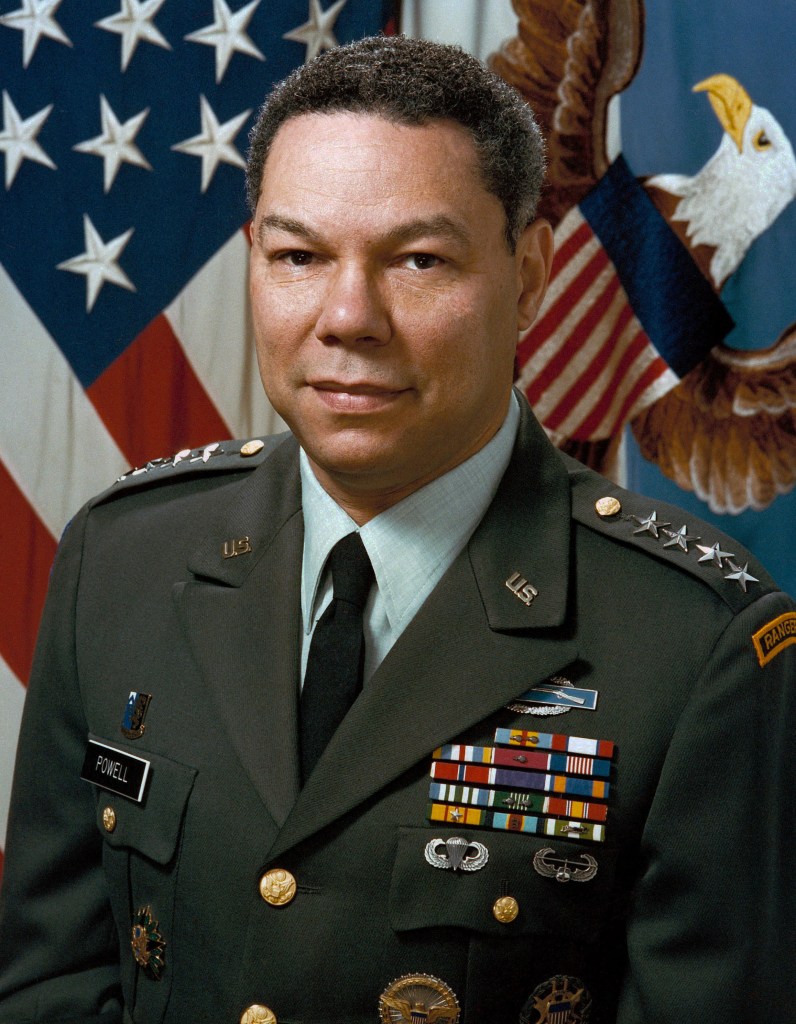
Powell ending his military career as a Lieutenant General and Chairman of the Joint Chiefs of Staff (1989-93). During those years he was intimately involved in a number issues, particularly the invasion of Panama, and Operation Desert Storm. During this period he developed what we now call the Powell Doctrine. There would be no military action unless 1) it was truly necessary for US security 2) the US would use massive force and 3) there was significant public agreement.
After his retirement in 1993, he was invited to give numerous speeches, and attend a variety of seminars and conferences, but most importantly, he chair America’s Promise–Alliance of Youth, a non-profit organization to involving people in all walks of to build character and competence for young men and women. (He has remained involved in the organization throughout his life.)
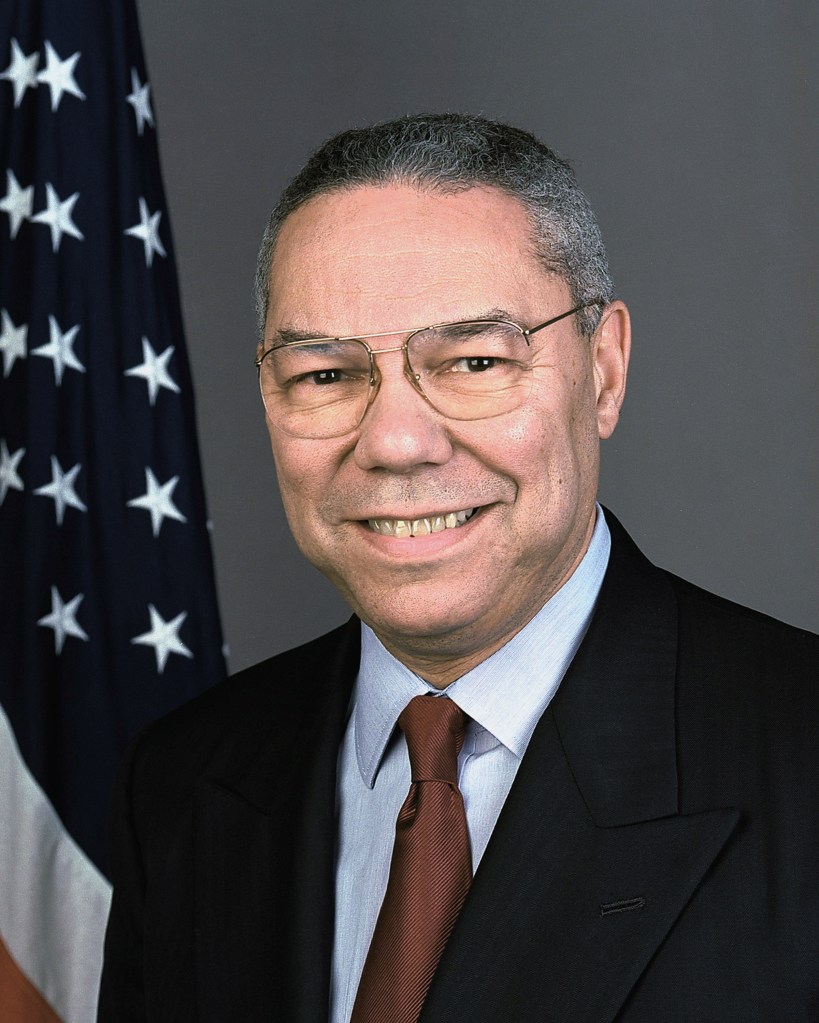
Retirement didn’t last that long. He had been so important to so many US Presidents that in 2001 he became the first African American Secretary of State. The Senate confirmed his unanimously. Unfortunately, he started his work just months before 9/11 when everything changed for the US. Powell did a stellar job of dealing with the US’s relations with foreign nations, trying to put together a sound coalition for the War on Terror. However, he was in a very difficult position when dealing with the 2003 invasion of Iraq, and he resigned in November 2004.
Since he stepped down from the Chairman of the Joint Chiefs, he wrote two excellent books, but I think we should end this post with part of his second book It Worked For Me. His thirteen lessons can work for all of us.
–It ain’t as bad as you think. It will look better in the morning.
–Get mad, then get over it.
–Avoid having your ego so close to your position that when your position falls, your ego goes with it.
–It can be done!
–Be careful who you choose.
–Don’t let adverse facts stand in the way of a good decision.
–You can’t make someone else’s choices
–Check small things.
–Share the credit.
–Remain calm. Be kind.
–Have a vision.
–Don’t take counsel of your fears or naysayers.
–Perpetual optimism is a force multiplier.
If you’re interested in Powell’s autobiographies or some well-done biographies, take a look at these.
http://Colin Powell. My American Journey
http://Colin Powell, It Worked for Me: In Life and Leadership
 Historical Lense