So many of us use the Internet today that it’s become second nature. We’re using it even more these days as we work from home, FaceTime with family, Zoom with colleagues and friends, and go to the gym or even church virtually. It really is a new world compared to the Spanish Influenza of 1918 when a telephone was a luxury.
As wonderful as this is, the truth is that some of us are dragging ourselves, sometimes kicking and screaming, into the 21st century. The first time I saw a computer was my senior year in college. It was enormous, covering the entire third floor of the building and you could hear a background hum as a huge number of punch cards zipped along. Fast forward and today I’m typing on an IPad. When I’m done, I can tap a button and send it to you all. Computers and the internet have become a part of our daily lives. Why and how did that happen?
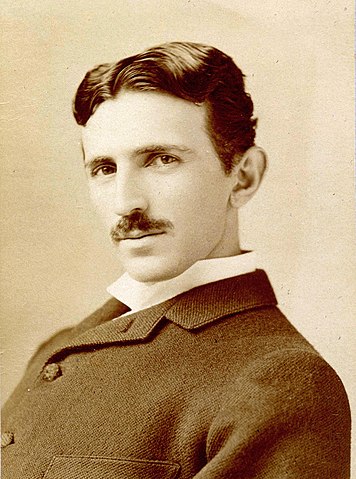
Nikola Tesla, an important inventor and electrical and mechanical engineer, spoke about a World Wireless System in the early 1900s but nothing really came of it until the 1960s. Paul Baron first invented packet switching which is a way of grouping data that is transmitted digitally between several networks. The second important breakthrough came in 1969 when UCLA and Stanford connected the first node, and UCLA sent the word “Login” to Stanford. The first attempt crashed when it got to “G” but the second attempt was flawless. Just a year later groups from Harvard and MIT also set up a node and connected some of their computers.
In short order Roy Tomlinson developed Email and “@“ that separated the username and the computer name. At the same time, Michael Hart founded Project Gutenberg by developing a way to list not just the authors and titles of books in the public domain, but storing and retrieving the complete books. Ultimately schools and universities began using EBooks (so much easier that carrying massive textbooks!!) Today, in addition to school books, we can read books on computers, Kindles, Nooks, and even audio-books.
This was all well and good, but how could regular people do things like use email or read a book? In 1977, Dennis Hayes and Dale Heatherington fixed that when they developed a PC modem so that rather than having to be hard wired, people could use computers both at work and at home. The following year, Gary Tuerk developed “unsolicited commercial email” aka SPAM. 😖 Happily, emoticons/emojis were developed in 1982.🤓
By then things were moving like wild fire. In 1984 there were so many “addresses” that the Domain Name Services (DNS) were developed, making it so much easier to use than the enormous numerical list used for a single IP address. Four years later, we were able to chat in real time, but one of the banner developments came 20 years after the packet switch, when AOL launched, making it simple for the general public to go “on-line.” Just a year later, Tim Berner-Lee finished the code for what we now call the World Wide Web.

In 1991 I saw my first web page—and it actually explained how it would work! For the first time, a page would have content in addition to files. Then came the first MP3s, which grew into MP3 players, a great way to hear music. Webcams arrived about the same time—incredibly useful for so many things! The first one was actually developed by a group in one of the labs at Cambridge University—but not for a lofty reason. They wanted to be able to check their coffee maker without stopping what they were doing to walk around the corner. Web browsers came next. The first simple one was Mosaic, developed in 1993.
Two years later, the Internet made an enormous leap forward, from research, universities and hobbies to commercial use. The SSL (Secure Socket Layer) could now encrypt information which opened it up to financial institutions. (How many people still write checks or actually go in to a bank?) Then came the first webmail—remained Hotmail? And by 1997 the word “weblog” was everywhere—now it just “blog.”
Most everyone was fascinated by the year 2000. It was the end of the decade. The end of the century. The end of the millennium. It was Y2K!! And it was the launch of Google❗️In 1996 two Stanford grad students, Larry Page and Sergei Brin, started trying to link together all of the information in the world. A tall order, but two years later, Andy Bechtolsheim from Silicon Valley invested $100,000. They founded Google and, as they say, the rest is history.

 Historical Lense