I had a wonderful history teacher in high school, Dana L. Stivers. Everyone loved him–and I do mean EVERYONE. Even the kids who hated history loved his classes. I still have all of his notes because they are that good. Whenever we were moving on to a new topic he’d start with a joke or a game. One time he came in and told us we were going to play charades. We would had 9 minutes to figure it out–three word, the middle one was “the,” and it was something that happened during FDR’s second term. It took a while, but Brian finally guessed the first word was “pack.” We never got the third word which was “court.” We were going to spend the hour discussing Roosevelt’s 1937 attempt to pact the court. Mr. S. also explained why it would have been a disaster for the country. I learned much more about it in college and grad school but I’ve never forgotten Mr. Stiver’s funny but very wise words–but apparently some people have. Let me give you his five-minute version.

Having had a stunning victory in the 1936 election, also sweeping a democratic majority in both the Senate and House of Representatives, Franklin Roosevelt was still not a happy camper. He was extremely annoyed because the Supreme Court had struck down some of the bills that he felt were at the core of the New Deal, particularly the National Recovery Administration and pieces of the Agricultural Adjustment Act. FDR decided that he would do whatever was needed to push through his regulations, even if it meant changing the Supreme Court from an independent judiciary to an arm of the legislative branch. He came up with a bill, the Judicial Procedures Reform Bill of 1937 (the court packing bill) which stated that for every Justice who was 70 or older, the president would nominate another Justice–but no more than six. (I can hear Gary now–a smart kid and great football player shouting out–“So Roosevelt was a sore looser!) I don’t think Justice Ruth Bader Ginsburg would put it those terms, but she did comment to NPR last year that not packing the court would maintain “the safeguards of judicial independence . . . that are as great or greater than anyplace else in the world.”

FDR’s attempt to pack the court went nowhere. The Senate Judiciary Committee (his own Democratic majority) believed “ultimately the effect would undermine the independence of the court . . . and expand political control over the judicial department.” And Republicans wanted no part of it either. Both sides understood that it would be a short term solution, and a terrible one at that! The Court would loose its credibility, and the public would not accept its rulings. People throughout the country understood that it was a blatant power grab. An independent judiciary was one of the reasons that the US broke from Great Britain. Roosevelt said that he only wanted to make those reforms was because the Court was bogged down. However, Chief Justice Charles Evans Hughes spoke to Congress and made it very clear that the Court was up to date with all its work, and didn’t need any help.
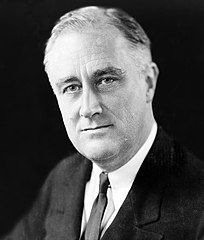
If Roosevelt had taken a longer view, he would have understood that eventually the Republicans would hold the majority and they would simply pack the court even more–and on and on. So the US would end up with an increasingly large number of Justices of the Supreme Court. How would they get anything done? Who would believe their judgment? The Judiciary Committee concluded that “It is far better that we (in 1937) await orderly but inevitable change of personnel than that we impatiently overwhelm them with new members.” And low and behold, in the coming years, seven Justices retired and Roosevelt was able to calmly nominate even more new Justices that he had hoped for.

Over the past 83 years, people have agreed that packing the court is NOT a good idea. Why change now? Are the current Senators more intelligent than those from 1937? Some of them may think they are, but most Americans don’t!! Are we in more dire straights now than in the depths of the Great Depression? Things are difficult, but not quite to that level. What is the same is the way both Roosevelt and a small number of Congressmen and Senators want what they want IMMEDIATELY. Both FDR and the current group of “court packers” seem to believe that their particular issues are more important than an independent judiciary. Again, look at the long term implications–a quick, down and dirty change that will eventually end up toppling the entire court system. That’s not the thoughts of some fringe groups of conspiracy theorists. It’s coming from judges and lawyers on both sides of the aisle, from common-sense members of Congress, from historians who understand that this has happened in other nations, and it didn’t end up well, and from average people who were lucky enough to learn civics in school. Congressional leaders need to act for the good of the whole country, not their own partisan interests. Chief Justice William Rehnquist said that “judicial independence is the crown jewel of our system of government.” We need to listen to people like Rehnquist and Ginsberg and not petulant children who want what they want when they want it.


 Historical Lense