Shouldn’t we learn from the past? Maybe not🤨

Last April, I wrote the following blog about the 81st anniversary of the Katyn Massacre, in which the Soviet Army murdered 20,000 Polish military officers, politicians, doctors, lawyers, priests and intellectuals, leaving them in shallow graves. Who would have thought that on the 82d anniversary of the Katyn Massacre we would be horrified at another Russian massacre. This time, with the use of aerial photography, we can see that up to 10,000 men, women and children have been left in a shallow grave in the outskirts of Mariupol–to say nothing of the hundreds of others who have been killed in Buchi, Irpin, and too many other towns.

Why? Initially President Putin told his people that it was because Russia wanted to demilitarize and denazify Ukraine (interesting when you remember that President Zelenskyy is Jewish.) Then it was to free Ukraine from oppression. (There’s plenty of oppression in Russia–maybe deal with that first? Just a thought.) Finally this week a Russian general in charge of the southern front made it clear that the goal of the Russian government is to take all of southern Ukraine–from Crimea, Donbas and Luhansk to Odessa and on toward Moldova. I have the horrible feeling that we are headed to World War II 2.0 being played out in Ukraine. It’s worth rereading the Katyn Massacre to remember what happens in this magnitude of warfare.

(Because of the graphic photos, there will be not pictures in the blog.)

Most of us know that Germany attacked Poland from the east on September 1, 1939. Just 16 days later, because of the Molotov-Ribbentrop Pact, the Soviet Union attacked Poland from the west. It’s difficult to know how many Poles were initially captured by the Soviets–estimates go between 250,000 and 455,000 men. In a relatively short time, many escaped and others were allowed to leave after interrogations, but by November 1939, Laeventia Beria, head of the Russian NKVD (precurser of the KGB) held about 40,000 men in prisons around Kozelsk and Karkiv,(sound familiar?) inside the USSR. On March 5, 1940, Stalin agreed with Beria, and they, with six other members of the Politburo, signed execution orders for over 25,000 “counter-revolutionaries.” During April and May, members of the Polish military, pilots, government officials, police, lawyers, doctors, engineers, professors, writers, journalists, large landowners and priests were killed, and thrown into unmarked graves, most of them in the Katyn Forest. Stalin hoped to get rid of individuals who could oppose the Soviet Union at the end of the war.

The “fog of war” regarding the missing Poles continued until June 1941, when Germany turned on its “friend” with Operation Barbarossa–the attempt to take over the Soviet Union. Despite their recent war with the Soviets, the Polish government-in-exile in London headed by President Wladyslaw Sikorski, signed the Sikorski-Mayski Agreement against Germany. The government-in-exile expected that the Polish POWs held in Russians would be released and fight with the Polish government. Sikorski asked Stalin where they were. The answer was that they had escapes, and the Russians had “lost track” of them, but they were probably in Manchuria. No one believed that, but the Soviets insisted that they simply didn’t know anything else.

However, when Germany pushed deep into the USSR around Smolensk in April 1943 they found a mass grave of thousands of men. Josef Goebbels, Hitler’s Minister of Propaganda and closed confident, was thrilled. He could tell the British, French, Poles in exile, and Americans that their ally, Stalin, had killed thousands of Poles. He brought in members of the “Katyn Commission” of the International Red Cross (IRC), with 12 forensic examiners, and even a number of Allied POWs, to examine the site. Now Sikorski demanded an explanation. Stalin replied that the Germans had actually massacred the Poles, and then cut all diplomatic relations with the Polish government-in-exile. Throughout the rest of the war, Stalin maintained that it was Germany which had massacred the Poles, regardless of the IRC’s extensive information.

In 1952, the US conducted a congressional enquiry about Katyn. It, too, found that the massacre had be done by the Soviets, but very little was said or done about it. And after the war, when Poland came under the controlled by the Kremlin, little more was said about it . . . in public. But behind closed doors, and among the Polish diaspora people continued to ask questions about what happened in the Katyn forest.

Over the decades, the questions of the massacre festered under the surface. In the 1970s, the Flying University in Poland, and the Workers Defense Committee started openly asking questions. Despite arrests and beatings, more and more people demanded that the documents be unsealed. In 1981, Solidarity took a significant step when it set up a Katyn memorial. The Polish Communist Party took it down, but every Zaduszki Day (All Souls Day) Poles would set up crosses with the same silent questions. Not until 1989, when real cracks appeared throughout the Warsaw Pact, did the USSR admit that Stalin had authorized the massacre. The following years, Mikhail Gorbachov explained that Stalin had agreed with Beria and had authorized the NKVD to exterminate so many of Poland’s elite. That year, the Kremlin also turned over a number of formerly top-secret documents to the Polish President, Lech Walesa.

Even so, it was another 20 years before Russia finally provided Poland with 81 volumes of material, though they still hold 35 more volumes of classified documents. On the 70th anniversary of the Massacre, the Polish Prime Minister, Donald Tusk, and the Russian Prime Minister Vladimir Putin attended a memorial service near the actual site. Yet, to this day, there are still many, many questions to be answered

We’ve Seen this Before

Sadly this is not the first time that Russia has attacked a sovereign nation. There’s a long history going back a millennium. Just in the past fifteen years it’s happened in Georgia, Chechnya, and Syria. The utter devastation, towns turned into rubble and civilians killed in horrifying ways, is unimaginable. What we’ve been seeing in Ukraine–in Mariupol, Bucha and other cities–is more reminiscent of Tamerlane than even World War I. What’s different about this war is that Ukraine decided to stand and fight. Thinking about that, there are definite parallels with the Poles who did the same in the Polish-Bolshevik War of 1920-1921.

Remember, Russia, Prussia and Austria-Hungary had dismembered Poland between 1772 and 1796. There was no “Polish State” for more than 150 years, despite a significant Polish underground network, riots, petitions and millions who resettled overseas, many in the US, who still wanted to see a true Poland. It wasn’t until the end of World War I that the Poles in exile, headed by the famed pianist, Ignace Jan Paderewski, managed to convince Woodrow Wilson to include an independent Poland as the 13th of his 14 Points. The Big Four (Wilson, Clemenceau, Lloyd George and Orlando) discussed a reconstituted Poland during the Paris Peace Conference, which finally became Article 82 of the Treaty of Versailles.

Photos from the Polish-Bolshevik War c. 1920

Despite the Treaty of Versailles, and the fact that the Western Allies opposed the Soviets, the new Bolshevik government wanted to keep the Polish territory that the Czars had held for 150 years. Initially the Red Army took over Ukraine, and in June 1920, began forcing the Polish Army west, all the way to the capital, Warsaw. The second Polish Republic was on the verge of complete collapse in mid-August 1920. But led by General Jozef Pilsudski, the new Polish Army, with volunteers, and contingents of the Blue Army (Haller’s Army) that transferred from France to Warsaw, the Poles won the Battle of Warsaw, (sometimes known as the Miracle on the Vistula). By August 25, the Reds were in retreat, and they continued to fall back to the east until the cease-fire on October 18, 1920. Poland and the Soviet Union signed the Treaty of Riga on March 18, 1921, which established the eastern border until World War II.

Polish soldiers in the Battle of Warsaw

However, World War II was very different. Again, the Poles fought bravely–and it wasn’t romantic cavalry charges. The Germans had to deal with Polish aircraft, tanks, infantry and an outstanding intelligence service. What they thought would be a quick run to Warsaw ended up being a real fight. But there were problems. Though the Poles had treaties with both the UK and France in which the two promised to join Poland if Germany attacked, neither France nor Britain were able to did anything. And then, on September 17, 1939, the Soviets attacked Poland from the east. With no assistance at all, there was little the Polish Army could do. Crushed between Germany and the Soviet Union, Poland became a wasteland.

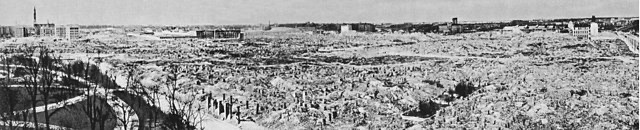
The rubble that was Warsaw c. 1944

Does any of this sound familiar? Russia has always wanted a buffer from the West. And that’s understandable. But decimating a nation, carrying out war crimes, pulverizing whole cities into submission is NOT the way to do it. That is why Poland, along with Moldova, Hungary, Romania, Estonia, Lithuania and other Central European nations are assisting Ukraine in every way possible. They’ve seen this before, and they understand that if it Russia is not stopped now, they will be next.

The Lady was a Sniper

In honor of Woman’s History Month, I thought we could take a look at an amazing Ukrainian woman, Lyudmila Pavlichenko. She was born on July 12, 1916, in Bila Tserkva in the Kyiv Oblast of what was then Russia. Her family moved to Kyiv in 1930 where she worked as a grinder at the Kyiv Arsenal Factory. She admitted that she was extremely competitive and a bit of a tomboy, and was delighted to join a shooting club in Kyiv, where she became an excellent sharpshooter. In 1937 Lyudmila entered the Kyiv University (studying history🥰). But life changed on June 22, 1941, when Germany invaded the Soviet Union.

Lieutenant Lyudmila Pavicenko, Hero of the Soviet Union

Like so many others, she immediately volunteered, and ended up in Odessa, where she was ordered to Nurses Training. She refused, insisting that she would be more useful as a marksman. She was assigned to the Red Army’s 25th Rifle Division. Weapons were in short supply, but when a sniper in her unit was wounded, she took his Mosin-Nagant 189 bolt-action rifle and immediately shot two Germans. With that, she officially became a sniper. Pavlichenko spent the next ten weeks at the siege of Odessa, during which she accrue 187 kills and quickly was nicknamed “Lady Death.”

As the Romanians wrested Odessa from the Soviets in October 1941, the Russians withdrew toward Sevastopol, in Crimea, which also came under siege. By May 1942, the new Lieutenant was cited by the Southern Army Council for having another 257 kills. In June, she was hit with shrapnel from a mortar. She was evacuated via submarine and spent a month in a hospital in Moscow.

Lyudmila Pavlichenko c.1942

With a total of 309 kills, Pavlichenko was more important to the Soviets as a spokesman than sending her back to the front. Instead, she went on a propaganda tour throughout the country. She then was out a tour to both Canada and the US where she met both Franklin and Eleanor Roosevelt at the White House, and spoke in both Chicago and New York City. On returning to the Soviet Union, she trained new sharpshooters and snipers until the end of the war.

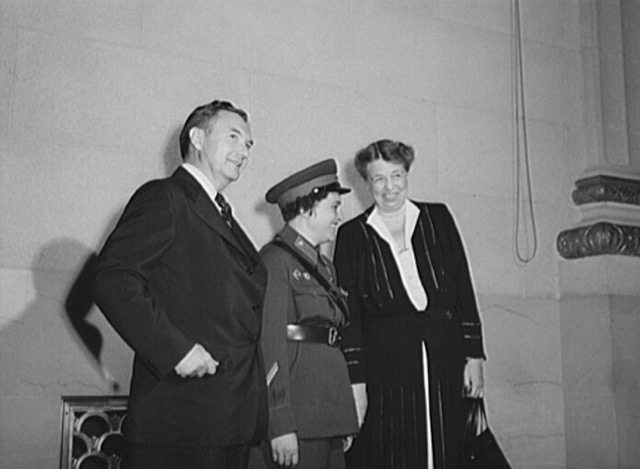
Justice Robert Jackson, Lt. Lyudmila Pavlichenko and Eleanor Roosevelt

After the war, she went back to Kyiv and graduated from the University with her history degree. Ultimately she became the Senior Researcher for the USSR’s Navy Headquarters. After dealing with what we now understand to be PTSD for years, she died of a stroke at the age of 58 in 1974.

In Ukraine, everything old is new again–review of book BLOODLANDS

Watching the news these past days has been horrifying. War is bad enough. But there’s a huge difference between a military campaign and indiscriminate carnage and war crimes. Turning thriving cities into rubble is very similar to what the Russians did in Aleppo, Syria, and Grozny, Chechnya. It’s understandable that the Ukrainians are willing to fight to the end. It’s only been thirty years since the end of the Soviet state, and the Ukrainians well remember being under the boot of the Communists. Even more, they understand what happened when the USSR took control of Ukraine 90 years ago. If you haven’t heard about the Holodomor–the Terror-Famine–which decimated Ukraine, take a look at Bloodlands: Europe Between Hitler and Stalin by Timothy Snyder.

Starvation in Kyiv c. 1935

Snyder’s book covers the years 1930-1945, focusing on Ukraine, Poland, Belarus and the Baltic states. After the victory of the Red Army in 1921, the Soviets were in such dire straits that Lenin set up the New Economic Policy which allowed the peasant farmers, called Kulaks, in Ukraine to provide food for the country. It worked well and Ukraine was again the breadbasket of their nation. Unfortunately, by 1927 General Secretary Josef Stalin decided it was more important to exterminate the “capitalist” kulaks than it was to allow them to feed his people. He deliberately confiscated all of the food grown in Ukraine for several years. In the mid-1930s, over 4 million Ukrainians died of starvation, while many of those kulaks who managed to survived were simply shot because of their “capitalist tendencies.” At the same time, there were numerous rounds of purges in Ukraine. to finish the job

Starvation in southeastern Ukraine c. 1935

After World War II, Ukraine remained part of the Soviet Union with everything that goes with a communist country. However, Ukrainians have long memories, particularly memories of the Holodomor and purges of the ’30s and the disasters of the war. They were eager to break away when the USSR disintegrated in 1991. It’s been a difficult 30 years, with the country growing in fits and starts, but always with the goal of developing a stable democracy. When Vladimir Putin’s army crossed into their country, it’s an updated effort to take the country. Rather than starvation, it’s tanks and MIGs. But this time, Ukrainian civilians have joined the military to save their country. They need all the help we can give them!

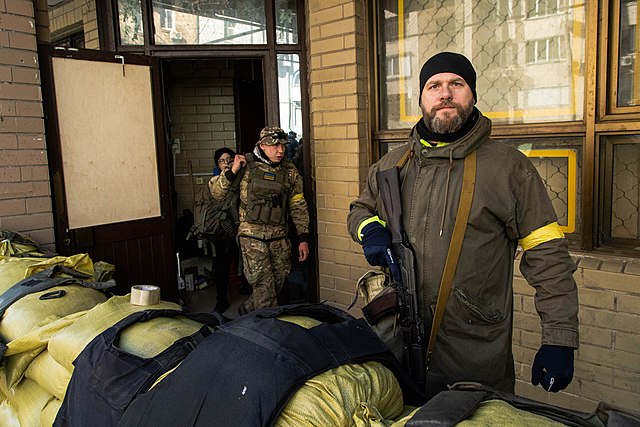
Armed civilians in Kyiv February 2022

If you don’t know much about Central Europe other than the chilling photos of bombs hitting maternity hospitals and cities with no food, heat, light, medical supplies or even water, take a look at Bloodlands. It becomes crystal clear why the Ukrainians are willing to fight for their freedom, and why the Poles and the Baltic states. are doing everything they can to help.

http://Timothy Snyder. Bloodlands: Europe Between Hitler and Stalin

Do you have photos in your office?

Do you have any photos in your office? Many of us do. I have four–not huge ones–just two small pictures of my children and two equally small ones of my parents. They definitely keep me grounded. If I ever have a question of what to do, one look at their photos gives me the right answer.

Apparently I’m not the only person who thinks that way. During his inauguration on May 20, 2019, President Zelensky of the Ukraine said:

I really do not want my pictures in your offices, for the President is not an icon, an idol or a portrait. Hang your kids’ photos instead, and look at them each time you are making a decision,”

That probably explains why so many Ukrainians have decided to stay and fight. It must be the hardest decision they’ve ever had to make, but they are trying to do what’s right for their family.

God Bless Ukraine

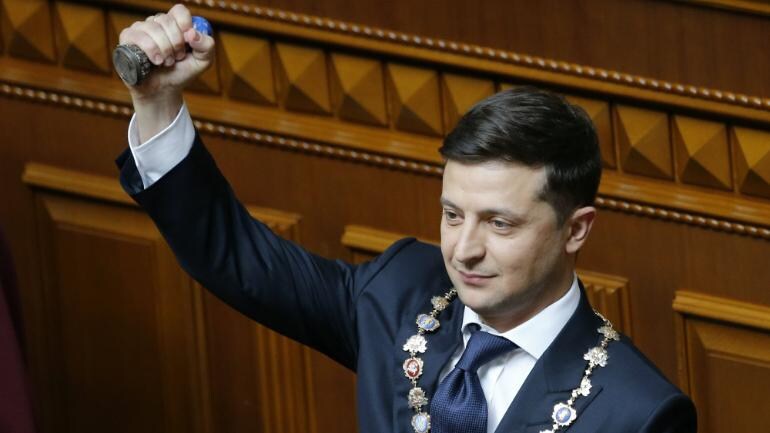
Ukrainian new President Volodymyr Zelenskyy

Ukrainian new President Volodymyr Zelenskyy holds the Ukrainian symbols of power during his inauguration ceremony in Kiev, Ukraine, Monday, May 20, 2019–India Today

Churchill Would Agree

Toward the end of one of his speeches last week, President Volodymyr Zelensky, said:

“Last night was brutal in Ukraine. Again, the shelling, again the bombing of residential areas and civilian infrastructure.

“We will fight as long as it takes to liberate the country. If children are born in shelters, even when the shelling continues, then the enemy has no chance in this — undoubtedly — people’s war. To victory! Glory to Ukraine!”

Sound familiar? Remember Churchill’s speech on June 4, 1940?

We shall go on to the end, we shall fight in France,
we shall fight on the seas and oceans,
we shall fight with growing confidence and growing strength in the air, we shall defend our Island, whatever the cost may be,
we shall fight on the beaches,
we shall fight on the landing grounds,
we shall fight in the fields and in the streets,
we shall fight in the hills;
we shall never surrender, and even if, which I do not for a moment believe, this Island or a large part of it were subjugated and starving, then our Empire beyond the seas, armed and guarded by the British Fleet, would carry on the struggle, until, in God’s good time, the New World, with all its power and might, steps forth to the rescue and the liberation of the old.”

I think both men would understand.