🚃 Send in the Marines ðŸšƒ

I was catching up with a friend who lives in LA a few days ago. Talked about our kids and grandchildren, our work, new books, etc. Then she told me that she’s seriously thinking of selling her part of her business to her partner and moving back to Iowa where she grew up and where most of her family still lives. Why??? She said that she’d reached her limit about two weeks ago when she saw Union Pacific trains stopped on their way to the LA rail yards. They were being plundered by coordinated groups of gangs. And not just a few cars. Ninety rail cars a day. Apparently members of the gangs use bolt cutters to open the cars, grab all the packages and take whatever they want–everything from medicine and high-end electronics to books and toys–leaving masses of garbage everywhere. The Union Pacific has begged for help from the city with no results. At this point, the Union Pacific is seriously considering moving their trains out of LA. This isn’t the first time there has been troubles on the trains, but when that happened they found a swift way to fix it. They called in the Marines!

Marines guarding the US mail in the 1920s

The “Roaring Twenties” were more than Flappers, Speak Easies and rumble seats. It was a time of Al Capone, the St. Valentine’s Day Massacre, and bank robberies. In those days, money was moved by truck and train via the Post Office. Between April 1920 and April 1921, $6.3 million dollars were stolen from the USPS. The Post Office tried to arm members of the USPS, with minimal success. Between April and October 1921, another $300,000 were stolen, with several post office workers killed. Postmaster General William Hays asked President Warren Harding for help from the Marines. Harding approved the request and Secretary of the Navy Edwin Denby immediately authorizes a contingent of Marines to guard main Post Offices, transfer stations, truck and trains.

Initially, 53 officers and 2,200 enlisted personnel were divided between the eastern and western zones in the US. Armed with standard M1911 pistols, the famous M1903 Springfield rifles, Thompson submachine guns and a few trench guns, their orders were basically to do whatever they needed to do so that the mail would get through. It took just four months for the Marines to have things in hand. (No one who had learned about the Marines on the Western Front during the Great War wanted to take on the Devil Dogs.) Marines returned to their normal duty in the spring of 1922.
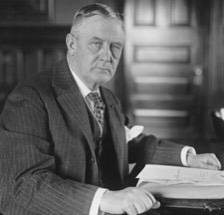
Postmaster General Harry New

Unfortunately, not everyone got the memo. 0n October 15, 1926, thugs attacked and killed a mail truck driver, wounded his helper and carried away $160,000 in broad daylight in Elizabeth, NJ. The current Postmaster General, Harry New, asked President Calvin Coolidge for help. Coolidge had Secretary of the Navy Curtis Wilbur call on the Marines to guard Post Office cars, trucks carrying registered mail and all major railroad and postal facilities until the Post Office itself could organize its own proper Postal Police force.
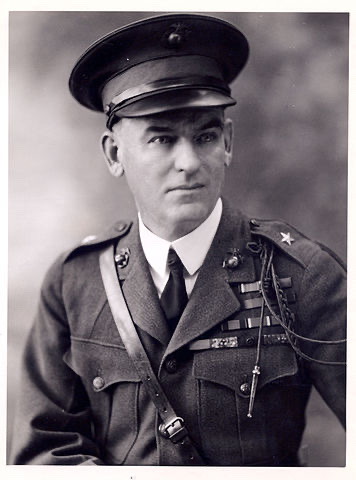
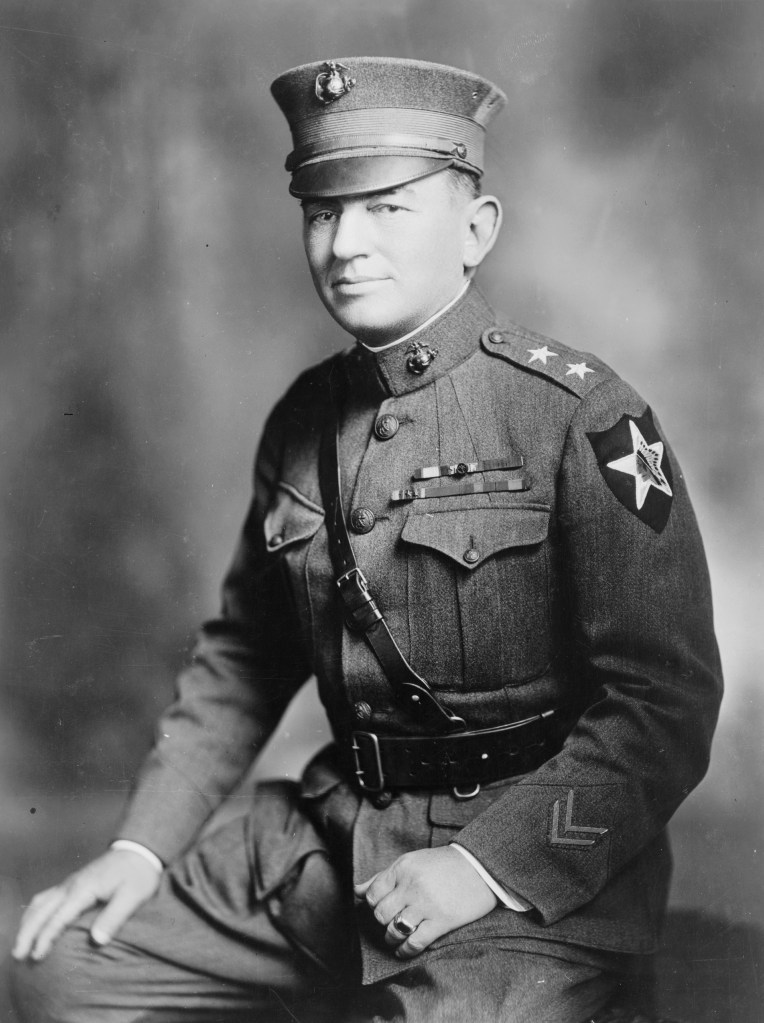
BGen. Logan Feland, USMC

The Marines took up their duties on October 21. BGen. Logan Feland, USMC, commander of the Marine Barracks at Quantico, directed the Eastern Region. BGen. Smedley Butler, based in California, commanded the Western Region which reached as far East as North Dakota, Colorado and El Paso, TX. It included 40,000 miles of railroad track and twenty-eight major post offices. The Marines carried .45 automatics, 12-gauge shotguns and Thompson submachine guns, and were expected to “shot first and ask questions afterward.” That ended the problem. By the end of February 1927, the last of the Marines had returned to their bases. They had seen no action, but it had bought the Post Office some time to set up proper security.
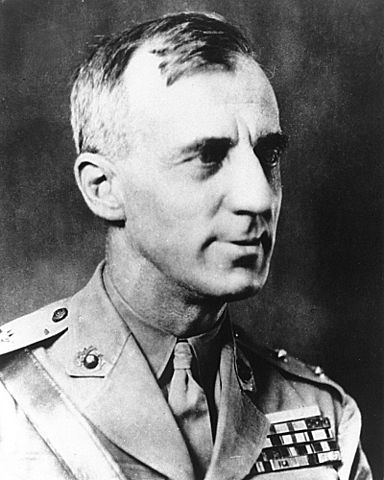
BGen. Smedley Butler, USMC

Right now, the Union Pacific has a very small number of security to deal with the current situation. I wonder what would happen if the Marines took over the mess in Los Angeles for a few months.🤔
Happy 246th Birthday Marines!

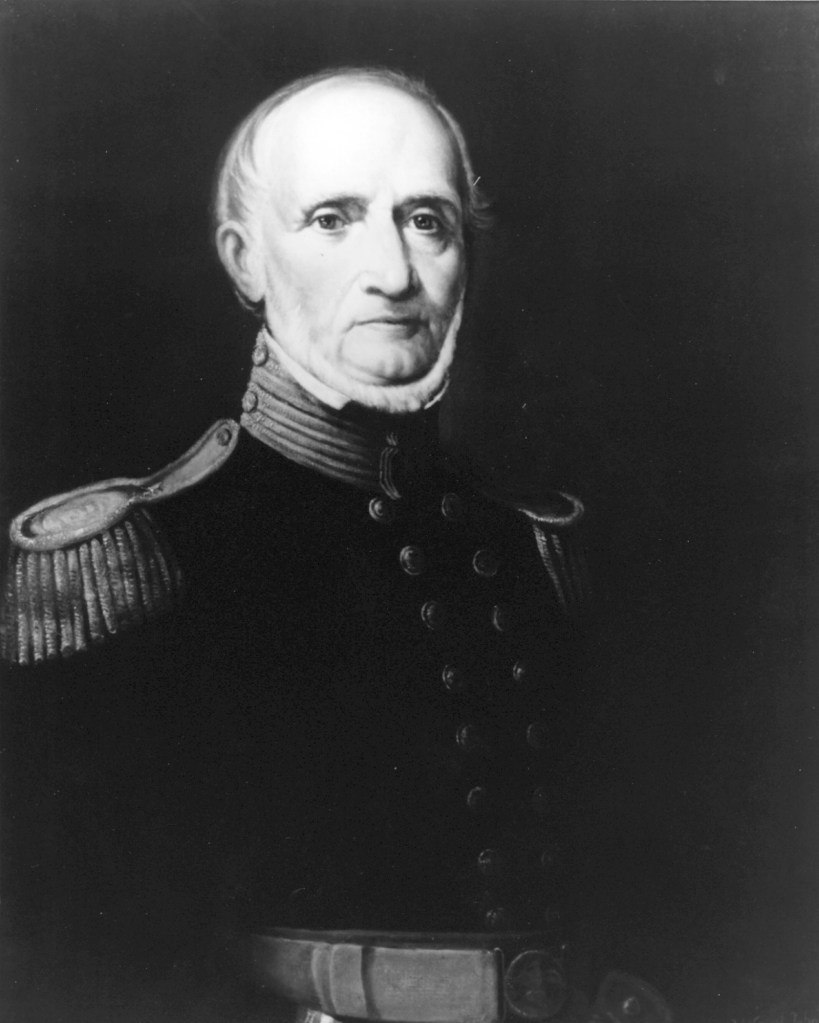
It was 246 days ago today that Captain Samuel Nicholas started recruiting Marines at Tun Tavern located at Water Street in Philadelphia. They have had a long and storied career with no end in sight. (You might want to take a look at last year’s birthday post.) Here are a few portraits/photos of some of the past Commandants of the United States Marine Corps.

BGen. Archibald Henderson
BGen. Jacob Zeilin
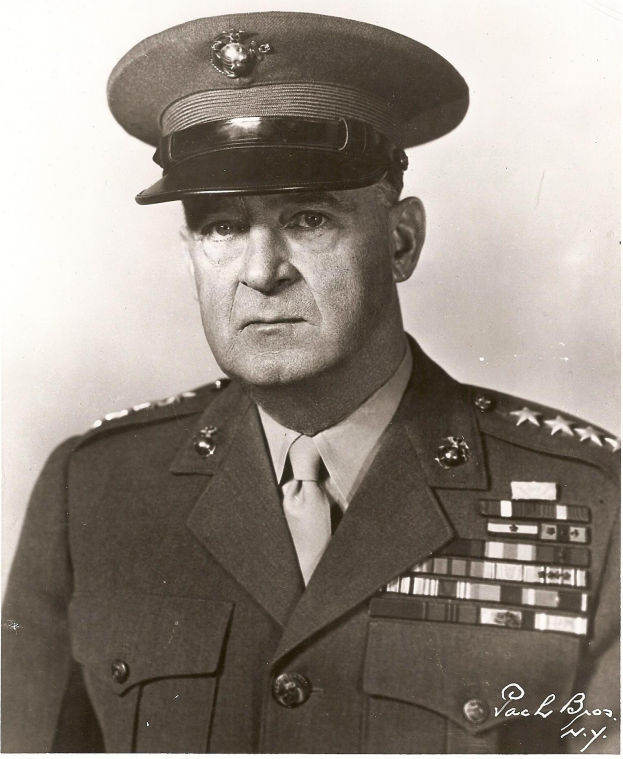
Lt.Gen. John A. Lejeune
Gen. Alexander A. Vandegrift

So Happy Birthday Marines, and many more!!

Happy Birthday Marines! ðŸ¥³

Tun Tavern, November 10, 1775, saw the birth of the United States Marine Corps. So many of us think of Marines at Belleau Wood, Iwo Jima, Inchon, Da Nang and Fallujah, but Marines have been in so many more areas of the world. Sometimes it’s been in battle, but frequently they went to show the flag. One long-forgotten diplomatic mission happened in 1903-1904 in Abyssinia (Ethiopia).

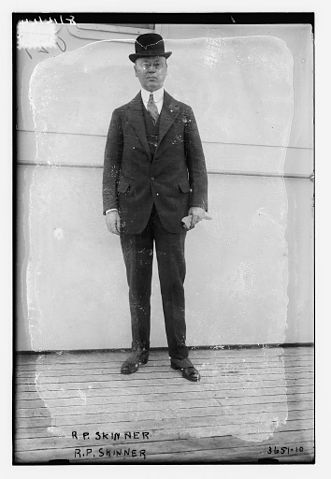
In the summer of 1903, the US decided to establish relations with the nation of Abyssinia. Few people knew much about it, though it was a well functioning nation which had actually defeated the Italians in 1894 when Rome thought it would be a cake-walk to seize the Abyssinia. The US much preferred to be a trading partner. The State Department told Consul Robert P. Skinner, then in France, to travel to Addis Ababa, capital of Abyssinia, and develop a treaty.

At that same time, the U.S.S. Brooklyn, U.S.S. San Francisco, and U.S.S. Macias were off the coast of Beirut, and they were ordered to put together a detachment of Marines, with a few seamen, to join Skinner on his trek to Addis Ababa. Lt. Charles L. Hussey, USN led the party. With him was Capt. George C. Thorpe, USMC, one sergeant, two corporals, 14 privates, six sailors, one hospital steward, a coxswain and an electrician. They sailed aboard Macias through the Suez Canal and down the Red Sea to Djibouti in what was then called French Somaliland. There they met up with Skinner and his secretary, Horatio Wales.

From Djibouti they took a rickety, narrow-gauge train about 200 miles to the end of the line at Dire Dawa, which was filled with mud huts, a telegraph office and a telephone exchange. There they set up Camp Scott. The following day they enlisted a translator, and bought 45 mules and 46 camel for their 300-mile trek to Addis Ababa. Shortly after they started their journey, they received a message from Ras Mekonnen asking the Americans to make a 32-mile detour to Harrar. As the most trusted counselor to the Emperor Menilek II, and the man who had defeated the Italians at the Battle of Adwa, that was a “command performance.” The Ras and 100 of his soldiers met the Americans just outside the city, and led Skinner and the entire detachment in to Harrar. The Consul and the translator spoke at length with Mekonnen and the following day returned to Dire Dawa. They finally headed out to Addis Ababa on November 29.

Most of the camel and mule handlers were members of the Danakil tribe, who were more warriors that muleteers. At one point, the man in charge of the animals told Thorpe to head in a different direction. When Thorpe insisted that they follow the American’s route, the man pulled a knife on the Captain. He and another Marine grabbed the knife. The man then snatched one of his own men’s spear. The Marines grabbed that as well, at which point the man gave up, flopped on the ground crying and carrying one—and then got up and started heading in the right direction.

Things went well until the evening of December 3d when the Danakil and what seemed to be a large group of men in the area began to threaten the Marines. Hussey, Thorpe and Skinner were discussing whether they might need to fight their way back to Dire Dawa when they started hearing very loud voices in a language even the translator didn’t understand. There seemed to be numerous people wandering around the area. Thorpe and his men formed a skirmish line and were seconds away from moving out when the clouds moved and they saw a huge number of monkeys who took one look at the Marines, and fled.

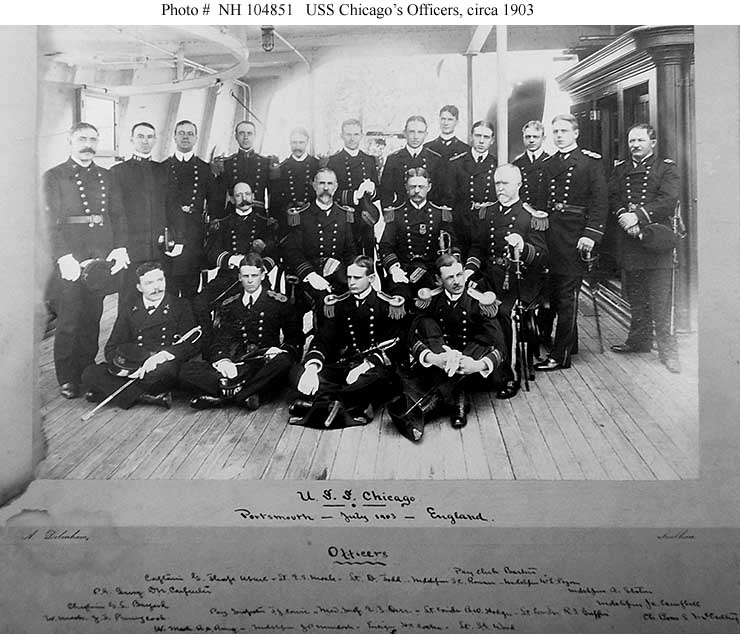
Marine Captain George Cyrus Thorpe is fourth from the left of the group standing

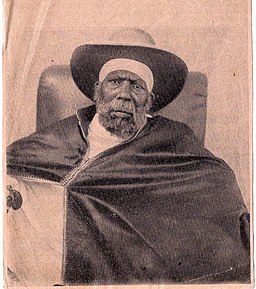
They trekked on across the grassland, until early in the morning of December 18, when they arrived about a mile away from Addis Ababa. Taking some time to change into their dress uniforms, they were met by Abyssinian troops and a group of Emperor Menilek II’s counselors, all dressed in brilliantly colored uniforms and the cavalry riding a variety of animals from Arabian steeds to zebras. After a “formal picnic” the Americans were escorted into Addis Ababa straight to the Geubi, the Emperor’s palace, where they met Menelik II. After a 21-gun salute and shaking hands will all the Americans, Skinner presented the Emperor with a large silver tray engraved with an invitation for Abyssinia to join the Louisiana Purchase Exposition in St. Louis in the spring of 1904. The Emperor immediately agreed. After some additional discussions with Skinner, the Emperor withdrew and the Americans marched to another palace to the tunes of Hail Columbia and the Marseilles.

Skinner and the Emperor continued their talks the following day. They agreed to establish diplomatic relations, and agreed to Most Favored Nations status between the two countries. Later that day, the Americans met diplomats from Italy, Great Britain and Russia, as well as the Abuna, Archbishop Mathias, the head of the Coptic Christian Church, and one of the most influential men in Abyssinia. On the 23st the Americans attend a mpressive banquet. The following day Emperor visited Camp Roosevelt, where he watched the Marines parade and Thorpe put his men through the Manuel of Arms and Bayonet exercises. Cpl. Joseph Rossell (later Colonel, USMC) showed the Emperor the Krag-Jorgenson rile, disassembling it, answering Menilek’s technical questions, then reassembling it at breakneck speed, loading it with blanks, and handing it to the Emperor who enjoyed shooting over the heads of some of his own men.

Emperor Menelik II

After additional discussions, Menilek and Skinner signed the treaty on December 27. The Emperor then presented each Marines and Seamen with the Menilek medal, and presented Hussey and Thorpe with the Star of Ethiopia medals, and two spears. As they were about to leave, the Americans were also presented with two massive elephant tusks, and two lion cubs to be presented to his friend, Theodore Roosevelt. The camels which were to carried the cubs in large baskets were terrified. Camels and lions don’t mix, but eventually they relented and carried the cubs, swaying along, back to Dire Dawa. (One of the cubs became terribly seasick because of the constant swaying, and eventually died. The Emperor replaced it, and both lions spent the rest of their days at the National Zoo in Washington, D.C.) By January 15, the Americans were back in Djibouti, boarding the Macias, and heading back to Beirut. Mission accomplished.