I was catching up with a friend who lives in LA a few days ago. Talked about our kids and grandchildren, our work, new books, etc. Then she told me that she’s seriously thinking of selling her part of her business to her partner and moving back to Iowa where she grew up and where most of her family still lives. Why??? She said that she’d reached her limit about two weeks ago when she saw Union Pacific trains stopped on their way to the LA rail yards. They were being plundered by coordinated groups of gangs. And not just a few cars. Ninety rail cars a day. Apparently members of the gangs use bolt cutters to open the cars, grab all the packages and take whatever they want–everything from medicine and high-end electronics to books and toys–leaving masses of garbage everywhere. The Union Pacific has begged for help from the city with no results. At this point, the Union Pacific is seriously considering moving their trains out of LA. This isn’t the first time there has been troubles on the trains, but when that happened they found a swift way to fix it. They called in the Marines!

The “Roaring Twenties” were more than Flappers, Speak Easies and rumble seats. It was a time of Al Capone, the St. Valentine’s Day Massacre, and bank robberies. In those days, money was moved by truck and train via the Post Office. Between April 1920 and April 1921, $6.3 million dollars were stolen from the USPS. The Post Office tried to arm members of the USPS, with minimal success. Between April and October 1921, another $300,000 were stolen, with several post office workers killed. Postmaster General William Hays asked President Warren Harding for help from the Marines. Harding approved the request and Secretary of the Navy Edwin Denby immediately authorizes a contingent of Marines to guard main Post Offices, transfer stations, truck and trains.
Initially, 53 officers and 2,200 enlisted personnel were divided between the eastern and western zones in the US. Armed with standard M1911 pistols, the famous M1903 Springfield rifles, Thompson submachine guns and a few trench guns, their orders were basically to do whatever they needed to do so that the mail would get through. It took just four months for the Marines to have things in hand. (No one who had learned about the Marines on the Western Front during the Great War wanted to take on the Devil Dogs.) Marines returned to their normal duty in the spring of 1922.
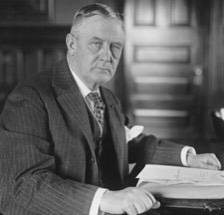
Unfortunately, not everyone got the memo. 0n October 15, 1926, thugs attacked and killed a mail truck driver, wounded his helper and carried away $160,000 in broad daylight in Elizabeth, NJ. The current Postmaster General, Harry New, asked President Calvin Coolidge for help. Coolidge had Secretary of the Navy Curtis Wilbur call on the Marines to guard Post Office cars, trucks carrying registered mail and all major railroad and postal facilities until the Post Office itself could organize its own proper Postal Police force.
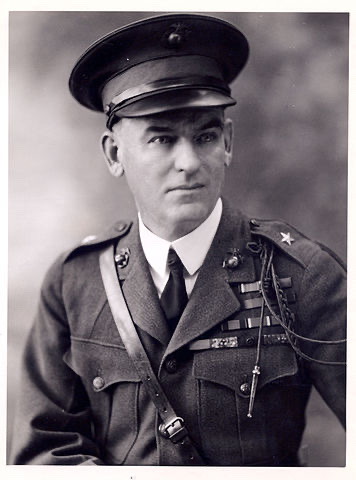
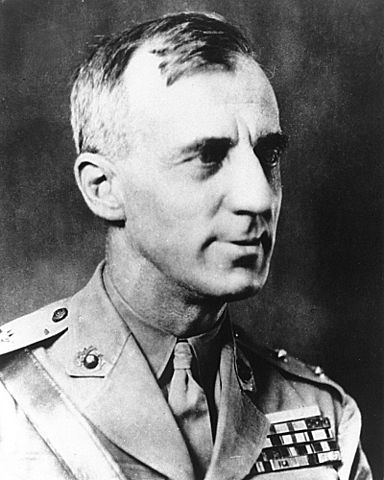
The Marines took up their duties on October 21. BGen. Logan Feland, USMC, commander of the Marine Barracks at Quantico, directed the Eastern Region. BGen. Smedley Butler, based in California, commanded the Western Region which reached as far East as North Dakota, Colorado and El Paso, TX. It included 40,000 miles of railroad track and twenty-eight major post offices. The Marines carried .45 automatics, 12-gauge shotguns and Thompson submachine guns, and were expected to “shot first and ask questions afterward.” That ended the problem. By the end of February 1927, the last of the Marines had returned to their bases. They had seen no action, but it had bought the Post Office some time to set up proper security.
Right now, the Union Pacific has a very small number of security to deal with the current situation. I wonder what would happen if the Marines took over the mess in Los Angeles for a few months.🤔

 Historical Lense