The Tomb of the Unknown Soldier 1921-2021

One of the tragedies of war is the death of so many soldiers and sailors. Even worse is the fact that there are so many who are unknown. Going back to the Peloponnesian War, there have been monuments for soldiers who remained unknown. In many wars, large numbers were buried in mass graves, often with monuments with the appropriate dates. Things changed during World War I.

At that time, most nations started requiring their men to wear ”dog tags” of some sort. (The Americans tags were made of aluminum and literally held the person’s name, rank and serial number.) The armies also set up new units which would keep track of those who had died. (Graves Registration Services in the US) At the end of the war, many of the deceased were re-interned in their own nation. However, there were so many who had died during the war, that it would have been impossible to repatriate everyone. Many families decided to allow their service member to remain with their brothers-in-arms and are buried in national cemeteries in France.

In 1920, Great Britain brought one of the Unknown Soldiers home and solemnly re-interned the soldier in Westminster Abby. Similarly, an Unknown Soldier is guarded at the base of the Arc de Triomphe in Paris. In early 1921, Hamilton Fish, Jr., a World War I veteran and member of Congress offered legislation ”To bring home the body of an unknown American warrior who in himself represents no section, creed or race in the late war and who typifies moreover, the soul of America and the supreme sacrifice of her heroic deeds.” The legislation passed, and it was decided that the Soldier would be placed in a tomb in Arlington National Cemetery.

Work began on the tomb that spring, and in October, 1921, four bodies of unknown soldiers were exhumed from four different cemeteries in France. On the 23th they arrived at Chalon-sur-Marne. The following day, Maj. Robert Harbord, USA, with a group of French and US soldiers, placed each casket on top of a shipping case. The Major then asked Sgt. Edward F. Younger to select one of the men. Younger walked gravely around the four caskets several times, then stopped and put a spray of white roses on one. The others were returned to the cemeteries they had left, while the fourth casket was placed in its shipping case and was moved on a caisson, and later by train, to the port of La Havre. From there it boarded the USS Olympia bound for the US.
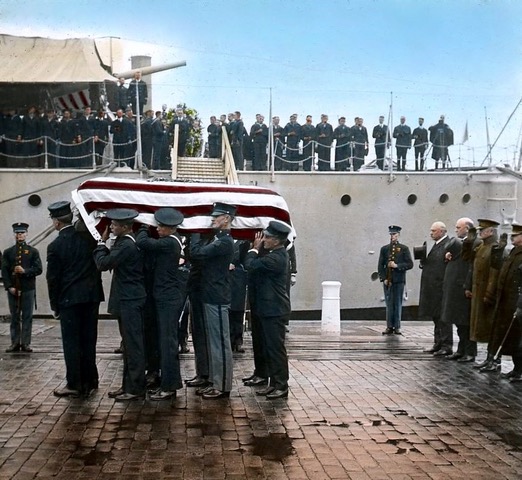
Unknown Soldier from World War I being taken from the USS Olympia at the Washington Navy Yard and transported to the US Capitol to lay in state. On November 11, 1921 the body was intered at Arlington National Cemetery (photographed by E.B. Thompson) http://www.flickr.com/photos/dcplcommons/3423377913/ http://www.flickr.com/people/dcplcommons/ District of Columbia Public Library

The Olympia arrived at Washington D.C. on November 9th. From there the coffin moved to the Capital where it lay in state at the Capital Rotunda. Over 90,000 people paid their respect on the 10th. The following day, the Unknown Soldier was placed on another horse-drawn caisson and slowly wended its way through Washington, D.C., crossed the Potomac, and moved on to the Arlington National Cemetery. President Warren G. Harding presided at the state funeral at the Arlington Memorial Amphitheater which included the two minutes of silence to commemorate the end of the War (Known as Armistice day–the 11th hour of the 11th day of the 11th month.)

Soldiers from Ft. Myers began guarding the Tomb in March 1926. They only did so during the day to make sure that family members didn’t become distraught, and that others remained respectful. In 1937 soldiers began guarding the Tomb 24/7, and in 1948 the 3d US Infantry Regiment, known as the ”Old Guard” took charge of the Tomb. Since then, the US has added men from both World War II and the Korean War to the Tomb. It can be the dead of night, in blazing sun or two feet of snow, the Old Guard is on duty.

Changing of the Guard at the Tomb of the Unknown Soldier

Thursday, November 2021 is the 100th anniversary of the Tomb of the Unknown Solder—Never Forget!

Fall Back–AND STAY THERE!! ⏰

The US and about 40% of the nations in the world switch between standard time and daylight savings time. This Saturday/Sunday, November 6/7 is the day when the US turns our clocks back one hour–we “fall back.” Then we “spring forward” an hour on the second Saturday/Sunday in March. I did a quick survey this week–asked over 45 people I ran into when I was out and about–if they think this is a good idea. Two said yes. Forty-three said no. (With a variety of expletives which I can’t say in polite society.) Where did this idea come from? And is it really a good idea?

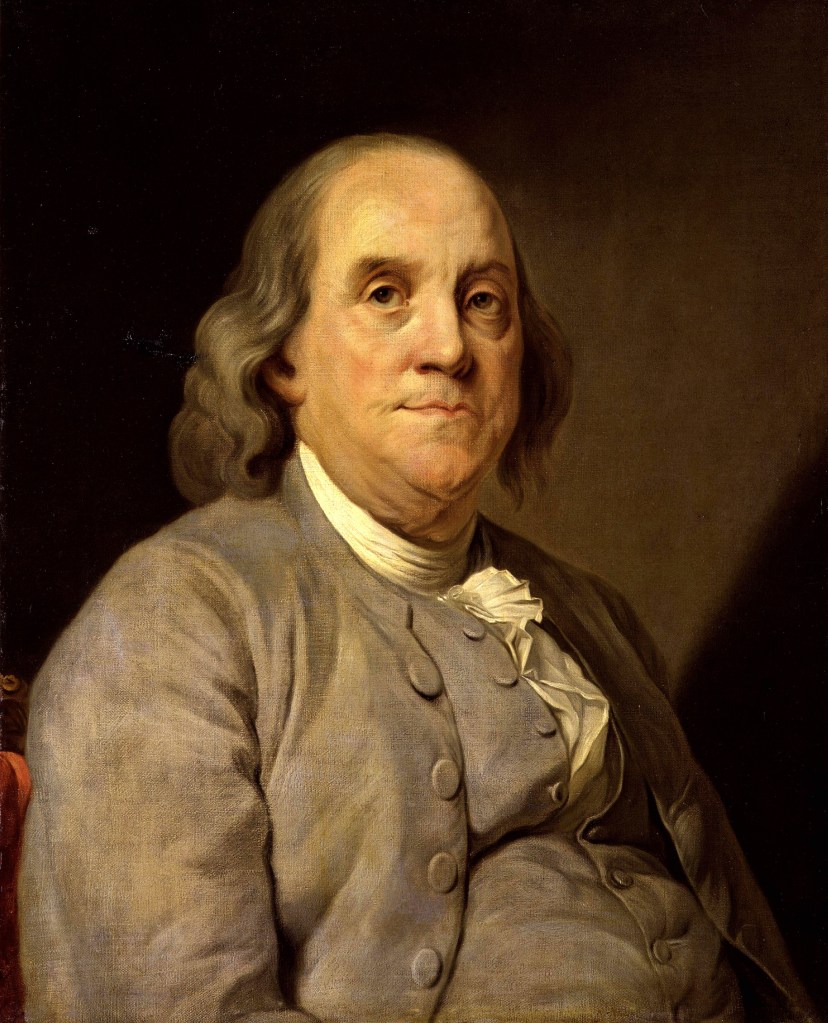
Benjamin Franklin first came up with the idea. He believed that having another hour of daylight would save money on candles, but it didn’t take off the way so many of his other ideas did. It really came to national attention in May, 1916, in the middle of World War I, when the German government believed that daylight savings would save fuel. The British and French started doing the same in 1917, and in 1918, the US joined them. At the end of the war, President Wilson wanted to continue that system, but many people, particularly in the rural US, hated the idea because they would loose an hour of daylight they needed on their farms. Wilson relented. Daylight Savings Time–then called War Time–returned during World War II, again because the government believed it would save fuel.

Daylight savings remained after the war, though the times were different in different parts of the country. In 1966 Congress passed the Uniform Time Act in which Daylight Savings Time began on the first Saturday/Sunday in April and changed to Standard Time on the last Saturday/Sunday of October. Congress again changed it in 2007 to the current November and March system. Why do we do this? Largely because the Department of Transportation (DOT) thinks that it saves energy and prevents accidents. As usual, I dod some research. It does NOT seems to work out like the DOT believes it does. In fact it’s pretty much the opposite.

Perhaps the use of energy in the World Wars, when we used mountains of coal, was a factor, but it really isn’t these days when we use natural gas renewables and even clean coal. In fact, the energy saving these days is from slim to zero. Work at the Oak Ridge National Laboratory finds that since electricity has become so efficient in the recent past, the cost savings of power is negligible.

Now let’s take a look at accidents. Peer-reviewed information from Current Biology shows that there is a 6% increase in car accidents for several days when we “spring forward.” (There are lots more journal articles–I just don’t want to bore you.) And that also means a significant increase in ER visits. Everything from a few bumps and bruises to traumatic injuries and death. And ever if we didn’t care about peoples, (though I believe most of do) the increase in medical costs is significant.

Why all the accidents? Because of sleep deprivation. And one hour can definitely make a difference. We all have a circadian rhythm–and internal clock–which tells each of us when we need sleep. What happens when we don’t? If we’re lucky we just feel tired and out of sorts for several days. But we can also end up in the ER. And if we drill down a bit, according to the Journal of Clinical Medicine in a 2019 report, they find higher numbers of heart attacks when both “sprinting forward” and “falling back.” The American Association of Cancer Research journal Cancer Epidemiology, Biomarkers and Prevention discussed the influence on Daylight Savings and Standard time with cancer. A 2015 Finnish study Sleep Medicine discusses the fact that in addition to cancer and heart attacks, there is an 8% increase in strokes in the days after the transition in DST. Most people who do shift work will tell you that even if they are careful and try to get sleep during the day, it’s still more difficult to work at night.

Because of these, and so many more issues, 15 states want Congress to stop changing the time twice a year. They don’t care which one, just pick on and stay there!!!

Is It Time to Retire?

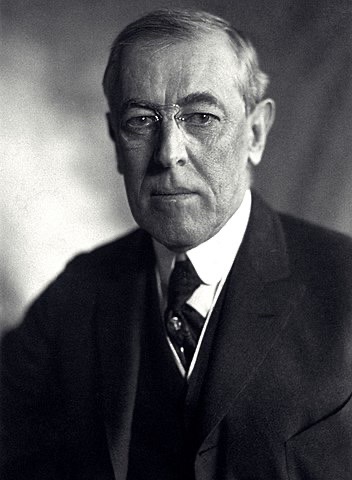
No, it’s not time for me to retire. Colleagues keep asking me to participate in a number of discussions and students ask for help, so I’m pretty sure there’s still some worked left for me to do. However, there are instances when it’s time for someone to retire, and that can be people doing simple jobs to someone who is President of the United States. A case in point was Woodrow Wilson.

Wilson was the 28th President (1913-1921.) He had tried to pass a number of progressive pieces of legislation from the Federal Reserve Act to the Keating-Owens Child Labor Act, but he was forces to divert much of his agenda because of World War I (1917-1918). At the end of the war, he went to the Paris Peace Conference, and signed the Versailles Treaty in June, 1919, which included the League of Nations. The League was Wilson’s pride and joy, and he returned to the US expecting that the Senate would happily pass it. He was sadly mistaken. Many Senators believed that the League would require the United States military to become involved in other military actions, and having just ended what they expected would be the “war to end all wars” they did not want to become any part of it. Wilson went to work to get it passed.

President Woodrow Wilson

To that end, in September 3, Wilson and his wife, Edith Bolling Galt Wilson began a train tour throughout the western states during which he would hold rallies and speeches in 29 cities. At his speech in Pueblo, Colorado, on September 25, he began to slur his speech and wobble. His doctor, RAdm Cary Grayson, USN, convinced him to end his tour and they returned to the White House ASAP. On October 2, his wife found him on the floor in the bathroom. Wilson had had a stroke due to a blocked artery, paralyzing his left side, causing serious vision problems, speech issues and slowed his judgment. The following day, newspapers across the country announced that he had become ill, and needed a period of serious rest.

By October 6, Secretary of State Robert Lansing held a Cabinet meeting–almost never down without presidential permission. They had not seen or heard from Wilson for over a week and were getting very concerned. They finally got ahold of Dr. Grayson who, in the most careful terms, said that Wilson was fine, but ill and needed rest. Lansing knew that Grayson was lying through his teeth, but with both both Wilson’s family and doctor all in sync, there was nothing he felt he could do. After that Grayson made sure to speak to the press frequently, telling they that Wilson was definitely getting better. Of course, there was a constant rumor mill suggesting everything from Wilson being at death’s door to Wilson having become completely insane.

His wife, Edith, made sure that no one saw Wilson. Anyone bringing him papers would have to leave them with her. She would then read them, and if she decided it was important she would read them to her husband. She would then have the papers delivered, often with scratchy comments in the margins that looked nothing like Wilson’s handwriting, and his signature which looked very feeble.

Edith Bolling Galt Wilson

Naturally, Edith, Grayson, and Wilson’s private secretary (now we call it the chief of staff) Patrick Tumulty knew that he needed to be seen, at least occasionally. An opportunity arrived on October 30, when King Albert I of Belgium and his wive, Queen Elizabeth, arrived in Washington, D.C., on a tours in the US. Normally a president would greet such a dignitary at the steps of the White House. This time, the King and Queen were escorted into Wilson’s bedroom where he was propped up on pillows, with his left arm, the one which had been paralyzed, gracefully covered by a blanked. The conversation lasted about 15 minutes. The Belgians left wishing him a speedy recovery and later told the press that the President seemed to be on the mend.

Congress was not convinces of that, and became more concerned as every week went by. Things came to a head in December, when the Senate Foreign Relations Committee pointedly asked Lansing when he had last spoken with Wilson. Lansing had to tell them that it hasn’t been since September. Members of the Senate started discussing setting up a formal enquiry, so to try to prevent that, the White House set up a meeting between Wilson and Senators Albert B. Fall (R.,NM) and Gilbert M. Hitchcock (D.,NB) on December 5. Both Senators visited Wilson in his bedroom. When Fall told him that they were praying for him, Wilson quipped “Which way?” The President said little more during the 40-minute meeting. He was lucky–Fall was a great talker and asked very few questions. Fall and Hitchcock’s visit were all over the newspapers, and kept the Senate at bay, but Lansing was still steaming. He knew full well that Wilson was truly unable to do his job, he but didn’t have any way of moving Wilson aside and have Vice President Thomas Marshall take the wheel.

Secretary of State Robert Lansing

Wilson did gradually improve, though he always needed to walk with two canes. He did attend some cabinet meeting in April 1920. The most important change was Wilson’s mental acuity. He had been an excellent political strategist, often finding good compromises, and changing course when change was warranted. After the stroke, however, he became adamant. He refused to even consider other options. Things needed to be done the way he wanted it. And because he was so insistent, and refused to compromise, the Senate refused to pass the League of Nations. We might have had a very different world if he had not bee so obstinate. But we’ll never know. He left the White House on March 4, 1921, and died in Washington, D.C. February 3, 1924.

–Epilogue

Given the current disaster in Afghanistan, and what we have seen and heard since April, 2021, one might seriously wonder if perhaps President Biden, who had two life-threatening brain aneurysms, which can definitely cause issues, may, like President Wilson, not be up for the work which is needed right now. Just a thought.

🌓 Rise and Shine!! 🥱

Even I, a definite morning person, thoroughly dislike Daylight Savings Time (DST).😒And I don’t know anyone who enjoys is. Why do it–to only change it back in a few months? I did a little digging to find out when this started, and who had this bright idea, and found some interesting information.

Benjamin Franklin

Some say that it began with Benjamin Frankin and his proverb in Poor Richard’s Almanac, “Early to bed and early to rise makes a man healthy, wealthy, and wise.” Pragmatically, he thought that shifting daylight an hour would save candles. It never took hold. Fast forward to 1895. George Hudson, a New Zealand entomologist wrote a paper for the Wellington Philosophical Society suggesting a two-hour shift would be very helpful for scientific study. He wrote a similar paper on 1898, but that, too, never took hold. Ten years later, William Willett, a businessman/builder in the UK, and more importantly to him, an avid golfer, suggested that an additional hour of daylight would allow golfers to play after work. He actually convinces Robert Pearce, a member of the Liberal Party in Parliament, to try to pass a bill allowing the change, but it failed.

What really caused the shift was World War I. In an effort to save coal, Germany and Austria-Hungary, the Central Powers, turned the clocks ahead one hour on April 30, 1916. Great Britain followed in May, as did France. Russia made their change in 1917, and in 1918, after joining the Allies, the US changed as well. Most nations changed back after the war. In the US, Congress tried to pass a bill to repeal it, but President Woodrow Wilson vetoed it. Congress passed it again, Wilson vetoed it again, but Congress overrode it the second time. It stayed that way until World War II. Again, European nations changed to DST in 1939, while the US changed in early 1942 and it stayed that way until 1945. Since then, we’re changed to DST at different time through the years.

Yes, as kids it’s nice to be able to play outside longer when school’s out–but who wanted to go to bed at regular time during school? And Mr. Willett is probably smiling down from heaven when people can play golf after work. But particularly since the 1970s there has been growing evidence that DST is not a good idea. Some serious research started during the energy crisis. The theory was that more sun in the evening would save electricity. At best it’s a wash and there’s some indication that it may actually be wasteful. Face it, the earth moves on its axis and there’s going to be just so much daylight and so much darkness every day, year in and year out. Does it matter If you turn on the lights so you can get ready for work, or turn it on earlier in the evening? You still need to turn on the lights (or Franklin’s candles) sometime during those 24 hours.

Chronobiologists have done significant work and have come to the conclusion that even small shifts in time can have inadvertent effects on the human body and brain. An eight-year study at the prestigious Mayo Clinic has found that the time shift has caused problems for medical personal’s sleep deprivation (they work long hours to begin with and that doesn’t help) Journals such as Open Heart and the Journal of Clinical Medicine have found a noticeable increase in Acute Myocardial Infarctions–aka heart attacks😱. There are also studies from the American Economic Journal Applied Economics showing an increase of at least 30 traffic deaths in the days immediately after “springing forward.” (interesting, no similar problems happen when “falling back”) as well as general accidents that cost roughly $275 million dollars. And if that’s not enough, apparently the shift in clocks cause a one-day loss of $31 billion in the US stock market.

Both Hawaii and Arizona don’t follow Daylight Savings Time, and momentum has been growing to end it once and for all. Fifteen additional states have passed their own laws ending it–Arkansas, California, Delaware, Florida, Georgia, Idaho, Louisiana, Maine, Ohio, Oregon, South Carolina, Tennessee, Washington State, Wyoming and Utah. However, that needs the OK from the Department of Transportation, which in turn requires an act of Congress. And recently Senator Marco Rubio developed a BIPARTISAN bill to do just that. The “Sunrise Protection Act” includes Democratic Senators Whitehouse, Wyden and Markey, and Republican Senators Rubio, Blunt, Rick Scott and Hyde-Smith. I’m keeping all fingers crossed that they pass it. 🤞🤞🤞

Christmas Truce, 1914 🎄

We often hear that this is the “Most Wonderful Time of the Year.” Right now, I’m thinking that this may be the strangest times of the 2020. But when you think about it, there have been other Christmas seasons that have been harder than this one. MUCH harder. Running through a list of them, the one I keep going back to is the Christmas Truce of 1914.

By September 1914, Europe was at war in both the Eastern and Western Fronts. In the West, Germany had attacked France through Belgium and headed toward Paris. The French managed to hold the line at the First Battle of the Marne. Then it became a “Race to the Sea” between German and French troops. The British Expeditionary Force (BEF) joined the French, and by December, the BEF held a 30-mile strip from the English Channel to the French line. As the armies became static, they began to build long trenches and dugouts to provide some safety for the men. Massive strands of concertina (large strings of jagged razor wire) covered each side of No Man’s Land between the warring armies. By December the men in the trenches were cold, stuck outside in rain, even snow, walking through thick layers of mud that was everywhere.

Pope Benedict XV

One person who was trying to deescalate the war was Pope Benedict XV. On December 7, 1914, he requested that all leaders involved in the hostilities abide by a truce. He’s remembered for his hope that “The guns may fall silent at least upon the night the Angels sang.” He was hoping that a truce would lead to negotiations, possibly a permanent cease-fire. Unfortunately, none of the participants agreed. Kaiser Wilhelm II did sent numerous Christmas trees to the front lines in the hope of keeping up morale, and some Germans set up candles in the trenches as well. Many French and British troops received presents, especially food, from home, and chaplains did what they could to brighten the men’s spirits.

However, thousands of men made their own truces at different times during the holiday, especially during Christmas Eve and Christmas Day. In some areas, the artillery stopped. At the very least, many units used a truce to retrieve the wounded and the dead from No Man’s Land. In some areas, one side began singing carols and shouting out Merry Christmas to the other side, which led to carols from both sides. In other areas men left their weapons and cautiously moved into No Lan’s Land, yelling Merry Christmas. The other side, seeing that it was safe, joined them. Many exchanged cigarettes and cigars, alcohol, food sent from home, and souvenirs like hats and buttons. Some men who wrote home said that it was very strange to be shaking hands with a man you’d been shooting at yesterday.

Most interestingly, there seems to have been some football (we call it soccer) matches during the truce. Over the years there’ve been lots of discussions about whether or not it truly happened. We do know that there were games played by soldiers of the same country. But in recent years, researchers have found letters and some newspaper clippings describing a few “international” pick-up games, particularly between German and British soldiers. There were at least three games–between the Royal Saxon Regiment and Scottish troops, Argyll and Sunderland Highlanders and German troops, and members of the Royal Artillery and a group of Prussian and Hanoverian men.

While most of the truces were between the Germans and British, there were also several brief cease-fires between the Germans and French, particularly in the area of the Vosges. There was one official truce between the Germans and Belgians to allow the Belgians to send personal letters home that required cross German occupied areas. There were also a few Austro-Hungarian commanders who did suggest a truce to nearby Russians who did agree, and they too met in No Man’s Land.

From the Illustrated London News

Most of the leaders in these nations were not happy to hear what their men had done. They expected that censorship would keep things quiet. However, the US was neutral in 1914, and members of their press had much more latitude. They did describe the Christmas truces in the New York Times on December 31, 1914. Once it came out, a few papers from the warring nations, particularly the British press, did mention it during the first week of January. However, the general staffs of all countries made it clear that it would not happen again. Any truces in the future could only come through proper channels–but after the unimaginable disasters of 1915, no-one thought about another Christmas truce during the remainder of the war.